Bob Schwartz

Category: Politics

Ted Cruz and Joe McCarthy

Ted Cruz - Joe McCarthy
For a while now, virulent anti-Obamaism has looked a lot like the anti-Communist vendetta of McCarthyism in the 1950s. Barack Obama is in fact the scary culmination of the fear that swept the nation fifty years ago. Not only are there Communist infiltrators in government offices; the White House itself is in the hands of a godless liberty-taker—or so it seems to millions.

U.S. Senator Joe McCarthy from Wisconsin did not invent this brand of hate and paranoia. He just perfected it through a combination of extreme showboating, angry rhetoric and, most of all, fear. Nothing could be worse than to be branded an enemy of the state (in McCarthyist terms), which might lead to a loss of a citizen’s reputation, job and career or, more to the point, to a politician’s losing office.

This week, Ted Cruz’s attempt to hog the American stage with his fauxbuster (media are still working on a term for a filibuster that isn’t one) has had a notable effect on some of his Republican Congressional colleagues. Since the 2010 elections, and certainly in the 2012 presidential campaign, there has been a reluctance to publicly break ranks and call an ambitious, self-absorbed blowhard that (e.g., Donald Trump) or a fool a fool (take your pick). In recent days, a few Republican Senators have stopped holding back, realizing that as much as they agree in their opposition to Obama policies, this is not a constructive way to proceed, governmentally or politically. Oklahoma Senator Tom Coburn, a loyal Republican and unassailable conservative, said that it appears that to Cruz and others of that ilk, he is just not conservative enough.

This is the Ted Cruz/Joe McCarthy strategy: if you are not with me, you are against America. To torture a quote from King Louis XIV, “America c’est moi.” (I am America). And if you are not for my definition of America, you are an enemy of the state—even if you purport to be a Republican, even if you are a Senator with many more years than my nine months in the Senate. And if you are an enemy of the state, I and my millions of like-minded Americans will destroy you. That is my mission.

Joe McCarthy’s brief demagogic career ended in ignominy (and ill health from his alcoholism). He went from holding center stage to banishment when more and more of his colleagues and the media stood up to his bullying. It wasn’t that anti-Communism went away; it remained a force for years to come and, as pointed out, lives still even in the post-Cold War era. It was that serious people put up with over-ambitious clowns as long as a common agenda is advanced, but at some point even the threat of losing office takes second place to what’s good for America.

In the end, McCarthyism lost to Americanism. Let’s hope that Cruzism suffers the same fate.

What the GOP Can Learn from Pope Francis

Pope Francis
Pope Francis has turned out to be everything his most idealistic supporters hoped for, and then some. For a bonus trick, he may be able to save the Republican Party—politically speaking.

If you’ve only seen the top-line coverage of his interview with the magazine America, or read some quotes, do read the whole thing. It is a multi-dimensional view of a simultaneously simple and complex leader of an enormous—and enormously controversial—enterprise. We are apparently just beginning to see his skills.

For one thing, he is trying to navigate a sea of reformist and conservative elements, a dynamic that has left the Church in turmoil. He is doing this by something outrageously unlike most of what we see in the “sophisticated” twenty-first century. He is leading by staying true to a bedrock of belief, in word and action, but doing it in a way that is learned, thoughtful, humble and realistic. He is stripping away an accretion of institutional and self-interest extras, genuinely trying to get back to the core that made him a priest and a Pope, that brought so many to the Church, and that so many now see forgotten and hypocritized away.

This is a near miracle, and he may be on his way to doing just that. As a bonus, if the Republican Party is paying attention, it can learn something too. It turns out that unalloyed, unconditioned ideals can be both appealing and moral, including love, compassion, humility, tolerance (see the Beatitudes for a complete list). It isn’t easy to make this work in the real world, and it will be controversial and unpleasing to some, particularly those with extreme views.

The Republican Party is in the same position as the Church. There are some core beliefs that are eminently worthy but are being lost and forgotten in layers of maneuvering, narrow-mindedness, arrogance and hypocrisy. Catholics didn’t like that in the Church, and citizens, including some Republicans, don’t like it in the party.

Right at this moment, there is no Pope Francis on the horizon for the Republicans. This may become more apparent in the next few weeks, as some Republicans continue to exhibit a thoughtless, heartless and unproductive stubbornness that flies in the face of everything the party once stood for. Then again, nobody saw Pope Francis coming either. Let’s hope, for the sake of the nation as an economic, political and moral enterprise, that the Republican Pope Francis comes along very soon.

TMFG: Too Many F***ing Guns

.TMFG

People are dying from politeness about guns.

We are a nation of laws, and especially of constitutions, so we talk and write about the Second Amendment. Rich, smart and safe people debate in really fancy buildings, but nothing gets done about guns. The Naval Shipyard shooting, for example, is supposed to demonstrate problems with our mental health system, or with our veterans affairs system, or with a lack of communication between our law enforcement agencies.

But we are also a nation of plain talk. Just ask Joe Biden and others. So it is time for polite and respectful people to speak openly and plainly. Constitutional arguments and political realities have their place, but so does this: There are too many f***ing guns. That is why and how too many are killed and injured—in our homes, on our streets, in our schools, in our movie theaters, in our military facilities.

Feel free to engage in extended discussion and political action; that is what we do in a democratic society. But sometimes, it can be therapeutic to speak truth to nonsense.

Four words. Four letters. TMFG. If you believe it, say it.

Some Little Truths About Obamacare

Affordable Care Act

You may not want to think or talk about the Affordable Care Act. Who can blame you? Politicos and talking heads are doing enough for all of us.

And yet, October 1 marks the start of people reading the menu of health insurance options and deciding which way to go. Which is why the volume of debate is once again up to 11 and why it is harder than ever, even after all this time, to make sense of any of it.

Previous posts have covered the process: how ACA is based on a Republican proposal, how Republicans ran screaming away from their own proposal, how the Supreme Court narrowly allowed it to proceed, etc. Now is the time to consider the substance and the merits, reluctantly. Reluctant because some kind of truly broad and truly affordable health coverage really is necessary for a civilized, modern and (in some segments) wealthy society, so a critique should not appear to deny that. Reluctant because, under the circumstances, ACA may really be the best we can do, even if that is not saying much.

But here are a few truths.

1. This is the most complicated, Rube Goldberg-like social program in American history. Comparisons to Social Security and Medicare—as in “people were skeptical or opposed to Social Security and now these programs are an integral part of American life”—are inapposite. Think: one concept, one law. That may be oversimplifying, but not much. Social Security was and is a way to create a fund to help older and disabled Americans who can’t help themselves. The way it’s evolved may be complicated and not to all tastes, but the basic concept remains. The same can be said about Medicare.

The single concept of ACA is more elusive, despite the name making clear it is about affordability. Separate from the execution and success in that regard, ACA is also about the reach and availability of coverage. More properly, it might be called the Market-Based Universally Available Affordable Care Act, a name that would hint at its complexity.

2. It may be too complicated to manage. To get to the truth of this, we have to look bigger. Bigger, as in the manageability or not of the American government. The loud complaint from some corners is that the government is “too big.” This is a misplaced critique. The problem is that very big enterprises are very hard to manage effectively. Just shrinking an unoptimally managed enterprise lessens the damage and the cost, but it doesn’t change the fact of ill management. Scientific management tells us that in theory any enterprise of any size can be managed, by discovering or devising the appropriate principles and executing soundly. But there is a cousin to “too big to fail” that is “too big to run.” Maybe the government is that.

Maybe the ACA is that also, too big and too complicated. Which touches back to the idea of its not having one single concept. It seems clear, as it did to the ACA proponents, that so-called universal, single-payer health care would never be accepted in “free market” America. If that wasn’t always clear, the debacle of the Clintoncare proposal, engineered by Hillary during the Clinton administration, put it out of reach for a generation. The only way to get anything, rather than nothing, was to patch together components that were variously consistent with popular ideas, market mechanisms, federalism, healthy business and industry interests, along with political and legal constraints. The wonder isn’t that a combination car/boat/plane gets designed and built. The wonder is that it can drive or float or fly.

3. The American political environment is distrustful, skeptical and toxic. Social Security was born during the worst economic crisis ever. So the building of an historic safety net was fitting. But on top of that, even with virulent opposition, there was a widespread understanding that we were all Americans, and part of that was caring for others, and part of that care was trusting that the government would, within the limits of human fallibility and self-interest, do the right thing.

We can pray for the return of that context, but it isn’t today. Today we have an unprecedented spectacle of a small but powerful segment of the country working desperately, and maybe effectively, to make sure that ACA is repealed or at least fails miserably. The reasons are as complex as the act itself, a bit about the shortcomings of the law, but, not surprisingly, mostly about politics. Proponents find themselves in the position of defending the act, promising to improve it, and trying to make it work—all the while perhaps harboring doubts in the places they can’t talk about that it won’t, not entirely.

Let’s hope it does work, a little. Because American health care is so broken, and for the moment, this is what we’ve got.

Are Presidential Comparisons Odious?

Lydgate - Horse, Sheep and Goose
Comparisons are odious.

This phrase, roughly meaning that comparing people and situations can be unhelpful and counterproductive, is centuries old. It is variously attributed, but as good a source as any seems to be medieval British writer John Lydgate. It comes from his poem The Debate of the Horse, Goose, and Sheep (1436–37).

(For those concerned that this blog just makes stuff up, be assured that scholarly authorities have been consulted. Maura Nolan’s John Lydgate and the Making of Public Culture (2006) was not read in its 290-page entirety, but it was used. Consider this pertinent passage:

Lydgate’s debt to Gower in this passage is obvious; though he has clearly read both Isidore and Higden’s accounts (and possibly Bromyard’s as well), he takes from the Confessio Amantis the notion that the vagaries of Fortune constitute the lesson of the exemplum, a lesson he later directly applies to present-day rulers, ‘‘wise gouernours of euery londe and region’’ (65, lines 25–26). Note: Lydgate makes a similar point in ‘‘The Debate of the Horse, Goose, and Sheep,’’ dated 1436–37 by Pearsall ( John Lydgate (1371–1449), 51), telling his readers that ‘‘thees emperours . . . with ther victories & triumphes’’ (lines 638–39) are subject to Fortune and fall. The political message is explicit: ‘‘Beth war, ye pryncis, your suggettis to despise’’ (line 643). See MacCracken, ed., Minor Poems of John Lydgate, part 2, 539–66)

(Please feel free to show off to your friends and colleagues who wonder if your liberal arts degree, if you have one, is worth anything. Knowing that “In the fifteenth century Lydgate was the most famous poet in England, filling commissions for the court, the aristocracy, and the guilds. He wrote for an elite London readership that was historically very small, but that saw itself as dominating the cultural life of the nation” should impress them.)

About Presidents and odious comparisons: In the many crises of his presidency, including the most recent, President Obama has endured more comparisons than perhaps any other President. Just in the past few days, we have heard about Woodrow Wilson, George W. Bush, Lyndon B. Johnson, Ronald Reagan, Bill Clinton, Jimmy Carter, John F. Kennedy, and in this very blog, Harry Truman.

Comparisons are natural for a few reasons. It is an office that has been held by a relatively small number of people over more than two centuries, and so how you do the job is defined as much by what others did as some sort of abstract definitions and expectations. There is also the flawed logic: the United States is the greatest country in the world, the President is the leader of the United States, therefore the President is the greatest leader in the world. At moments yes, but please check history, the sometimes impossibility of situations, and the nature of imperfection of all powerful humans. Finally, Obama is so unlikely, if not unlike any of his predecessors, that you almost want to jump to comparisons.

My best attempts to find out what the horse, sheep and goose were debating about six centuries ago, and what it has to do with comparisons, have come up empty. So I do have had to make this part up. If the debate was about which one is superior—whether a horse, sheep or goose is better—the answer is elusive and equivocal. This is in no way to cut the current President the slightest bit of slack, as readers of the blog already know. But the presidency is not a single job, even in more stable and simple times, which these are not. So compare away, but don’t let those comparisons obscure clear thinking and distract us with reveries (or lingering antipathies) about this leader or that. That would be odious, in a country and world with odium enough.

Syria: So This Was the Plan All Along

The Sting
The Syria strategy may have looked improvised or haphazard. It turns out that all along it was a master plan. A sting. A long con. Aimed at having Assad turn over his chemical weapons.

It began with President Obama’s mention of a chemical weapons red line two years ago. Even after there was evidence that chemical weapons were being used a year ago, it was too soon to make a play. And then it was time.

Everybody knew their part. The President beat the limited and unbelievably small war drums. The international community and Congress demurred, feigning reluctance. Most of all, John Kerry’s penchant for overtalking was the most valuable tool. One loose remark after another, and then the trap was sprung. He mentioned the “impossible” possibility that Assad would turn over his chemical weapons in a week. The State Department would pretend that this offhanded remark was not administration policy. Assad and his Russian handler took the bait. Very soon—maybe not a week but soon—Syrian chemical weapons would be in the hands of the international community, ready to be destroyed.

Back in the real world, here is another possible behind the scenes scenario.

John Kerry continued to say stuff, lots of stuff. Asked if there was any way for Assad to avoid a strike, Kerry did indeed mention turning over the chemical weapons in a week. It was an accident.

Vladimir Putin and Bashar al-Assad are power hungry political survivors, one more venal and voracious than the other. One or both of them sensed an opening.

It was Putin who may have said: This chemical weapons business is bad for all of us. The world knows you are our client state, and while I don’t mind defending you most of the time, this isn’t in either of our best interests. You can do whatever you want to hold on to power by conventional means; we will continue to help. The chemical weapons can be our trump card and it is time to play it. Once we come to the table, we can keep this negotiation going for months. As long as there is the appearance or the slightest possibility of progress, there will be no military action. Meanwhile, you can continue to pursue your war with no interference. I get to look a little bit like a hero and statesman—I don’t expect miracles—and you get to look like someone who isn’t averse to being part of civilized humanity. We both win.

The American scenario is already unfolding. While the administration is cautious about this latest development, it does claim that whatever good comes out of it will be due to their willingness to respond militarily. For the moment, it is hard to say who is more relieved, the President or Congress. The President may avoid having his request for authorization turned down. In Congress, those who continued to sit on the fence may be gloating, as a vote may be delayed or never taken.

And John Kerry? With all due respect, when you are smart and articulate, if you keep talking long enough, something good is bound to happen.

John Kerry: A Teeny, Tiny, Unbelievably Small Strike

Cruise Missile
Secretary of State John Kerry says the strike against Syria would be “unbelievably small” (“teeny, tiny” is inferred).

The job of Secretary of State is unbelievably big. More than just the nation’s chief diplomat, the secretary is in the line of presidential succession, following the Vice President, Speaker of the House and President Pro Tem of the Senate. Six American Presidents have served in the office, along with two of the most famous Chief Justices—John Jay and John Marshall—and an army of legendary figures, including Daniel Webster twice.

Throughout the Syria crisis so far, John Kerry has had some trouble when he speaks. His appearance before Congressional committees has been widely viewed as underwhelming. His comparing Assad to Hitler, talking about a “Munich moment,” was mostly ignored. And now he is trying to minimize attacking targets in Syria as “unbelievably small.” It isn’t clear that this is a diplomatic term of art. Hopefully, it is not a military term of art. If it is artful anywhere, it might find its place in a casual conversation between friends.

John Kerry has already been getting a pass from the media on past statements, no doubt out of respect for his no longer being a politician. So what he might have said as a Senator and presidential candidate may be out of bounds. Such as

“If you don’t believe…Saddam Hussein is a threat with nuclear weapons, then you shouldn’t vote for me.” February 11, 2003

The real dilemma is how to downplay the nature of the strike while maximizing its claimed ability to achieve either the stated aim to deter further chemical warfare or, as some would like it, to change the balance of power in the civil war. This is less like squaring the circle and more like rounding the tesseract (a four-dimensional cube).

Whatever the rhetorical trick that is being tried, it is not working. Or at least talking about a teeny, tiny, unbelievably small strike isn’t.

Syria Videos and the ASPCA

ASPCA Ad
Almost everyone knows the Sarah McLachlan television ad for the ASPCA, her haunting song Angel playing as background for heart-tugging scenes of cats and dogs. It is widely reviled and sometimes mocked: some viewers can’t lunge quickly enough for the remote. It is also one of the most successful fundraising ads ever, considered by some a game changer.

This weekend, supporters of a military strike against Syria are using a similar approach. Horrific videos of victims, especially children, in the throes of chemical warfare in Syria are now circulating.

Emotional rather than rational appeals have to be carefully calibrated. There may be a sense that the emotional appeal is a last resort, because your rational argument is weak or failing. Viewers may also feel unduly manipulated, even insulted, by the premise that they are too stupid or uncaring to get the point otherwise. Finally, disgust may take over, nearly making further appreciation of whatever good arguments there are impossible to hear.

The ASPCA ad worked not because people were entirely guiltily coerced into giving. Those who did manage to stay and were not turned off had an aha moment: you know, I thought about it some more, and I get the point. Animals are mistreated and homeless, something I care about, and I can help.

This is where the Syria horror show falls down. Even when those who aren’t disgusted to the point of numbness think about it, they have trouble getting the point because, even if there is or once was a focused point in Syria, it keeps shifting, as do the rationales, as do the discussions of outcomes.

If you give to the ASPCA, there is reasonable certainty that your donation will go to programs reasonably designed to help mistreated and homeless animals. If you give your approval and support to an attack on Syria, what exactly are you getting for that donation?

Extreme emotional appeals are not necessarily illegitimate; in some cases, as with the Holocaust, they are necessary. But care is the keynote, knowing exactly what you are saying in support of what you are showing. Right now, the Syria videos are being shown in the context of a bunch of different explanations. The audience is left not only with uncertainty about where it all leads or should lead, but with a diminished regard for the presenter. These are serious times, and when the presenter is the President of the United States, none of us can afford that.

“Pentagon Is Ordered to Expand Potential Targets in Syria With a Focus on Forces”

Syria

This headline— Pentagon Is Ordered to Expand Potential Targets in Syria With a Focus on Forces—is from a New York Times story yesterday. It has not been as widely reported as it should. And it should, because it might make some people more uneasy than they already are.

The story begins:

President Obama has directed the Pentagon to develop an expanded list of potential targets in Syria in response to intelligence suggesting that the government of President Bashar al-Assad has been moving troops and equipment used to employ chemical weapons while Congress debates whether to authorize military action.

Mr. Obama, officials said, is now determined to put more emphasis on the “degrade” part of what the administration has said is the goal of a military strike against Syria — to “deter and degrade” Mr. Assad’s ability to use chemical weapons. That means expanding beyond the 50 or so major sites that were part of the original target list developed with French forces before Mr. Obama delayed action on Saturday to seek Congressional approval of his plan.

For the first time, the administration is talking about using American and French aircraft to conduct strikes on specific targets, in addition to ship-launched Tomahawk cruise missiles. There is a renewed push to get other NATO forces involved.

The strikes would be aimed not at the chemical stockpiles themselves — risking a potential catastrophe — but rather the military units that have stored and prepared the chemical weapons and carried the attacks against Syrian rebels, as well as the headquarters overseeing the effort, and the rockets and artillery that have launched the attacks, military officials said Thursday….

Obviously we are not going to blow up stockpiles of chemical weapons, even assuming we know where they are. But this news puts the question in starker relief. If our goal is to both punish Assad and to reduce the possibility of his using chemical weapons again, we are not going to do that by taking them out of his hands. But if not that way, then how? And the answer from this report is that we intend to weaken his ability to make war more generally—because the people and equipment that make chemical warfare possible are the same ones that make the overall bloody war on his people possible. And at that point, intentionally or incidentally, we have generally intervened in the conflict, no matter how limited the basis.

And that, as this news report helps clarify, is what is bothering members of Congress, members of the military and a lot of Americans.

Yellowcake and Red Line: The Colors of Casus Belli

Yellowcake
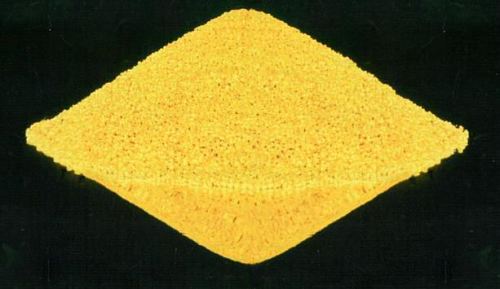
You may not remember yellowcake. Not the kind you eat. The kind that is uranium, the stuff of nuclear fission, the stuff of weapons of mass destruction, the stuff that was supposed to be in Iraq but was never found there.

Colors seem to be troublesome in talking about reasons for going to war. So maybe President Obama should have picked a different metaphor than red line. Line in the sand comes to mind. Of course, lines in the sand have a different quality. They are harder to see, and are subject to being erased by wind or water, or by a quick brush of the foot.

Maybe better to stay away from colors and lines altogether, and instead do the much harder, painful and less appealing work, leaders and citizens, of talking honestly about our strengths and limitations, the world we have and the one we want to have, and how to practically and ideally get from here to there. That would be a nice grownup change from childish colors and macho ultimata.