Bob Schwartz

Category: Politics

Republican Jewish Coalition and the Sabbath

Republican Jewish Coalition Spring Leadership 2014

It’s Saturday, the Sabbath in Jewish communities. Why is this Sabbath different than all other Sabbaths?

Because on this Sabbath Sheldon Adelson’s Republican Jewish Coalition is continuing its three-day Spring Leadership Meeting, including a galaxy of political and policy stars looking for support, prestige, power, and money, including:

New Jersey Governor Chris Christie
Ohio Governor John Kasich
Wisconsin Governor Scott Walker
Vice President Dick Cheney
Israeli Ambassador Ron Dermer
Ambassador John Bolton

It’s true that the majority of American Jews don’t fully honor the Sabbath as a time for rest, reflection, and study. It’s also true that some number of those do try in small ways to live in the spirit of the Sabbath. Where Sheldon Adelson and the RJC sit on this spectrum of Sabbath observance and honor is between them and their God and their party.

One of the things that most non-Jews and many Jews don’t recognize is the complex significance of the Sabbath. The year is filled with special days, some regarded as very serious, very important and, in the case of the High Holidays, literally awesome. The Sabbath, though, stands apart, characterized as a beloved or royalty, as a bride or queen.

The great, deep and inspiring Jewish theologian Abraham Joshua Heschel wrote an incomparable work on the nature and meaning of this. The Sabbath presents a spiritual picture of what he calls sacred time. The book is considered by readers of all faiths and even no faith an uplifting view of how we are to live in the context of such a powerful reality.

It would be presumptuous to say whether the late Dr. Heschel, who among his many achievements marched with Martin Luther King in Selma almost fifty years ago, would attend the RJC Spring Leadership Meeting. In any case, most likely not the RJC on the Sabbath.

Although the RJC will be holding its political beauty pageant today, they still might have a moment to squeeze in some Heschel. This passage from the Epilogue of The Sabbath is out of context, and not so easy to appreciate on its own. It does have something to say about space, which can be owned and fought over, and time, sacred time, in which we are all joined and connected and sharing—no matter who you are, no matter how many casinos you own, no matter how big your PAC:

Time, then, is otherness, a mystery that hovers above all categories. It is as if time and the mind were a world apart. Yet, it is only within time that there is fellowship and togetherness of all beings.

Every one of us occupies a portion of space. He takes it up exclusively. The portion of space which my body occupies is taken up by myself in exclusion of anyone else. Yet, no one possesses time. There is no moment which I possess exclusively. This very moment belongs to all living men as it belongs to me. We share time, we own space. Through my ownership of space, I am a rival of all other beings; through my living in time, I am a contemporary of all other beings. We pass through time, we occupy space. We easily succumb to the illusion that the world of space is for our sake, for man’s sake. In regard to time, we are immune to such an illusion.

The Torah and the Supreme Court: Tazria and Scalia

Women of the Supreme Court

This week the portion of the Torah read in Jewish communities is Tazria (Leviticus 12:1–13:59). This week the Supreme Court heard arguments in the widely reported Hobby Lobby case. There is a significant but not obvious connection between the two.

Leviticus is the one of the Five Books of Moses that has the least action and the most rules. Lots of rules about the behavior of the Jewish people. In the thousands of years since those rules flowed into the processes of cultural and social oral tradition, and in the thousands of years since those traditions were set down in writing, different Jewish people and communities have determined which to honor and which to ignore. Those decisions are based on what exactly one thinks these rules are: God-given and inviolable, or ancient and subject to temporizing to suit modern philosophy and life. We should not wear clothing made from two different fabrics, Leviticus says. Non-literal interpretations of this have been conceived for centuries, but it says what it says, or rather, God says what God says. But what’s so wrong about a wrinkle-free, 60/40 cotton-poly blend shirt?

The Tazria portion begins:

The Lord spoke to Moses, saying: Speak to the Israelite people thus: When a woman at childbirth bears a male, she shall be unclean seven days; she shall be unclean as at the time of her menstrual infirmity. On the eighth day the flesh of his foreskin shall be circumcised. She shall remain in a state of blood purification for thirty-three days: she shall not touch any consecrated thing, nor enter the sanctuary until her period of purification is completed. If she bears a female, she shall be unclean two weeks as during her menstruation, and she shall remain in a state of blood purification for sixty-six days.

On the completion of her period of purification, for either son or daughter, she shall bring to the priest, at the entrance of the Tent of Meeting, a lamb in its first year for a burnt offering, and a pigeon or a turtledove for a sin offering. He shall offer it before the Lord and make expiation on her behalf; she shall then be clean from her flow of blood. Such are the rituals concerning her who bears a child, male or female. If, however, her means do not suffice for a sheep, she shall take two turtledoves or two pigeons, one for a burnt offering and the other for a sin offering. The priest shall make expiation on her behalf, and she shall be clean.

 The attitude toward and treatment of this passage in a modern context ranges widely, depending on belief sets. Some express wholesale acceptance and obedience (except for the sheep and bird sacrifice). Some faithfully regard it as God’s word, but pass it through interpretive filters suitable for the times. Some see it as a reflection of ancient people making sense of the mysteries of God and life.

One of those mysteries, of course, is women. Especially for men. Especially for the strange and foreign ways that women “work”. No matter your ideology, no matter how much the passage is accepted or spun, it is not hard to read meaning. Women are different. Some of that difference renders them unclean, even if that part is functionally essential (e.g., sex, birth). That uncleanness can be fixed, but it will cost you (e.g., lambs, pigeons).

The Hobby Lobby cases (Kathleen Sibelius, Secretary of Health and Human Services v. Hobby Lobby; Conestoga Wood Specialties Corp. v. Sebelius) concern the interaction of two federal laws: The Religious Freedom Restoration Act of 1993 (RFRA), which aims to protect Americans from intrusion on their religious lives, and the Affordable Care Act (ACA) which, among other things, requires employers to offer health insurance that includes coverage for contraception. The Tenth Circuit Court of Appeals found that the religious right of companies such as Hobby Lobby, which has Christian objections to providing that coverage, overcomes the particular requirement of the ACA.

The big legal issues are complex and significant. One arises every time religion is in the mix: we protect religion in this country, both in its expression and establishment, but in a nominally secular country, that is bound to clash with civil rights that may contravene religious belief. This isn’t easy to resolve, but resolve it we do. If, for example, your religion happens to believe that people of color are lesser human beings, and you are “commanded” to treat them accordingly, you still cannot follow that faith in the public square or the marketplace.

The other big legal issue is whether a company such as Hobby Lobby is a “person” able to enjoy religious liberties in the first place. We’ve seen this come up before and will again. Citizens United is the most recent and famous case deciding that enterprises may enjoy free speech, First Amendment rights, just as you do. Then there is Mitt Romney, former presidential candidate, who will forever be identified with his own legal interpretation of the issue: “Corporations are people, my friend.”

Besides these, the Hobby Lobby case is widely viewed as being about women, because practically it is. The ACA requirement that health insurance include contraceptives for women is a practically and realistically sound policy. A large majority of women use contraceptives, either for health reasons or, more frequently, to prevent conceiving as a result of sex. Preventing conception has a number of advantages, including avoiding unwanted or unplanned pregnancies. An advantage of this is that women do have sex, and do want to avoid pregnancy. It’s that basic. And then there’s this: many of those women who want to prevent conception are having sex with men.

The transcript of oral arguments in the Hobby Lobby case shows, as usual, a deeply divided court. Beyond the interesting central arguments concerning religious freedom and the personhood of corporations, there is a subtle subtext (some might say not so subtle). To a certain extent, the law, and arguments about it, are clinical. To the greatest extent possible, questions about impact are subservient to questions about the law itself: what it says, what was intended, how it works with other laws and with the Constitution. The rule of law prevails over the rule of people, and if the impact is unfair or disproportionate but still constitutional and legal, well, change the law.

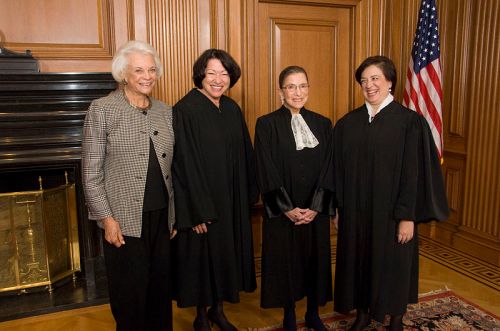
But that has never been, will never be, and can never be how it works. Everyone—judges, lawyers, litigants, citizens—comes to the table with histories, psyches, lives, all the riches and trash we can carry. That’s how a case that seems about one thing can be, at least in small part, about another. That’s how the Hobby Lobby case is about women, something the three women on the Supreme Court without question get, something the six men may or may not.

Do read the transcript of the argument and maybe a few of the almost one hundred appellate briefs filed in the cases. In the arguments, you won’t find any express misunderstanding of the lives and impact of the case on women, though you may if you read between the lines. The briefs, which come from just about every corner of American society and politics, are a little clearer on how this is about women in ways that are not just incidental.

This brings us back to Tazria. It is easy to dismiss the passage as archaic, particularly for those who have found ways to work through or around it. Similarly, you may consider the Hobby Lobby case one about important and respectable religious and legal doctrines, and it is.

It can’t be said often enough: Men don’t get it and they can’t. They don’t know what it’s like to menstruate or be capable of bearing children or of having children. They don’t know what’s it like to be treated as unclean because of all of that, and then to be hypocritically treated as enjoyable and useful for those very same reasons. They don’t know how it feels to have some very simple means of adjusting all that, and then to have those means treated as something both profound and trivial, but not important.

Men don’t know, even if they are at the pinnacle, writing scripture or dispensing justice. So pleading ignorance, a little humility, a little learning, and a little compassion might be in order.

Afghanistan Loves Russia

Hamid Karzai - Congress

Karzai and Putin sitting in a tree
K-I-S-S-I-N-G

In 1979, Russia invaded Afghanistan. The U.S. supported the insurgents who eventually chased Russia out of Afghanistan. In 1989, Russia left Afghanistan.

In 2001, al-Queda attacked the U.S on September 11. That same year, the U.S. sent troops to Afghanistan to remove the Taliban from power and to eliminate their safe haven for Osama bin Laden and al-Qaeda.

In 2004, Hamid Karzai was elected President of Afghanistan. That image above shows him addressing a joint session of Congress on June 15, 2004, with Vice President Dick Cheney and Speaker of the House Dennis Hastert applauding.

In 2011, the U.S. found and killed Osama bin Laden. Plans were made to withdraw U.S. troops from Afghanistan, but not before thousands of U.S. and other allied troops died, in the longest war in U.S. history.

In 2013, negotiations began with President Karzai for an agreement that would allow some U.S. troops to remain in Afghanistan in a support role after withdrawal. President Karzai, not wanting to appear to be in friendly partnership with the U.S., has so far failed to reach such an agreement.

Today, President Karzai announced that he supports the Russian position in Crimea, putting him in the same league as Syria, North Korea, Iran, and Venezuela. We still have troops in Afghanistan. The troops who died on behalf of President Karzai are still dead. The Afghans who died at the hands of the Russians are still dead. There are no reports yet about whether Dick Cheney or Dennis Hastert are still applauding.

There are no words to make sense of this. So instead, here is the Afghan flag, along with an explanation of the flag from the ever-authoritative CIA Factbook. Note especially the part about the Afghan flag having more changes in it than any other national flag in the 20th century. As always, a funny old world.

Afghanistan Flag

Three equal vertical bands of black (hoist side), red, and green, with the national emblem in white centered on the red band and slightly overlapping the other two bands; the center of the emblem features a mosque with pulpit and flags on either side, below the mosque are numerals for the solar year 1298 (1919 in the Gregorian calendar, the year of Afghan independence from the UK); this central image is circled by a border consisting of sheaves of wheat on the left and right, in the upper-center is an Arabic inscription of the Shahada (Muslim creed) below which are rays of the rising sun over the Takbir (Arabic expression meaning “God is great”), and at bottom center is a scroll bearing the name Afghanistan; black signifies the past, red is for the blood shed for independence, and green can represent either hope for the future, agricultural prosperity, or Islam Afghanistan had more changes to its national flag in the 20th century than any other country; the colors black, red, and green appeared on most of them.

Turkey Goes Radioactive

Erdogan and Twitter
Turkish Prime Minister Tayip Erdogan tried to close down Twitter in Turkey yesterday. Instead it exploded in his face, like a digital trick cigar.

Erdogan is miffed because Twitter is being used to disclose details about corruption, including the broadcast of phone conversations. “Twitter, mwitter,” he ranted as he blocked access.

The world noticed and, of course, tweeted. So did those in Turkey, who circumvented the ban by using an SMS text-based version.

As previous posts point out, Turkey is unlike any country in the world. Its path to modern democracy is unique and apparently unfinished. More than a bridge between east and west, it is a bridge between ancient and very modern. No nation, except perhaps for Israel, has experimented so creatively with making the past present, the past future, and the present and future past.

And, without any particular personal or filial or ancestral connection, it was for me love at first visit.

Also, even if you have no other feeling for it or reason to watch it, watch carefully. Turkey is a bellwether. If democracy and modernism proceed hand-in-hand there, there is great hope for the world, if not necessarily a replicable model. If Turkey cannot pull off that trick, we should all be concerned. Very concerned.

Erdogan has no plans to give up. But when I heard this morning’s score—Twitter 1, Erdogan 0—the song that came to mind was Radioactive by Imagine Dragons:

I’m waking up
I feel it in my bones
Enough to make my systems blow
Welcome to the new age, to the new age
I’m radioactive, radioactive

Ukraine: What’s Happening on the Weak Side?

Basketball
The weak side in basketball does not suggest weakness. It is the part of the court away from the ball. This doesn’t mean that the players there are weak or that the action there is unimportant. On the best teams, there can be almost as much happening on the weak side as there is on the strong side. Players may be running around, positioning themselves to take advantage, either by scoring or by taking away the ball. On the lesser teams, weak side players sometimes seem to drift aimlessly, or just stand around, depending on someone else to somehow work it out. If you don’t have the ball, what else is there to do?

We know exactly where the ball is in the current Ukraine crisis. And we know exactly who has the ball. The question is what the players on the weak side are doing. Are there plays carefully diagramed by the coach, practiced for just such a situation? Is there a player away from the ball, away from the basket, just waiting to heroically steal and drive all the way down court? Or are the weak side players drifting, trying to remember plays they once learned or improvise new ones?

The shot clock is running.

Ukraine Sanctions: Who Is Poking Which Bear

Bear
The most interesting message about this morning’s U.S. sanctions to protest Russian actions came from one of those sanctioned. The travel bans and freezing of U.S. assets are aimed at a handful of Putin advisers and others complicit in the Crimean takeover, but not at the highest level (including Putin) or at any businesspeople.

Russian Deputy Prime Minister Dmitry Rogozin, who is being sanctioned, tweeted this:

“Comrade Obama, and what will you do with those who have neither accounts nor property abroad? Or didn’t you think of that?”

On this day when a prominent Russian television journalist, with an atomic mushroom cloud as background, pointed out—correctly—that Russia is the only country that can reduce the U.S. to “radioactive ash,” the tweet from Comrade Rogozin is most telling.

The U.S., even more than our allies, is being poked. Taunted. “Is that the best you’ve got? You can do better than that!” The U.S. and Europe can of course do better (meaning: more severe) than that, from big business sanctions to military intervention, all of which threaten global instability.

This is the point in every fight when power has to be harnessed in the service of strategy. Russia wants nothing more than any excuse to throw away the rulebook they don’t believe in anyway. They aren’t so much bringing guns to a knife fight as brandishing guns to bring out the other guns and look like the victim. The aggressor victim.

Let’s hope or pray for our leaders to be strong, wise, unselfish, non-partisan, and honest (with us and with themselves), who can interpret the language of pokes, and can act appropriately.

Beyond Anger: How to Hold On to Your Heart and Your Humanity in the Midst of Injustice

Beyond Anger
The crisis in Ukraine is deepening, and with that lots of thought, opinion, and calls for action. It may seem like the wrong time for self-awareness and contemplation. Enough talk. This is a Nike world, so let’s just do it.

Whether it is about the Russian invasion of Ukraine or about unfairness in our own nation, our desire for justice and aversion to injustice is a good thing. But it can be so powerful and overwhelming that we easily get lost. It isn’t that we shouldn’t act decisively; it’s that in our zeal, we can be confused or overly certain about what the right decision is.

Last summer, in the face of terrible killings in India that had profound implications for Buddhist communities, Shambhala Publications published a free book you can get, Beyond Anger: How to Hold On to Your Heart and Your Humanity in the Midst of Injustice.

The publisher explains:

In July 2013, multiple bombs exploded in Bodh Gaya, India, in and around the holiest Buddhist pilgrimage site, the Mahabodhi temple that marks the spot where the Buddha attained enlightenment. In response, Shambhala Publications offers this free eBook consisting of excerpts from some of our books from a variety of Buddhist traditions that encapsulate values of love and nonviolence, which we can all practice ourselves.

You may not be a Buddhist, or care about Buddhist philosophy. You may or may not be angry about what is going on around the world, or about what some people say about how to solve the problems. You may believe that you have a better way, and you may be right. It’s just that no matter what, a different perspective can always be helpful.

In a section of the book called Conflict Resolution: Anger Is the Problem, The Karmapa, Ogyen Trinley Dorje talks about Global Conflicts, Global Solutions:

When bigger and more powerful nations step in to offer guidance to other nations, many of the same principles apply as when individuals intervene to resolve interpersonal conflicts. A sincere motivation is absolutely key, and on top of that, the intervention must be done with sensitivity and skill.

In this small world we live in, nations coexist interdependently. The actions of one country affect others deeply. Countries with more power have the potential to influence others more. I believe that with this power comes a great deal of responsibility, and that includes the responsibility not to exercise one’s power over others in pursuit of the private interests of one’s own nation….

Before you approve the actions proposed, you should be confident that they are in the best interest not only of your country, but of the world as a whole. To be a responsible, conscious citizen, it is important that you think for yourself, and take universal peace, stability, and well-being into account. Use your discernment and take a stand that serves the whole world, not just one corner of it.

Even when we are sure that the motivation to contribute positively to the well-being of the world is sincere, we also have to scrutinize the means used to pursue that aim. For example, in the name of bringing freedom to other countries, weapons are produced and wars are waged. As powerful countries themselves expand their arsenals and wage more war, the peace and stability of their own country and of the world are both placed at risk.

Again, a pure motivation needs to be applied with wisdom. I feel very strongly that war and fighting are not an effective means to bring about peace or prosperity, stability or freedom. I am certain that history will demonstrate war to be ineffective and counterproductive in the long run.

I have met many people from powerful countries who are deeply unhappy with how their leaders wield their power internationally. This seems especially common when people have failed in their efforts to urge the decision makers to pursue a more compassionate and skillful course. Some of these people become angry at their own governments. In other cases, people direct their anger at the governments of other countries.

If you find yourself angry at any government, please recollect how harmful anger is to yourself and others, and steady yourself with a firm resolve. Make an unwavering commitment to yourself that you will not allow your mind to become perturbed. Be immovable—unshakable from a peaceful state of mind.

Teach-in and Dope in the Senate

Teach-in
Yesterday some Senators, mostly Democrats, held an all-night “talkathon” on the Senate floor about climate change. It wasn’t any kind of filibuster, because there wasn’t any particular piece of legislation involved.

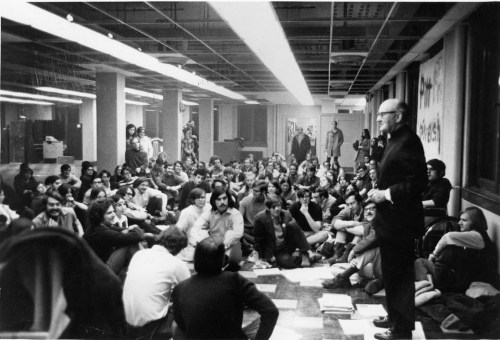
Back in the 1960s, this might have been called a teach-in, which was just this sort of session during which change-minded people would learn about the radical issues of the day. Except those people were more likely to be professors and students (or “outside agitators”), and it was more likely to take place in a college administration building than the U.S. Senate.

Two occasional hallmarks of extended teach-ins were sex and drugs. We don’t dare speculate whether any U.S. Senators were having sex during this “talkathon,” but we might just wonder if anybody snuck out to the cloakroom for a quick hit.

In the delightful and trenchant Amazon political comedy Alpha House, one of the four Republican U.S. Senators living in the eponymous D.C. house is seen relieving the tension of running for reelection by bonging it in the bathroom. (The much more serious and dangerous Netflix political series House of Cards also shows the ambitious Frank Underwood, played by Kevin Spacey, sharing joints with his Lady Macbeth of a wife. Sex of all varieties too.)

Back to the climate change teach-in. Even if no substances were involved in the event, what are the odds that any of those participants occasionally indulge, or that any of the rest of the Senate does? As a variant on the old speaker’s trick of imagining your audience without clothes, maybe it would be easier to watch the U.S. Senate if we as citizens just imagined our favorite or least favorite Senators sitting in those iconic smoke-filled rooms passing the pipe. Dope in the Senate. That would explain so much.

Putin’s Bizarro World: Simultaneously Defending and Attacking Jews

Babi Yar Momument Kiev
In the last few days, Vladimir Putin has represented himself as the enemy of anti-Semitism and therefore the friend of Jews. He says, with a selective bit of truth, that among the many constituencies who deposed former Ukraine President Viktor Yanukovych were ultra-nationalists and neo-Nazis who are themselves anti-Semitic. By this logic, Putin claims that his intervention in Ukraine is in part to restore Yanukovych and deny power to those anti-Semites.

In those same last few days, synagogues in the Ukraine have been vandalized and attacked, according to Russia by those same ultra-nationalists and neo-Nazis. Few believe that. Instead it is widely believed that Russia is responsible for this anti-Semitic mischief, which conveniently fits the Russian story line.

Jews have had a tough time in Europe, in Eastern Europe, in Russia, and certainly in Ukraine. In September 1941, about 33,000 Jews were rounded up by the Nazis in Kiev, and along with tens of thousands of others, massacred in a ravine known as Babi Yar. Say what you will about the execrable, pathological and murderous Hitler, he knew how to play the strategic blame game. He regularly blamed the Jews for just about everything, but he rarely blamed someone else for hating and attacking the Jews. That was something he wanted full credit for.

So the suggestion for Putin is this: leave the Jews out of this particular rationale. The Jewish community in Ukraine is small, and it is true that in the just-evolving democratic regime, Jews will be uncomfortably standing side-by-side with people who don’t like them. Democracy makes for strange bedfellows, or at least that’s the lesson in America. Jews have enough problems without Putin as their friend and defender. Because with friends like that…

Putin About to Win Post-Olympics Invasion Competition

Putin Olympics
In August 1936 Adolf Hitler hosted the Olympics in Germany. In March 1938 he invaded Austria. He waited about 18 months.

In February 2014 Vladimir Putin hosted the Olympics in Russia. Just a few days after the closing ceremonies, Putin is hosting ousted Ukraine President Viktor Yanukovych. Putin is also engaging in rhetoric and military movements that reasonably look like a prelude to some sort of Russian intervention in the Crimea region of eastern Ukraine, or he is at least engaging in bullying and sabre rattling.

Putin is on his way to winning the gold for post-Olympics invasions, moving Hitler down to the silver. Well done.