Bob Schwartz

Category: Politics

Trump: Who’s the Wack Job Now?

Yesterday Donald Trump called U.S. Senator Bernie Sanders “a wack job.” He has also called U.S. Senator Ted Cruz “wacko” multiple times. Along with all his other free association invective, versions of “crazy” seem to be Trump favorites.

Back in November I wrote a post gently inquiring about Trump’s mental health. Now I discover that at the same time, actual psychiatrists and psychologists were considering the same thing.

Is Donald Trump Actually a Narcissist? Therapists Weigh In! appeared in Vanity Fair. Professionals raised genuine concerns that Trump’s history and his behavior during the campaign reflect a psychological shortfall, not an ideological or policy one. A shortfall big enough to put in question his fitness for the job he is seeking (and that he believes only he can succeed at).

As an observer, it isn’t hard to see some projection possibly going on here. Setting aside the lack of civility or respect in these accusations, neither Sanders nor Cruz nor any of the other “wack jobs” Trump finds are actually mentally unhealthy. Extreme, maybe, and not to Trump’s liking, but not crazy. Trump, on the other hand, may be revealing what he sees in the mirror. Besides a President.

New York Daily News Wins Pulitzer Prize for Trump-Palin Front Page

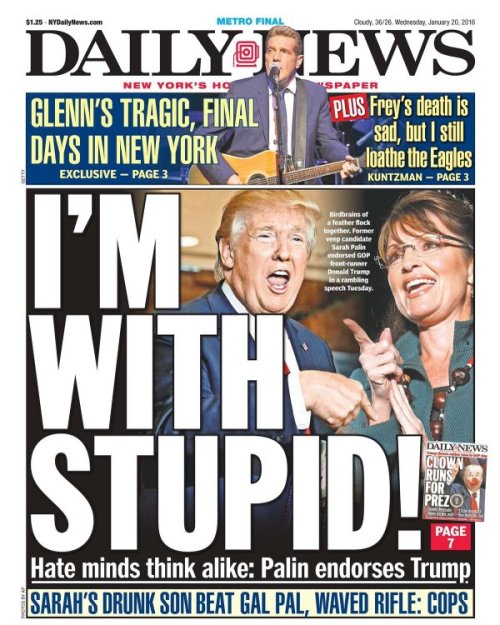
I'm With Stupid!

There is no Pulitzer Prize for newspaper front pages. And if there was, the New York Daily News is not going to win it. Too bad.

“I’m with stupid!” Sarah Palin pointing at Donald Trump. Three words. One photo. It does what media outlets continue to spend hours and pages on, while avoiding the obvious in the name of fair-mindedness—or for ratings and circulation. Or to avoid insulting a future President.

Journalism schools will not use this as a model of anything. We do need high-minded and thoughtful analysis. But once in a while, you’ve just got to cut through the blah-blah-blah and get to the point.

Donald Trump Wants to Make the Bible Great Again!

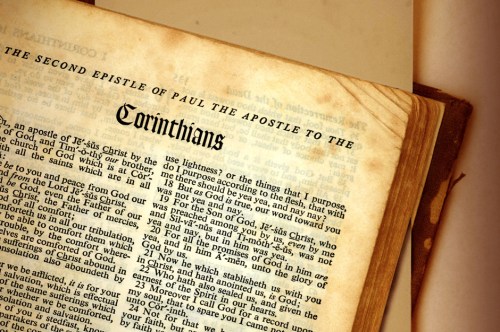
2 Corinthians

Donald Trump spoke to an assembly of students at Liberty University, one of the best-known evangelical colleges in the country. He quoted a Bible passage to show his depth of Christian faith and knowledge.

In doing that, he mispronounced the name of the New Testament book “2 Corinthians” as “Two Corinthians.” It is in fact universally called “Second Corinthians.” Anyone who has glancing familiarity with the Bible knows that, including five-year-olds in Sunday School. Every time there is a numbered series of books (such as 1 Kings and 2 Kings in the Old Testament, etc.), they are called by the ordinal number (First, Second).

Does this prove that Trump has little familiarity with the Bible? Yes. Does this prove that he is willing to cynically use faith as a tool to “close the deal” on the Republican nomination? Yes. Will this affect his support among evangelical Christians, Christians in general, or people of faith? Who knows?

Here’s the thing. It was no mistake.

Trump may not know much about the Bible or about the Presbyterian Church he identifies himself as belonging to. But he knows a “not great” situation when he sees it. Calling these books “First” or “Second” makes no sense. Plus, it’s a waste of time and breath. Everyone knows that Trump is all about making sense and not wasting breath.

And so, this is part of his strategy to make everything terrific. He wants to change the way people have been referring to the Bible for centuries.

He wants to make the Bible great again! Who can blame him? Thank you, Donald.

Bernie Sanders as John the Baptist

John the Baptist

The Democratic Party is in trouble. Politically, philosophically, spiritually, demographically. Bernie Sanders won’t save the party or win the presidency. But he is setting the scene for the party’s reform and renewal.

John the Baptist was a terrible candidate to lead a religious revolution. He was a wild-eyed radical who seemed to be crazy. His people skills needed work. But his cause found a much better spokesman and leader, who took it to the next level. And then some.

When you think carefully about the party and its recent Presidents and leaders, you look hard for real radical inspiration. Bill Clinton was affable and politically adept, but his was the politics of radical compromise, to the point of digging a rut in the middle of the road that invited neo-conservative disaster and greed. Barack Obama was genuinely inspirational, and has helped the cause of humane Americanism as much as politics would allow. But circumstances and inclination led him to solid pragmatism.

One problem with pragmatism is that it makes a terrible anthem and cause. Another is that it allows all sorts of accommodations that look to the would-be believer like nothing but surrender.

That’s where Bernie Sanders and John the Baptist come together. When the stakes are high, and the troubles are deep, that’s when you have to invoke big visions. That’s what gets people who have fallen into both practical and spiritual malaise to answer the call and start working for real change.

There are few in the Democratic Party willing or able to do this. Whether or not Hillary Clinton wins the nomination or the election, it is not her. If she wins the nomination but loses the election, the party will do some typical superficial soul searching. If she wins both, she may consolidate her power, and the power of the establishment, but the Congress will be even less effective than it is now.

Either way, it is possible that Bernie Sanders is unleashing something bigger than the Clintons or any tepid self-inquiry the party may pretend to engage in. He may not be heir to the spirit of Bobby Kennedy, but he might as well be saying this:

“There are those that look at things the way they are, and ask why? I dream of things that never were, and ask why not?”

When Bernie Sanders is done with this election, another Democratic reformer and revolutionary will come along, and another. At that point, if we are lucky, millions of previously unengaged and disappointed people may come to the party dreaming and asking “why not?” And Bernie, like John the Baptist, will have prevailed.

Hillary in Iowa 2008


Hillary Iowa State Fair

“Character is destiny.”
Heraclitus

Will Iowa 2016 be Iowa 2008 for Hillary? Here are her thoughts back in 2008, as documented in Game Change: Obama and the Clintons, McCain and Palin, and the Race of a Lifetime by John Heilemann and Mark Halperin:

The problem was, she hated it there. Every day felt like she was stuck in a Mobius strip: another barn, another living room, another set of questions about immigration (from people who were anti-) and the war (ditto). She’d get back on the plane, slump into her seat, heave a deep sigh, and grunt, “Ugh.”

The Iowans didn’t seem to be listening to her, just gawking at her, like she was an animal in a zoo. Hillary would hear from her staff the things voters were saying about her: “She’s so much prettier in person,” “She’s so much nicer than I thought.” It made her ill. She found the Iowans diffident and presumptuous; she felt they were making her grovel. Hillary detested pleading for anything, from money to endorsements, and in Iowa it was no different. She resisted calling the local politicos whose support she needed. One time, she spent forty-five minutes on the phone wooing an activist, only to be told at the call’s end that the woman was still deciding between her and another candidate. Hillary hung up in a huff.

“I can’t believe this!” she said. “How many times am I going to have to meet these same people?”

Over and over, she complained about the system that gave Iowa so much power in selecting the nominee. “This is so stupid,” she would say. “So unfair.” She bitched about Iowa’s scruffy hotels and looked for excuses to avoid staying overnight. But among the sources of her frustration and bewilderment, the absence of connection was paramount. “I don’t have a good feeling about this, guys,” she told her staff on the plane. “I just don’t have a good feeling about this place.”

Why should the President be born in the United States anyway?

We are asking the wrong and less interesting question about the Constitution and presidential qualification.

A lot of people are talking about Ted Cruz’s birth (the place, not the biological event). The better question is whether the requirement, however interpreted, is in our best interest.

It isn’t. There are plenty of brilliant and capable non-native American citizens who would be terrific at trying to run this country with some vision and imagination. (Though most of them are too smart to want to get involved in the thankless insanity we are now witnessing.)

We have rules, and if any rules deserve respect, the constitutional ones do. But just because it’s in the Constitution doesn’t mean it’s the best idea.

I am not suggesting that we amend the Constitution, especially not for Ted Cruz. But we should at least be talking about maybe expanding the talent pool. Because if most of the current crop of candidates is what we get when we limit ourselves to natural born Americans, we could definitely do much better.

The History of My Sweater Vests

Sweater

A number of years ago, I wore buttoned sweater vests for a while. They were kind of colorful and designed, and I thought pretty cool. Not everybody liked them, not everybody who mattered liked them, but I did.

Then buttoned sweater vests disappeared. In their place were the equally traditional pullover sweater vests. So I swung that way, mostly solids in the core colors (grey, brown, blue), but a few with designs. It went like that for years, though I never gave up looking—mostly unsuccessfully—for the next generation of buttoned ones.

The low point was probably Rick Santorum attempting to “rock” his pullover sweater vests during his 2012 campaign for President. Every time I went out wearing mine, I was moderately embarrassed, as people affirmatively mentioned Santorum when they saw me. He and I share nothing, then or now, except our belief in sweater vests. This didn’t stop me from wearing them.

Buttoned sweater vests arrived again this past year. Actually, all kinds of vests arrived on the racks, along with three-piece suits. I was able for the first time in a while to have some new and attractive buttoned sweater vests to wear casually, or under a sport coat, or whatever. Awesome and attractive, to me at least. Others, as mentioned above, are not so sure. Or are vocal dissidents. Oh well.

The photo above shows an example of one of my new sweater vests. That is not me, just some model for Macy’s, but you get the idea. Honestly, I think I carry it off just as well. My watch isn’t that big or clunky, but I can cock my left eyebrow just as insouciantly. Of course, he got paid for wearing his, while I had to pay for mine. Totally worth it.

Two Kinds of Conservatives: The Reasonable and the Cowardly

There are two kinds of conservatives.

One says that we might take a pause, even a small step back, while we consider how to boldly move forward.

The other says that we should take a giant step back and stay there, because that is where the successful future lies. Boldly going back where others have gone before, with mixed results.

The first kind are rare, are not to the liking of some, and are not appropriate for all circumstances, especially ones that call for immediate forward thinking. Overall, though, it can be seen as a reasonable approach.

The second kind may be disguised to look bold, but are actually timid, even cowardly. If their way looks like retreat, that’s because it is. It is also the kind of conservatives that are dominating much of our national discussion these days.

So the next time you hear one of those conservatives promoting back to the future, think of them as defeatists, cowards rather than heroes. Because they want support for their plans to actually just surrender.

“Wrong Direction” Is the Wrong Question: A Nation Lost

GPS

Seventy-five percent of Americans say the country is moving in the wrong direction. But that isn’t the problem they actually perceive. It isn’t that they think we should go East when we’re heading West. It’s that, like an unprogrammed GPS, we have no idea where we want to go.

Americans love their GPS. They love it not because it can tell heading North from South; any compass can do that. They love it because when you put in a particular location, it will, mostly, direct you there. But that presupposes that you have a particular destination in mind.

America was least lost in the years following World War 2. There had been two very specific objectives, both of which had been achieved. We wanted to restore a failed economy and introduce renewed prosperity. Done. We wanted to defeat the most evil threat the world had ever known. Done.

We proceeded on autopilot for decades, though there were bumps on the road. It was about prosperity and freedom. When there were obstacles to either, we eliminated or overcame them. There were recessions here and there, but they passed. There was global Communism, which we fought wherever we found it, and found it sometimes where it wasn’t.

Then some things happened. A new generation was born, which had no native knowledge of any of that. A new economic generation was born, with money machines on a scale that dwarfed anything in history. A new technological generation was born, transforming the nature of human experience. A new threat to freedom and security emerged, though it didn’t much look like the Communism we had come to know, hate, and fight. Whereas only two countries had world-destroying weapons after WW2, the list was now long and growing.

And then, on top of all that, the prosperity we had depended on for more than sixty years was put into question. It wasn’t that it was taking a break. Maybe it would never come back again, ever, at least not the way it had been.

Which brings us back to the ‘wrong direction” question. If we say that 20th century-style prosperity and that freedom and security are what America is living for, is our personal and national direction, there is nothing wrong with that. But what if that is something we can’t program into our national GPS because it is not a destination we can reach, at least not fully and unconditionally?

We can keep saying we are moving in the wrong direction. Politicians and leaders are more than happy to exploit this, telling us who to blame and how they can fix it. But maybe we are lost, and should admit it, and should spend our energy figuring out, very specifically, without vague ideas of “prosperity” and “freedom”, where exactly we want to go, and then how we might get there.
The Unasked Simple Question About Hillary’s Emails: Why the Private Server in the First Place?

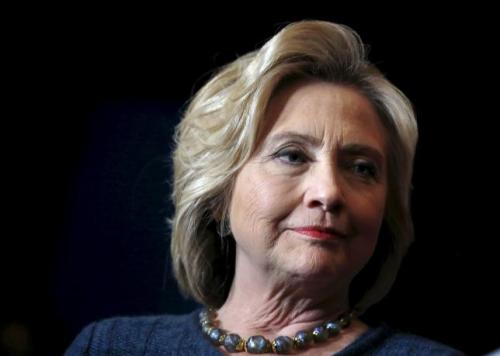
U.S. Democratic presidential candidate Hillary Clinton listens to her introduction at a campaign event in Sioux City, Iowa, United States, January 5, 2016. REUTERS/Jim Young

We are lost in the tall weeds of questions about the emails from Hillary Clinton’s private server. Did a particular email contain classified information? Was it classified at the time it was sent or received? Did she know it or should she have known it?

All of which ignores an early question that is not repeated often enough: Why did she have a private email server in the first place? The early answers vaguely had something to do with convenience, or multiple devices, or a bunch of other explanations—none of which should be satisfying to fair-minded observers (not to mention partisan opponents).

It is a simple question, with a reasonably simple answer. She wanted to have maximum control of her email communications while she was Secretary of State. Which, while it completely transgresses the principle of relatively transparent and accountable government, is completely understandable. If you were in her position, the country’s top diplomat, but also a controversial politician aiming to finally become President of the United States, wouldn’t you want to reduce the risk of being misunderstood—or worse, being perfectly understood?

Of course if she did say exactly that, that it was done entirely to keep maximum control, she would be more than lambasted. She would be done, or close to it. So that isn’t how she answers. And now, the question is supposedly settled, so it isn’t asked much anymore, if at all.

But maybe it should.