Bob Schwartz

Category: Music

Baseball: You’ve Gotta Have Heart

Damn Yankees - Heart

With the World Series tied at 1-1, it’s a good time to look back to the baseball musical Damn Yankees. Its most famous song, sung in the clubhouse of a losing team, is Heart. (The same trope appears in one of the only really great football movies, The Replacements. Coach Jimmy McGinty (Gene Hackman) is asked by a reporter the secret to his ragged team of replacement players. He just pounds his chest and simply says “Heart”.)

So whether you’re an Indians fan, a Cubs fan, or no fan of baseball whatsoever, here’s some encouragement. You’ve gotta have…. Well, you know.

You’ve gotta have heart
All you really need is heart
When the odds are sayin’ you’ll never win
That’s when the grin should start

You’ve gotta have hope
Mustn’t sit around and mope
Nothin’s half as bad as it may appear
Wait’ll next year and hope

When your luck is battin’ zero
Get your chin up off the floor
Mister you can be a hero
You can open any door, there’s nothin’ to it but to do it

You’ve gotta have heart
Miles ‘n miles n’ miles of heart
Oh, it’s fine to be a genius of course
But keep that old horse
Before the cart
First you’ve gotta have heart

Rickroll Zazen

Rickroll Zazen

To understand this, you need to know a little about two things: Zen and the 1980s pop star Rick Astley.

The centerpiece of Zen is zazen, sitting meditation, and the center of that is shikantaza, just sitting. Sitting without mantra or visualization or other objective technique. Just sitting and breathing. If thoughts arise, let them go.

In his great but now out of print Approach to Zen (incorporated into his later, greater and available Opening the Hand of Thought, Kosho Uchiyama Roshi included a very primitive but excellent line drawing to represent how zazen works.  After reading countless explanations, this drawing still says it as well as any other description:

Uchiyama Zazen

You sit. Along the way you think about a. Then you return to just sitting (Z). You think about b. Then you return to just sitting (Z). You think about c, apparently a lovely woman or whatever. Then you return to just sitting (Z). It is both simple and hard.

Rickrolling is a cultural phenomenon surrounding pop star Rick Astley. In 1987, he had a huge hit with the track Never Gonna Give You Up. It was the heyday of MTV, so naturally there was a video.

Sometime around 2007, something happened with the video for Never Gonna Give You Up. It began showing up as a surprise at completely unlikely and inappropriate moments. You would click on something, but instead it would be Rick. Rickrolling continues to this day.

Because of this, Rick Astley remains one of the most recognized 1980s pop music icons, even for people who have no idea who he was. He just released his first album in years. And it was reading about him and that new album that got me started.

You cannot read about Rickrolling, let alone hear the track or view the video, without getting Never Gonna Give You Up stuck in your head. Which is not convenient if the very next thing you are doing is zazen. As a regular practitioner with a complex life, I’ve had to put some very serious things out of mind when I sit. But Rick Astley, for a few minutes, was as stubborn and sticky as it gets.

Above, borrowing from Uchiyama Roshi’s drawing, you will see what Rickroll zazen looks like.

Note: For those who don’t know the video (it has about 250 million views on YouTube) here it is. And no, you are not being Rickrolled.

Poem, Joke, Etc.: Confused Birds

Confused Birds

These birds are confused
Not angry
Wondering where
The cold winds are.
Exulting in
Extended summer.
What’s time to a bird
Or me?

The line “What’s time to a bird” is borrowed from a favorite joke with a surprisingly philosophical punch line. It goes something like this:

A guy is driving along a country road. He sees a farmer under an oak tree, holding up a pig so the pig can eat acorns. The guy stops. “You know,” the guy says, “it would be a lot easier and take a lot less time if you just shook the tree and let the acorns fall to the ground.” “Maybe,” says the farmer, “but what’s time to a pig?”

More about birds:

In the sky a bird was heard to cry.
Misty morning whisperings and gentle stirring sounds
Belied a deathly silence that lay all around.
Hear the lark and harken to the barking of the dog fox gone to ground.
See the splashing of the kingfisher flashing to the water.
Grantchester Meadow, Pink Floyd

“Well, then, just what does it mean that everybody has the Buddha Mind?…in the course of listening to my talk, if a dog barks outside the temple, you recognize it as the voice of a dog; if a crow caws, you know it’s a crow…you didn’t come with any preconceived idea that if, while I was talking, there were sounds of dogs and birds, children or grown-ups somewhere outside, you were deliberately going to try to hear them. Yet here in the meeting you recognize the noises of dogs and crows outside and the sounds of people talking… the fact that you recognize these things you didn’t expect to see or hear shows you’re seeing and hearing with the Unborn Buddha Mind.”
From Bankei Zen: Translations from the Record of Bankei

Respected Political Journalist John Heilemann Calls Trump a Lunatic

Eclipse

You lock the door
And throw away the key
There’s someone in my head but it’s not me

John Heilemann is one of the most respected, talented and fair-minded political journalists in America.

He and his partner Mark Halperin  have written two of the most insightful and entertaining presidential campaign books of all time: Game Change: Obama and the Clintons, McCain and Palin, and the Race of a Lifetime  and Double Down: Game Change 2012. They are the Managing Editors of Bloomberg Politics. They have a weekly show about the campaign on Showtime called The Circus: Inside the Greatest Political Show on Earth. They have a daily show for Bloomberg Politics that airs on MSNBC called With All Due Respect.

It was on that show that something extraordinary happened yesterday. It was a tiny moment, one that could go unnoticed and unremarked. Talking about Donald Trump and the week he has had, Heilemann called Trump a lunatic.

One possibility is that despite the overwhelming evidence of a career marked by even-handed reporting, Heilemann has all along been a substandard journalist with a secret partisan agenda. The other possibility is that Heilemann is a great professional journalist who just finally had enough and could not avoid speaking the obvious.

In the event, hearing the word brought to mind the song I think about any time the word lunatic pops up, Pink Floyd’s Brain Damage from Dark Side of the Moon. It is the penultimate track on the album, leading into the closing Eclipse. The song is inspired in part by the tragic story of original Pink Floyd member Syd Barrett, whose genius was paired with and compromised by mental illness.

This may have absolutely nothing to do with the presidential campaign and election. Then again…

The lunatic is on the grass
Remembering games and daisy chains and laughs
Got to keep the loonies on the path

The lunatic is in the hall
The lunatics are in my hall
The paper holds their folded faces to the floor
And every day the paper boy brings more

And if the dam breaks open many years too soon
And if there is no room upon the hill
And if your head explodes with dark forebodings too
I’ll see you on the dark side of the moon

The lunatic is in my head
You raise the blade, you make the change
You re-arrange me ’til I’m sane
You lock the door
And throw away the key
There’s someone in my head but it’s not me

And if the cloud bursts, thunder in your ear
You shout and no one seems to hear
And if the band you’re in starts playing different tunes
I’ll see you on the dark side of the moon

Music of Other Tables

Breakfast

Music of Other Tables

Half listen so
Duets from other tables
Are sounds minus meaning
Words to notes
Scales of breakfast
And lives.

Music: Calling All Angels

Calling All Angels

The last post discussed asking angels to intercede on behalf our attempts to turn as a new year (Rosh Hashanah) begins. Whether or not you believe in angels, whether or not you believe they have any influence, it never hurts to ask.

Here is a favorite angels song, Calling All Angels, written by the great Jane Siberry, performed by Siberry and the equally great KD Lang.

Calling All Angels

Santa Maria, Santa Teresa, Santa Anna, Santa Susannah
Santa Cecilia, Santa Copelia, Santa Domenica, Mary Angelica
Frater Achad, Frater Pietro, Julianus, Petronilla
Santa, Santos, Miroslaw, Vladimir and all the rest

A man is placed upon the steps and a baby cries
High above you can hear the church bells start to ring
And as the heaviness, oh, the heaviness, the body settles in
Somewhere you can hear a mother sing

Then it’s one foot, then the other as you step out on the road
Step out on the road, how much weight, how much?
Then it’s how long and how far and how many times
Oh, before it’s too late?

Oh, and every day you gaze upon the sunset with such love and intensity
Why?
It’s ah, it’s almost as if you could only crack the code then you’d finally understand
What this all means

Oh, but if you could, do you think you would trade in all
All the pain and suffering?
Oh, but then you’d miss the beauty of the light upon this earth
And the sweetness of the leaving

Calling all angels, calling all angels
Walk me through this one, don’t leave me alone
Calling all angels, calling all angels
We’re tryin’, we’re hopin’, we’re hurtin’, we’re lovin’
We’re cryin’, we’re callin’ ’cause we’re not sure how this goes
Music: Calling on John Coltrane

A Love Supreme

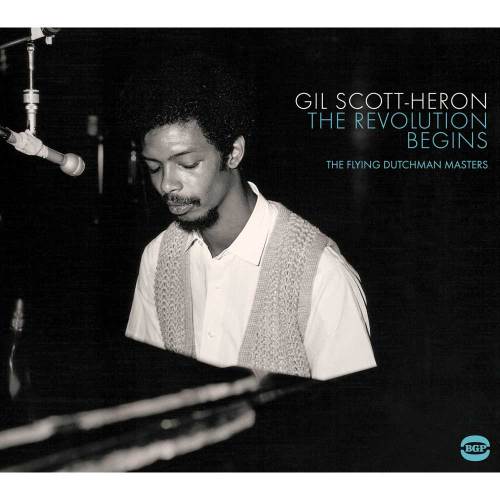
The last post was about Gil Scott-Heron’s Lady Day and John Coltrane. Realizing now that some (most?) readers were not familiar with Coltrane, here’s some background and suggestions.

Music fans love to debate “the best”. There is no debate here. Coltrane was the best saxophonist, and some would argue, jazz player. Along with his gifts as an artist, part of that is how spiritual his music is.

He came by that spirituality when, in the midst of his too short career, he kicked a heroin habit by finding a Higher Power. The truth is that he had always been channeling that Higher Power. He just hadn’t been aware of it.

His most overtly spiritual work is A Love Supreme. For those who are not jazz listeners, this may be a bit challenging for a first stop. But at some point, please give this a listen. Bach and centuries of holy music have nothing on Coltrane.

A good place to start gently is the album My Favorite Things, which opens with the title track. All due respect to Julie Andrews (who I do like), this is the famous Sound of Music song in a whole other cosmos. While you’re there, stick around for the next track, a slowly lyrical Every Time You Say Goodbye, a perfect piece of love’s longing, Coltrane style.

Music: Lady Day and John Coltrane

Gil Scott-Heron 2

They’ll wash your troubles,
Your troubles, your troubles
Your troubles away!

Musician and poet Gil Scott-Heron was unlike any artist of the modern era. He is a jazz artist identified as a “godfather of rap” (he rejected that), his song The Revolution Will Not Be Televised is quoted somewhere every day, and his vision of the black experience is as current and insightful as any.

But this isn’t about him. It’s about one of his songs, Lady Day and John Coltrane, that celebrates the power of music to heal and change our lives, especially when we are giving up. If you don’t regularly take that prescription, please consider it.

Lady Day and John Coltrane

Ever feel kinda down and out, you don’t know just what to do
Livin’ all of your days in darkness let the sun shine through
Ever feel that somehow, somewhere, you’ve lost your way
And if you don’t get help quick you won’t make it through the day
Could you call on Lady Day,
Could you call on John Coltrane
Now ‘cause they’ll
They’ll wash your troubles
Your troubles your troubles
Your troubles away!

Plastic people with plastic minds are on their way to plastic homes
No beginning there ain’t no ending just on and on and on and on and on, it’s
All because they’re so afraid to say that they’re alone
Until our hero rides in, rides in on his saxophone.
Could you call on Lady Day,
Could you call on John Coltrane
Now ‘cause they’ll,
They’ll wash your troubles,
Your troubles, your troubles
Your troubles away!


Hillary Clinton Has the Rockin’ Pneumonia and the Boogie Woogie Flu

Huey "Piano" Smith

Hillary Clinton and her campaign aren’t known for their grasp of pop culture. Back in 1992, the Clintons chose Fleetwood Mac’s Don’t Stop Thinking About Tomorrow as the campaign theme song. As much as you might like Fleetwodd Mac, by that time it wasn’t the height of hip. (Note however, that Hillary never did stop thinking about tomorrow. It’ll soon be here.)

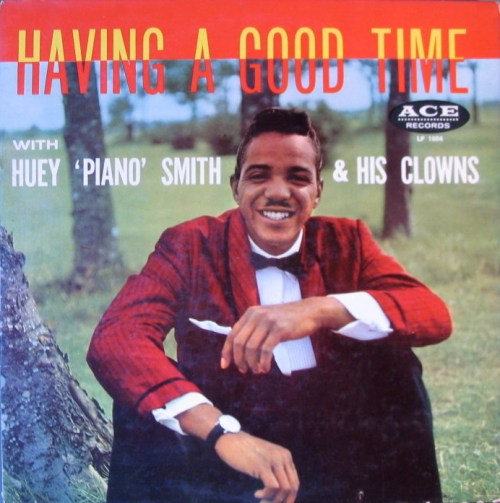
Admittedly, Huey “Piano” Smith’s R&B classic Rockin’ Pneumonia and the Boogie Woogie Flu is not exactly new school. But it never stopped being cool.

So don’t you think the whole Hillary pneumonia thing could be going much better for her if she had just explained:

It’s true, my doctor told me on Friday that I had the rockin’ pneumonia and the boogie woogie flu. Yes, I wanted to jump but I was afraid I’d fall. But now, I wanna scream, I want you all to know that I feel better than fine.

I don’t know about you, but that’s all the medical report I would need.

Tuning Fork

Tuning Fork

Tuning Fork

Strike and resound
A single perfect note
Against which
Our poor play is practiced.
The texts are ancient
Thoughts in a case
Replaced by the
Younger and fresher.
This tuning fork
Centuries old.
Bring me a gadget
A gizmo
To give me my pitch.
Ah but
The warm simple beauty
Of the vibrating metal
Is the practice
Before the practice.