Bob Schwartz

Category: Movies

Actor Is Typecast As Satan

Satan
The media is all atwitter over the observation that the actor who plays Satan in a new Bible series looks a lot or something like President Obama.

The Associated Press got a response from the producers:

Mark Burnett and Roma Burnett said Monday the Moroccan actor who played Satan in the History channel series has played Satanic characters in other Biblical programs long before Obama was elected president.

First, separate from any questions about motives or about whether Mohamen Mehdi Ouazanni does look like Obama, let’s quickly get past a gap in this reply. If an actor looks like the President, and you have some creative notion that this helps make it a good casting choice (for artistic, political or publicity reasons), his having played Satan before just might be a bonus. Or if his experience as Satan is the driving reason, then the look-alike feature might be a bonus. The earlier Satan experience doesn’t fully dismiss any possibilities.

Beneath all this is a commentary on the craft and business of acting. From the producers’ comments, it appears that Mohamen Mehdi Ouazanni is, or is on his way to, being typecast as Satan. He played the part before, he is playing it now (and getting lots of attention for it), and may then be asked to play it again. If Charlton Heston had done a few more Moses movies after The Ten Commandments, what would his later career have looked like? Would he have been waiting around for the next Moses movie, instead of giving us Ben Hur, Planet of the Apes, Soylent Green, etc.? No major actor has ever reprised the role of Jesus, either, because besides the fact that there is no sequel to the story, it is the kind of part that is hard to shake.

There is a silver lining, though. Whether or not there are other Satan parts in this actor’s future, there is no doubt that in years to come, we will be seeing all kinds of films about Barack Obama. Some will even cast Obama as a metaphorical devil—a part he already plays in lots of political punditry. When those films are finally made, there will be a call for actors, and maybe having played Satan will be a real qualification.

Another Reason We Need Assault Weapons

Attack of the 50 Foot Woman
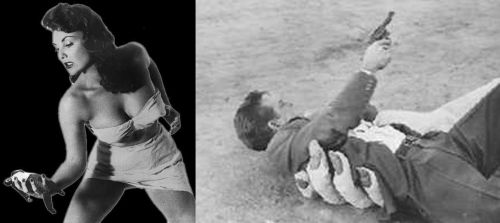
The 1950s were the reel golden age of science fiction movies. Consider the shots above from Attack of the 50 Foot Woman (1958). It is the story of a rich socialite turned into a giant woman by a giant alien. She seeks revenge on her cheating husband, something made easier by the fact that she is…50 feet tall. (She is also pretty sexy, wrapped in what looks like a few very big sheets, needed because her designer socialite clothes did not grow.)

The sheriff discovers that a pistol is no match for the giant alien, and as you can see, her husband learns that his pistol is useless against her. (She is ultimately stopped when the sheriff shoots an electric transmission tower she is standing next to.) This is an old story and a lesson we should have learned by now: pistols are not effective against aliens, monsters, people turned into monsters, etc.

Assault rifles may do no better, but at least they might give you a fighting chance and a little extra time to escape. The NRA, for some reason, has failed to make this argument. But it is both appealing and rational. The chances of the government turning against all its citizens may be small, but it could happen, and the NRA believes it and promotes the possibility. The chances of alien invasion, experiments gone rogue, the sudden appearance of strange new enemies may be small, but it could happen too.

In that case, would you rather be carrying a pistol, rifle, or shotgun, or do you want some serious firepower? You know the answer.

The Ides of March

Julius Caesar - Mercury Theater
Today is the Ides of March, which is the 15th of March in the Roman calendar. (The Ides are a monthly mid-point, between the Nones early in the month and the Kalends on the first day.)

It is the day of Julius Caesar’s assassination in 44 BCE, made forever famous by Shakespeare’s play Julius Caesar, where the Soothsayer warns him (twice) to “beware the ides of March”. It did turn out to be a bad day.

Above is a scene from the Mercury Theater’s legendary 1937 presentation of the play in modern dress and sensibility, set by director Orson Welles in Fascist Italy. The theater company was organized by Welles and John Houseman, and this was their first play. In the photo above, Marc Antony (George Coulouris) kneels over the lifeless body of Julius Caesar (Joseph Holland).

Welles was only 22 at the time, but already a rising star. The Mercury Theater, intended as an independent answer to the restrictions placed on Welles by the Federal Theater Project, was really the launch pad for his fame and infamy as a world class artistic iconoclast.

For an entertaining look at this Mercury Theater production and company, at Orson Welles, and at the promises and disappointments of being young, in love, and working for an impossibly wonderful/horrible genius, see Richard Linklater’s Me and Orson Welles (2008).

The movie is underrated and did very poorly at the box office (as did most Welles films). It is a fully-realized and charming fictionalization of a real cultural milestone, with  recreated scenes from the Julius Caesar production and great ensemble acting. The star turn, appropriately, is from Christian McKay as Welles. There have been other attempts to play this part, which is a double challenge, since the Welles persona is so huge and Welles himself did such a good job of playing Orson Welles. McKay is near perfect, for the part and the story; maybe not “Daniel Day Lewis is Abraham Lincoln” (which he was), but still impressive from such a young actor. McKay is currently listed in five movies in production, which he deserves to be.

Christian McKay - Me and Osrson Welles

There is no special Roman designation for the 16th of March, so enjoy the ides while you can.

Black Friday

The shopping day after Thanksgiving, Black Friday is so named because for retailers, it can mean the difference between loss and profit–being in the black.

Like it or not, the Christmas shopping season is an important contributor to this consumer economy. But the term is an overwhelmingly bleak one, particularly in relation to Christmas. In all other contexts, Black Friday is historically associated with financial crises, weather disasters, fires, military attacks and massacres. Rather than concerning Christmas and the birth of Jesus, the death of Jesus is marked by what is called Good Friday–also known as Black Friday.

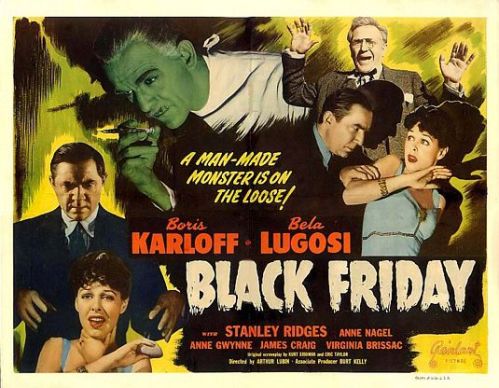
And then there is the 1940 horror movie (see above)…

Compassion for Karl


In the movie Runaway Jury, based on the John Grisham novel, a gun company is being sued for the death of a man in an office shooting. Gene Hackman plays Fitch, a jury consultant who specializes in using dirty tricks to extort the “correct” verdict out of jury members. The chief executive of the gun company has paid Fitch big bucks to “buy” a verdict. But the trial doesn’t seem to be going well:

Mr. Fitch, I looked into the faces of those jurors. I didn’t see any friends sitting there. Now where the hell are we with securing my verdict?

It’s a cat-and-mouse game. We’re about to change all that…

You just be a little more cat, a little less mouse.

That’s Karl Rove above, honored by fellow conservative and conceptual artist Stephen Colbert with the sculpture “Ham Rove.”

Like Fitch, Rove promised some very rich men a verdict. And like Fitch, he ultimately didn’t deliver. A little too much mouse.

Unlike the scripted moment above, we don’t know what the conversations have been like in the aftermath of the election. We would like to know, and are sure that is much, much more dramatic than the Grisham book or film.

Rove’s anticipation of that moment is probably what explains his now-legendary appearance on Fox News last night, immediately after Fox called Ohio and the election for Barack Obama. Rove simply refused to believe it, babbling and furiously calculating in a scene worthy of a tragic absurdist mathematical drama. He was undoubtedly imagining the conversations he would soon have to have with some very powerful and disappointed people, and he genuinely appeared on the verge of a breakdown. Having questioned the capability and integrity of the very news channel that has served him, the decision desk at Fox was brought in to assure him that they were right to call the race.

This led—and this is completely earnest—to feeling a little sorry for Karl Rove. Strategists lose, whether in business, war or politics, and there is always a price to pay. Some learn from it, some don’t. There is no indication of what, if anything, Karl Rove has learned. But when the stakes are very high, that loss can leave “the smartest people in the room” as the loneliest people in the world. And that’s sad.

Of course, Rove’s response to such sentiment might be that he doesn’t need anyone’s pity and that there’s no crying in politics. Okay then, but for a moment, it did look like that was exactly what was about to happen on Fox last night. Or maybe not.

This closes with good news. Maybe juries can be bought, maybe they have been. After Citizens United, we have been right to worry that maybe elections were now going to be regularly bought. We still have to fix that, but in the meantime, the result of this particular election is that floating on oceans of money, democracy is alive and well.

Beautiful Quantum Scribbles


In Robert Wise’s classic sci-fi movie The Day The Earth Stood Still, Klaatu (Michael Rennie), a visitor from distant space, has come to earth to warn world leaders that their conflicts endanger universal order and must end. To enlist the help of the smartest scientist, Dr. Barnhardt (a fictionalized Albert Einstein played by Sam Jaffe), Klaatu visits the professor’s house. He finds an unsolved problem in celestial mechanics on the blackboard, and quickly corrects the equations. He is interrupted by the housekeeper Hilda:

HILDA
How dare you write on that blackboard! Do you realize the Professor has been working on that problem for weeks?

KLAATU
He’ll catch on to it in no time now.

HILDA
How did you get in here? And what do you want?

KLAATU
We came to see Professor Barnhardt.

HILDA
Well, he’s not here. And he won’t be back till this evening.
(Klaatu scribbles a note and hands it to Hilda.)

KLAATU
You might keep this. I think the professor will want to get in touch with me.

Hilda’s glance wanders to the blackboard and she picks up an eraser, debating whether to erase Klaatu’s corrections.

KLAATU
I wouldn’t erase that. The Professor needs it very badly.

Even if you are not a physicist, and are simply intrigued by the arcana that only geniuses and space aliens understand, this is a memorable moment.

People who are comfortable living in the old high school classroom picture of a determinate universe full of atoms and their constituent protons, neutrons and electrons have another think coming. In the quantum world beyond simple particles, anything is possible and nothing is certain, if certainty itself exists. In the view of some, in quantum physics are hints of rough sketches of the face of God, as well solutions to practical matters such as how to teleport information across the universe beyond light speed. Those of us of lesser minds struggle to grasp even the most basic concepts, while the greater minds solve puzzles beautiful in their incomprehensibility.

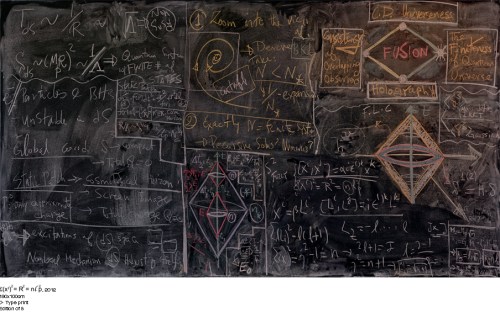
Spanish artist Alejandro Guijarro has combined two things at polar ends of research and education. On one end he has taken detailed photos of blackboards, a thinking and teaching tool so primitive that some are surprised to find them still around, and others have never seen one. On the far end, these particular blackboards belong to some of the world’s leading quantum thinkers. Guijarro traveled to institutes and laboratories around the world to record the smudged, chalk-streaked evidence of some of the world’s most sublime calculations…and erasures.

Romney Needs Women


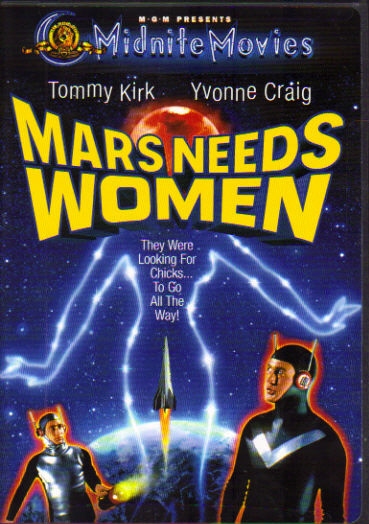
Mitt Romney’s talking about being handed “binders of women,” a quote from the second Presidential debate, is not on its face all that funny, no matter how much it’s gone viral. But as a signal of a bigger picture, it seems to people meaningful.

In the wonderful depths of Mad Men in dealing with personal and social issues of the 1960s, the very first episode of the Emmy-winning series is on point. The execs at Sterling Cooper are about to meet prospective client Menken’s Department Store. In advance, Don Draper asks whether there are any Jews at the agency, and Roger Sterling laughingly doubts it. But at the meeting, there appears “David Cohen from the Art Department”, a nebbish who Roger has actually dug up from the mailroom.

This probably isn’t exactly how it went when Romney realized that as the new chief executive of Massachusetts state government, it would be appropriate to fill some of the jobs with qualified women. But what people are keying on is that it sounds a little like that. Do we have any women around here who are really qualified for these demanding jobs? Does anybody here know where we start to look for them? Hence, the binders of women.

By 2003, Massachusetts had been known for more than two centuries as the home of extraordinary women. While Abigail Adams was long gone, she should have offered a hint of the possibility that one of the most educated and vital states in America might include women of note and achievement. If you believed that they were actually out there, and weren’t some rare and exotic creature like a unicorn. And if you had a clue where to look—outside the mailroom or the binders.

Soylent Green, My Friend, Is People


Mother Jones has already changed the trajectory of the Presidential campaign with the “47%” video. It’s latest video find may not have the same effect, but it is still revealing.

It comes from a promotional Bain Capital CD-ROM from 1998. Along with other artifacts of the Bain culture at the time, it includes a video of Mitt Romney from 1985 explaining the Bain business model:

Bain Capital is an investment partnership which was formed to invest in startup companies and ongoing companies, then to take an active hand in managing them and hopefully, five to eight years later, to harvest them at a significant profit…The fund was formed on September 30th of last year. It’s been about 10 months then. It was formed with $37 million in invested cash. An additional $50 million or so of what I’ll call a call pool, which is money that we can call upon if the deals are large enough that they require more than a $2 or $3 million dollar initial investment. Why in the world did Bain and Company get involved in this kind of a business? We’re not particularly noted for having years and years of experience in financing. Three reasons. We recognized that we had the potential to develop a significant and proprietary flow of business opportunities. Secondly, we had concepts and experience which would allow us to identify potential value and hidden value in a particular investment candidate. And third, we had the consulting resources and management skills and management resources to become actively involved in the companies we invested in to help them realize their potential value.

It’s the “harvest” line that is getting the most attention, presumably because it suggests to some that the companies are viewed primarily as abstract opportunities that are optimized for profit, rather than enterprises that make particular things and where particular people work and build their lives.

Fans of sci-fi movies are burdened by seeing the “real” world through the lens of those films. So this line flashed two iconic and unforgettable scenes.

One is from The Matrix (1999), when we first see the humans being used as living batteries to power the world of the Matrix.

The other is from Soylent Green (1973). In 2022, the desperate population of overcrowded New York City is being kept alive by the nutritional drink Soylent Green. At the end, we learn the dark secret of Soylent Corporation, as screamed by Charlton Heston (spoiler alert): “Soylent Green is people!” Yes, it is processed from the oversupply of corpses.

All this probably has nothing to do with Bain Capital harvesting companies. Somehow, though, “Corporations, my friend, are people!” just got mixed up with “Soylent Green is people!”, Charleston Heston got mixed up with Clint Eastwood and Mitt Romney.

As noted in a post a few days ago, this campaign may not just be threatening to drive us—candidates and voters—mad. It may have done that already.

Political Break: Mitt Romney and Bat Boy


“Sometimes I think I must go mad.”

That’s a quote from the Marx Brothers movie Horse Feathers (1932). And that’s how a lot of us feel right about now, after months of campaign craziness and days of political bombshells. There will be plenty of time for insightful analysis and cogent commentary. But just for a moment, a break.

Here’s something from the movie:

Retiring President of Huxley College: I am sure the students would appreciate a brief outline of your plans for the future.

Professor Quincy Adams Wagstaff (Groucho Marx): What?

President: I said the students would appreciate a brief outline of your plans for the future.

Wagstaff: You just said that! That’s the trouble around here: talk, talk, talk! Oh, sometimes I think I must go mad. Where will it all end? What is it getting you? Why don’t you go home to your wife? I’ll tell you what, I’ll go home to your wife and, outside of the improvement, she’ll never know the difference. Pull over to the side of the road there and let me see your marriage license.

President: President Wagstaff, now that you’ve stepped into my shoes…

Wagstaff: Oh, is that what I stepped in? I wondered what it was. If these are your shoes, the least you could do was have them cleaned.

And here’s something from the Weekly World News in March of 2007, during Mitt Romney’s first unsuccessful run for the Presidency:

Movies: Force of Evil


The overlooked movie Force of Evil (1948)  is one of the most striking creative critiques of big business in any medium. It was produced by the major, decidedly capitalistic studio MGM, and it featured one of Hollywood’s biggest stars at the time, John Garfield, in what many consider his greatest performance. A standout of intelligent film noir, it has a brilliant and poetic script, written and directed by Abraham Polonsky.

Garfield is still a celebrated name in movies. Polonsky is more narrowly known, mostly among film historians. Shortly after Force of Evil, both Polonsky and Garfield were blacklisted in the craze of anti-Communist McCarthyism that swept the movie industry. Polonsky would not work again for twenty-one years.

There are two kinds of political movies. One is expressly and directly about political issues. The other kind—the one that so worried Commie-hunters—are films that look entertaining on the surface, but have a subversive and counter-cultural subtext. Force of Evil is a sort of third wave. You can watch it as a well-acted and engaging melodrama, which it is. But at some points, the politics explicitly but gracefully rises above subtext, in a way that is mostly undidactic, so it doesn’t get in the way of enjoying and appreciating the movie. It is quite a trick that Polonsky pulls off.

One of the archetypes of storytelling is the two brothers who end up on opposite sides of the law—Cain and Abel, the cop and the gangster. In this movie, both brothers are on the wrong side, just on a different scale. Leo is small-time, running a modest numbers betting business. (Numbers, sometimes called the policy racket, is an illegal lottery, long popular in low-income neighborhoods. Small bets are placed on the last three digits of the daily betting take at a race track; the odds are thus 1000 to 1.)  Joe (John Garfield), the younger brother who Leo helped put through Harvard Law, works for Ben, one of the biggest racketeers in New York.

Joe wants to make his first million, and he believes he will thanks to an ingenious plan to rig the outcome of the numbers on the Fourth of July. Since bettors often pick the numbers 776 on Independence Day, when that number comes up, the bettors will win for a change, but all the small-time numbers operators will go out of business, and be taken over by Ben. It is a strategy of forced, one-sided, underhanded mergers. (That’s right, the corrupt big business will play its dirty tricks on the slightly less corrupt small businesses—and on the innocent poor people—on the Fourth of July.)

Joe tries to save his brother by bringing him over to the bigger, richer and slightly darker side. But there are few heroes here. Events overtake characters, and in the end everyone, including a rival boss, is dead—except for Joe and the young woman he loves. While not exactly a happy ending, this outcome led some to complain that this sort of redemption was inconsistent with the rest of the movie. Maybe so, but this was made by one of the world’s biggest movie studios, and anyway, we all deserve a break in the face of this bleakness.

Bleak it may be, but Force of Evil is not some sort of dull lesson in ideology. It is a great, entertaining and rarely-seen film that deserves attention, whatever your politics.