Bob Schwartz

Category: Media

Us And Them: Presidential Pink Floyd

In response to ABC’s Robin Roberts’ questions about Mitt Romney’s tax returns, Ann Romney stood firm:

“We’ve given all you people need to know and understand about our financial situation and about how we live our life.”

The benefit of the doubt might indicate that “you people” meant “the media” rather than the huddled masses yearning for information and transparency. But it does seem to fit the storyline that the Romneys believe, appropriately, that the rich are different.

In either case, Pink Floyd’s Us and Them from Dark Side of the Moon came to mind. Us and Them is hauntingly beautiful and multivalently obscure. Hundreds of interpretations have been generated (war? money? Kent State? Syd Barrett?). Who knows? This is art and Pink Floyd, for God’s sake, and like the rest of Dark Side it both washes over you and seeps into you.

Us and them
And after all we’re only ordinary men.
Me and you.
God only knows it’s not what we would choose to do.

Black and blue
And who knows which is which and who is who.
Up and down.
But in the end it’s only round and round.

Haven’t you heard it’s a battle of words
The poster bearer cried.
Listen son, said the man with the gun
There’s room for you inside.

Down and out
It can’t be helped but there’s a lot of it about.
With, without.
And who’ll deny it’s what the fighting’s all about?

Us and Them is clearly the theme of this Presidential campaign. So much so that we should adapt the Dark Side of the Rainbow approach, in which Dark Side of the Moon is mind-blowingly synchronized as the soundtrack to The Wizard of Oz. In this case, Dark Side can be synchronized to your choice of campaign videos. This is not as crazy as it sounds, especially given that both Obama and Romney have exhibited their musical chops. It is doubtful that either one has ever tried singing anything from Pink Floyd, or in Romney’s case even heard the band, but it would be fun and enlightening. The bright promise of politics in Eclipse, maybe?:

All that you touch
All that you see
All that you taste
All you feel.
All that you love
All that you hate
All you distrust
All you save.
All that you give
All that you deal
All that you buy,
beg, borrow or steal.
All you create
All you destroy
All that you do
All that you say.
All that you eat
And everyone you meet
All that you slight
And everyone you fight.
All that is now
All that is gone
All that’s to come
and everything under the sun is in tune
but the sun is eclipsed by the moon.
Marketing To “The Gays”


In the 2005 comedy The Family Stone, Sarah Jessica Parker plays an uptight New York businesswoman. She is at a family dinner with her fiancé’s gay brother, who is planning to adopt a baby with his partner. Trying to prove her open-mindedness, she says every wrong thing, and finally blurts out: “I love the gays. Gay people. They know that.”

This article appeared in a recent Billboard:

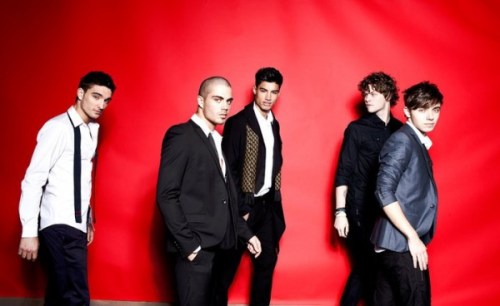
Why The Wanted Play Gay Clubs: Marketing, Music And The LGBT Community’s Mainstream Music Clout

When the Wanted was looking to book its first major U.S. gigs in January, the British pop group didn’t just call up Live Nation or AEG to reach the tween- and teen-girl fan base courted by the generations of boy bands that had come before them. Sandwiched in between 10 midsize-club dates, the group made a quintet of special appearances booked by a boutique PR and events company called the Karpel Group to help reach what has arguably become an even more powerful audience when it comes to modern pop stardom: the gays.

The article is a straightforward business and marketing story: here’s an identifiable market, here’s how the artists and labels are marketing to it. Among the reports:

For music, bloggers like Perez Hilton, Andy Towle (Towleroad) and Jared Eng (JustJared) wield a lot of influence and Sirius’ Out Q (hosted by former Billboard editor Larry Flick) has been a satellite-radio mainstay since 2003. Even Clear Channel has a Pride radio network that serves 19 markets with gay-friendly pop music as well as across iHeartRadio’s digital network.

And this:

Gay buying power, often touted for the consumer group’s supposed affluence, remains a bit of a misnomer. “There’s no data that suggests gay people are wealthier than anybody else,” Witeck Communications’ Bob Witeck says….

They also not only appreciate being marketed to directly, they expect it — particularly when it comes to music. Labels are starting to develop dedicated gay-marketing strategies for certain artists, much as they already have for reaching Hispanic or African-American audiences.

And this:

“Five or six years ago it was almost uncomfortable. Now I sit in label meetings and someone in the room will say, ‘We really have to drill down on this market,'” says Scott Seviour, senior VP of marketing and artist development at Epic Records. “On a business level and an industry level, there’s a greater respect for that consumer. You’ve seen them break an artist and make names. They’re passionate and they can move the needle.”

Business is business, markets are markets, and if you can identify and reach consumers who might buy and promote your products, that is the game. As is pointed out, the practice of marketing to all sorts of groups is common. And in a consumer-driven economy, being recognized and courted is at least a show of economic respect, if not of social acceptance.

But there are caveats too. Being targeted is not necessarily a sign of enlightenment, though it is better than ignorance, invisibility or hate. There is also a general challenge with identity marketing. It’s a thin line between identity and stereotype, a line that’s always in danger of disappearing—if it’s there at all. It can be legitimate and effective to target consumers on the basis of what you know about them and how that works with the products you are selling. But it is easy to fall unwittingly into treating people of any kind as a market and not as people.

The proposition “If you are a (fill in the identity), then you will/must like/want this” is problematic. That’s why “the gays” and “they” and even “gay-friendly” are so cringeworthy. Substitute your own or anybody else’s identity there—woman, black, Jew, etc.—and you’ll see.

We’ve come a long way culturally, moving closer to seeing and treating all people as individuals. It’s too late to turn back or slip back now.

An Old Wave of Music Death


The death of musician Bob Welch, former member of Fleetwood Mac, is the latest in a current series of deaths—natural and unnatural—in the pop music world.

A fascination with rock death arose from a cultural and demographic phenomenon. The 1960s saw the meteoric appearance of very young stars to very young audiences. When a plane crash took Buddy Holly at 22 and Richie Valens at 17, this deeply touched teenagers who had little experience of death.

The late 1960s took this to a new level. Not only were young artists dying, but they were dying in strange and often self-inflicted ways. In 1979 the Village Voice published the legendary article Rock Death in the 1970s: A Sweepstakes, by music critic Greil Marcus (unfortunately not available online). Trying to both appreciate lost artists and skewer a fascination with celebrity death, Marcus scored the dozens of musicians according to past contribution, prospective future contribution and manner of death (heroin overdose received 0 points for manner, since he considered it “the common cold of rock death”).  Jimi Hendrix won, with perfect 10s for past and future contribution.

Some portions of the recent deaths bear an uncanny and all too familiar similarity to the worst days decades ago. If a Marcus-like list is to be made now, Amy Winehouse belongs near the top. Others who died too soon could join her there.

But there is something different about the latest wave. While some of the deaths are untimely, some of them preventable, and all of them tragic, we are now seeing a sort of bookend to the first days of the phenomenon. In the beginning, and in Marcus’ bizarre contest, most of the artists were in their twenties or even younger. While sixty may be the new forty, or whatever the baby boomer conceit is, many of these artists who are passing are in their mid- to late-sixties. They may not have died from getting older, but they were getting older. Even if this isn’t a wave touching shore, it is definitely out there on the horizon.

As Paul Simon, who is now 71, wrote forty years ago in a prophetic verse, “Everything put together falls apart.”

The First [Description Here] President

You’re every President
It’s all in you.
(apologies to Ashford & Simpson and Chaka Khan)

It all began when Maya Angelou dubbed Bill Clinton “the first black President.” This proved awkward when the real first black President, Barack Obama, took office. But when politics meets media, too much is never enough, and so the meme took hold.

This week Barack Obama was cover-featured in Newsweek as “The First Gay President.” That was followed today by Dana Milbank in the Washington Post suggesting that Obama may be, in a way, the first female President. Previous coverage had tagged Obama “The First Jewish President.”

To keep things actual, President Obama is not Jewish, or gay, or female. He has indeed been known to wear a kipa. He has not been known to wear a halo, rainbow or any other color.

Keeping it further factual, he is also the first biracial President, the first Hawaiian President, the first Grammy-winning President, and so on. If you’re positively inclined, you might also add that he may be the first 21st century President, if you relegate George W. Bush to a prior century’s worldview. If negatively inclined, there are plenty of choices: the first non-American President, the first Muslim President, the first Socialist/Communist President, etc.

Why stop there? Neither politics nor media is always that tethered to reality, so let your imagination run wild (i.e., make stuff up). Simply choose a descriptor and plug it in. Warning: No matter how whimsical and fantastic the results may seem, some of those who oppose Barack Obama will likely pick up on them and treat them as real. Please whimsicize responsibly.