Bob Schwartz

Category: Literature

Ferguson and The Fire Next Time

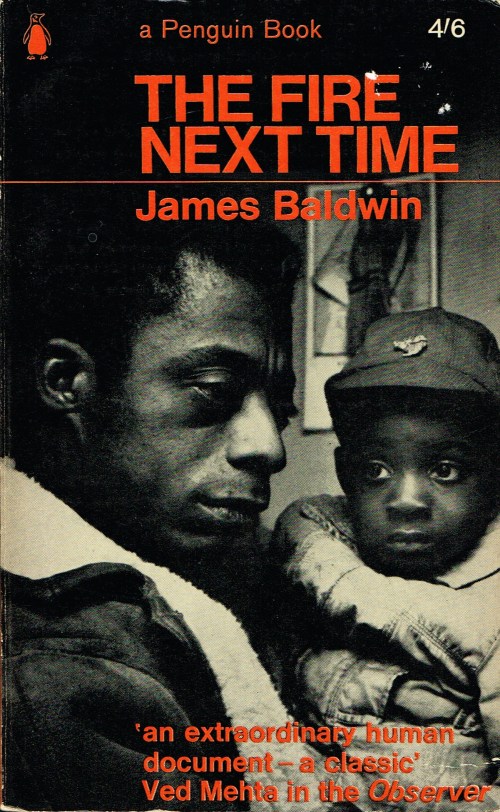
James Baldwin - The Fire Next Time

James Baldwin’s The Fire Next Time may be the best and most eloquent statement of relations between whites and blacks in America ever written. From the publisher:

The appearance of The Fire Next Time in 1963, just as the civil rights movement was exploding across the American South, galvanized the nation and continues to reverberate as perhaps the most prophetic and defining statement ever written of the continuing costs of Americans’ refusal to face their own history. It became a national bestseller, and Baldwin was featured on the cover of Time magazine. Critic Irving Howe said that The Fire Next Time achieved “heights of passionate exhortation unmatched in modern American writing.”

Baldwin was one of the great writers of his or any other American generation. He shouldered the burden of being a triple threat to America of the 1960s—a black man, a brilliant and outspoken intellectual, and gay. This he did with unequaled prose grace, and this work and others are required reading for anyone who wants or claims to be a writer.

The first of the two essays is My Dungeon Shook: Letter to My Nephew on the One Hundredth Anniversary of the Emancipation. Brief and unforgettable, it is a summary of how things are and why his teenage namesake cannot give up and in. It does no justice to this book to excerpt it; it stands as a whole that must be read—not the least of all because with the real progress we have made, we are foolish and destructive to over-measure how far we have come. But here is how the essay closes:

And if the word integration means anything, this is what it means: that we, with love, shall force our brothers to see themselves as they are, to cease fleeing from reality and begin to change it. For this is your home, my friend, do not be driven from it; great men have done great things here, and will again, and we can make America what America must become. It will be hard, James, but you come from sturdy, peasant stock, men who picked cotton and dammed rivers and built railroads, and, in the teeth of the most terrifying odds, achieved an unassailable and monumental dignity. You come from a long line of great poets, some of the greatest poets since Homer. One of them said, “The very time I thought I was lost, My dungeon shook and my chains fell off.”

You know, and I know, that the country is celebrating one hundred years of freedom one hundred years too soon. We cannot be free until they are free. God bless you, James, and Godspeed.

Your uncle,
James

Slaughterhouse-Five


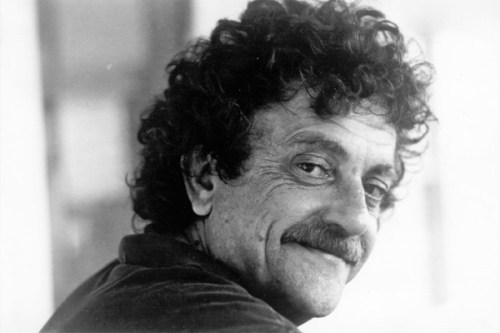
Kurt Vonnegut

A friend in Israel has been corresponding with me about the current mess there. He is a proud and passionate American-Israeli. In the course of the conversation, he mentioned Dresden.

I, along with millions of others, can’t think of Dresden without thinking of Kurt Vonnegut. There is some chance, if you are of a certain age, that you don’t know Dresden or Vonnegut, so here is a summary.

In February 1945, just a few months before World War II ended, the Allies firebombed the city of Dresden, Germany. Much of the city was destroyed and tens of thousands lost their lives. At the same time, Allied prisoners of war were being held by Germany in Dresden.

Kurt Vonnegut was one of the most interesting and original writers of the 20th century, and he influenced the cultural lives of readers throughout the 1960s and beyond. He was also one of those prisoners of war who was an eyewitness to the destruction in Dresden. He tried for more than twenty years to write about it, and finally in 1969 published his novel Slaughterhouse-Five, a title reference to the Dresden slaughterhouse in which he was held. It is a masterpiece, but not what anyone would expect a novel about the horrors of war to be like. It is, though, precisely what you might expect from Vonnegut.

The first chapter is his factual history of how he came to write this book. That chapter alone is worth reading, even if you think you don’t want or wouldn’t like the rest. In it, he recounts this conversation with a friend:

Over the years, people I’ve met have often asked me what I’m working on, and I’ve usually replied that the main thing was a book about Dresden.

I said that to Harrison Starr, the movie-maker, one time, and he raised his eyebrows and inquired, “Is it an anti-war book?”

“Yes,” I said. “I guess.”

“You know what I say to people when I hear they’re writing anti-war books?”

“No. What do you say, Harrison Starr?”

“I say, ‘Why don’t you write an anti-glacier book instead?’”

What he meant, of course, was that there would always be wars, that they were as easy to stop as glaciers. I believe that, too.

And even if wars didn’t keep coming like glaciers, there would still be plain old death.

Please read Slaughterhouse-Five (and more Vonnegut if you are so moved). You will be glad you did.

Easter

Gnostic Bible

I am not a Christian, not in any conventional or even unconventional sense. But I have been a student of Christian religion, literature and phenomena for decades. It is part of a religious triangle—or maybe universe—with my native Judaism and my adopted Buddhism.

One of my earliest Christian experiences was reading the Gospel of Thomas, part of the Nag Hammadi Library, a trove of early Christian writings discovered in 1945. That translation of one of the so-called Gnostic Gospels was done by Dr. Marvin Meyer; I did not know that years later I would work with and become friends with him. What I did know on first reading (and on first meeting) was that the late Dr. Meyer was brilliant. (You may well have seen him on many of the History and Discovery Channel type biblical shows.)

For this Easter, I include a selection from the Gospel of Thomas. It is taken from The Gnostic Bible, edited by Dr. Meyer and by the equally-brilliant poet, translator and scholar Willis Barnstone.

The Gospel of Thomas, often called the Fifth Gospel, is a work of sayings and wisdom; there is no action. Some of the sayings are similar to those that appear in the canonical gospels. Others are more assertively cryptic and mysterious, puzzling in the same way that Zen koans are. This section, appropriately for Easter, is about life and death:

11

Yeshua (Jesus) said,
This heaven will pass away
and the one above it will pass away.
The dead are not alive
and the living will not die.
During the days when you ate what is dead
you made it alive.
When you are in the light, what will you do?
On the day when you were one
you became two.
But when you become two, what will you do?

Willis Barnstone’s most recent work is The Restored New Testament, a monumental achievement in which he single-handedly translated the entire NT (including Gnostic Gospels) and provided hundreds of pages of lucid and enlightening commentary. In that book, he offers this wisdom for a modern age:

In the end, all people are people, and no people should ever be classified for whatever reason as less than another. Any marker of sect and theology that distinguishes any people adversely is human and humane error. So the gospels and Apocalypse should not be seen for the momentary and external conflicts they may contain, but rather for their greater universality of spirit in a world desperately poor in coming to terms with human consciousness within the perishable body. Happily, the call to spirit is deep and needs no name, and no divisive emblem. The New Testament is a book of the mind; it is infused with compassion and courage and the great questions of being, death, time, and eternity. For the perceptive reader, spirit eludes name, dogma, and even word to reside in the silence of transcendence.

Putin and the Little Engine That Could

Vladimir Putin - Little Engine

The pro-Russian insurgency in eastern Ukraine, and the Russian warnings to stay away and out, are not surprising. A fifth-grader doing a Social Studies assignment (if there is still Social Studies) had this one figured out.

So obviously did the American intelligence and foreign policy experts. They can’t tell us they know because that would give something away, even if that fifth-grader has already guessed. The other reason it isn’t officially talked about is that, officially, few are sure what to do next.

Vladimir Putin is well set up, for something. He can take little bites out of the region, or if Ukraine should erupt in instigated civil war, he can enter on the pretext of assuring the stability and security of a neighboring country. There is plenty of historical precedent for this strategy, and for this strategy working.

We—and this includes those who claim to know him—are not sure exactly who Putin is: cunning statesman, cowboy, sociopath? Whether he has himself killed people, up close, is a matter of conjecture, but many have no trouble believing it. German Chancellor Angela Merkel, who grew up in Communist East Germany and knows him, suggests that he is out of touch with the realities of the situation. Former U.S. President George W. Bush just displayed his painting of Putin, which picture says as much about W. as an artist as it does about the Russian President.

Putin is not out of touch with reality, any more than those people who believe that visualizing an outcome will ultimately make it so. He is under no delusion that realizing his reality will be cost free. He is just willing to pay the price, or allow others to chip in, maybe profoundly.

The U.S. may have the most distorted view of war in history. It isn’t that great sacrifice or valiant service haven’t been made. The U.S. didn’t just participate in some of the most significant defenses of human freedom; it helped freedom prevail. But for a few generations, there has been a lot of blood and treasure sacrificed in a sometimes well-meaning, sometimes self-serving fog. The source of the confusion is that for more than 150 years, the U.S. has not experienced national war on its soil. Regional conflicts and shocking, fleet- and building-destroying hostilities, but not a national war, inside or on our borders.

Whatever the list of solutions to international problems and provocations, war shouldn’t just be at the bottom of the list. It should be in some strategic sub-basement, below the last resort. At this moment, war in Europe is where it should be: unthinkable. But if something is unthinkable, then everything else has to be more thinkable, more discussed. Right now, the U.S. body politic is fascinated with other matters major and minor, because we need a break.

But trust this: Putin doesn’t give a care for what happened to a plane that has been at the bottom of the Indian Ocean for weeks. He is single-mindedly like that favorite American children’s book The Little Engine That Could, chugging along: I think I can, I think I can.

We don’t have to be concerned about Ukraine or we can be concerned. We don’t have to take action or we can take action. We don’t have to go to war or we can go to war. What isn’t optional is talking about it in the public square, in a conversation led by the President and others. This is not jumping the gun. It is a sensible prelude to an emerging situation, which could at any moment escalate from blah-blah-blah to something more active and serious.

The U.S. has not been very good at sensible preludes. The run-ups to recent wars have been filled with hyper-drama, fueled by the occasional exaggeration or lie. Ukraine, Europe, and the world need something else. Putin thinks he can. Who knows what we think?

Bookstores in New York


Rizzoli Bookstore

Bookstores in New York
The gleaming rooftops at sundown
Oh, bookstores in New York
It lifts you up when you run down

Dreamers with empty hands
They sigh for exotic lands

It’s bookstores in New York
It’s good to live it again

Apologies to Vernon Duke, Autumn in New York, the greatest of all Manhattan songs

The New York Times ran a story this week, Literary City, Bookstore Desert: Surging Rents Force Booksellers From Manhattan .

If you’re interested, you can read the story yourself. If you’re paying any attention to New York, business, media, or culture, you already know the story. Bookstores under siege by the rise of Amazon and digital books. Manhattan rents skyrocketing. The number of people who care about or have actually had the bookstore experience falling. The number of people who associate the Manhattan experience with the bookstore experience falling faster.

Above is a picture of the Rizzoli bookstore on West 57th Street. It will be closing soon, as the building owner will be tearing down the building. It is not the only great bookstore, past or present, which has contributed to the specialness of Manhattan. It is, though, a good example of that. If you have not walked down 57th, and have not turned into Rizzoli, and have not walked up those stairs and past those shelves, you will have to imagine. The same goes for all the other big and small bookstores of Manhattan, some less grand on less grand streets, all of them filled with books. All of them places to get lost for a while, for a long while if the aisles are long and the shelves high, the way you get lost in a flirtation or a lifelong love.

This is not nostalgia. This is not romance, at least not the kind that constructs an unreal and unattainable dream. It is real, it is still there, for now, the bookstores, the books, the place and time to scan the titles, to pick up and pull out and leaf through and browse. A refuge from the Manhattan streets, or whatever streets you walk, a place and time to be yourself, to be anywhere, and mostly to fall in love. It’s still good to live it.

Spring: Flowers in the Sky

The Plum Blossoms - Henri Matisse
This message for the start of spring comes from the masterpiece Treasury of the True Dharma Eye (Shobo Genzo) by Dogen, the founder of Soto Zen.

The passage is taken from Fascicle 44, Flowers in the Sky, written in 1243:

Thus, when the time comes, flowers open. This is the moment of flowers, the arrival of flowers. At this very moment of flowers arriving, there is no other way. Plum and willow flowers unfailingly bloom on plum and willow trees. You see the flowers and know plum and willow trees. You understand flowers by looking at plum and willow trees. Peach and apricot flowers have never bloomed on plum and willow trees. Plum and willow flowers bloom on plum and willow trees. Peach and apricot flowers bloom on peach and apricot trees. Flowers in the sky bloom in the sky in just this way. They do not bloom on other grasses or trees.

Seeing the colors of flowers in the sky, you fathom the limitlessness of fruit in the sky. Seeing the opening and falling of flowers in the sky, study the spring and autumn of flowers in the sky. The spring of flowers in the sky and the spring of other flowers should be the same. Just as there are a variety of flowers in the sky, there should be a variety of springtimes. This being so, there are springs and autumns in the past and present.

Those who assume that flowers in the sky are not real and other flowers are real have not seen or heard the Buddha’s teaching. To hear the words that the sky originally had no flowers and assume that the flowers in the sky that did not exist do exist now is a lesser view based on shallow thinking. Step forward and think deeply.

Ukraine: Adolf Hitler and William Faulkner

Adolf Hitler - William Faulkner
The term lingua franca means a language that is understood across cultures. It literally means “Frankish language,” referring to a hybrid language that was used for commerce and diplomacy during the Renaissance. Today, one might call English a lingua franca, since unofficially and officially (as in air transport), it is the one universally used and understood.

In contemporary history, the person who comes up most often as an historical analogy is Adolf Hitler. For good reason. Others may have killed more. Others may have conquered more territory. But Hitler did it all, ignited world war, and did it in our times, in living memory, and in ways that shaped the world—and thus shaped our thinking and conversation now and for generations to come. He is the historical persona franca.

A previous post pointed out that Putin’s post-Olympics invasion of Ukraine bested Hitler’s annexation of Austria in March 1938. Hitler waited almost two years after his self-promotional 1936 Berlin Olympics before the Anschluss; somewhat bizarrely, even though Putin politely waited for two days after the Paralympics in Sochi closed, the annexation of Crimea was effectively done while the Olympics were still being held.

When Hillary Clinton mentioned in a speech that Putin’s actions were reminiscent of Hitler, she was shushed up by her supporters and her detractors. Talk like that was deemed premature, alarmist, undiplomatic, and, in Hillary’s case, unpresidential. And yet as events have sped along, the mentions increase. Just today, the former U.S. Ambassador to Russia had to admit that we have not seen an event like the annexation of Crimea since…the 1930s. And whether Hitler is a persona franca or a trump card, Putin uses it himself, claiming that the Ukrainian ouster of Yanakovych was orchestrated by Nazi thugs who are now in power.

History matters, and Hitler matters in history, whatever use he may be in thinking about the critical issues developing in Ukraine. This year is the centennial of World War I (also known as THE World War and the War to End All Wars, before there was a second one). So maybe take a little time to learn a little more about Europe in the period from 1914 to 1945—a mere thirty years or so in which there were two world wars, one of the most evil men in history, an attempt to eliminate an entire people from the earth, and the development of an apocalyptic weapon that gives God a run for his money.

Why learn this history? Because literally everything that is in the news about Russia and the Ukraine is joined with it. Because history never goes away, particularly in Europe. Or anywhere. As William Faulkner wrote, having lived in the American South where history never goes away, where understanding history is the only way to understand today, “The past is never dead. It’s not even past.”

Finite and Infinite Games: Thoughts to End and Begin a Year

Finite and Infinite Games
James P. Carse, now Professor Emeritus of history and literature of religion at NYU, published Finite and Infinite Games in 1986. The book’s spare 160 pages belie its significance. It is a masterpiece of clear, poetic and transformative thought, as Carse takes on the big question that faces us now and always: What are we doing and saying when we act and talk about things religious—or for that matter about life?

His answer—and this is impossibly oversimplified—is that we are playing games. To say even that little is misleading. The only way to appreciate the book and its power is to follow its 101 very brief sections end to end.

This was written at a time when the idea of religion as myth was enjoying renewed currency. It was not a new idea, but by the 1980s a generation of thinkers was trying to make intellectually honest sense of a conundrum: If religious narrative is merely myth, how can religious history have any value or substantial meaning, and how then can we be religious? It turned out in their view that it was not “merely” myth, but a matter that necessarily coexisted with, complemented  and completed religion.

This continues to be something both hard for many to accept or wrap their heads around and equally hard to articulate. Carse articulates this better than anybody else has, and elevates the entire area to a platform for considering the whole of existence and life. If that sounds like hyperbole, please read the book and decide.

In the meantime, a wholly inadequate sample, given that many definitions and premises are missing:

1

THERE ARE at least two kinds of games. One could be called finite, the other infinite.
A finite game is played for the purpose of winning, an infinite game for the purpose of continuing the play.

. . .

99

If it is true that myth provokes explanation, then it is also true that explanation’s ultimate design is to eliminate myth. It is not just that the availability of bells in churches and town halls of Europe makes it possible to forge new cannon; it is that the cannon are forged in order to silence the bells. This is the contradiction of finite play in its highest form: to play in such a way that all need for play is erased.

The loudspeaker, successfully muting all other voices and therefore all possibility of conversation, is not listened to at all, and for that reason loses its own voice and becomes mere noise. Whenever we succeed in being the only speaker, there is no speaker at all. Julius Caesar originally sought power in Rome because he loved to play the very dangerous style of politics common to the Republic; but he played the game so well that he destroyed all his opponents, making it impossible for him to find genuinely dangerous combat. He was unable to do the very thing for which he sought power. His word was now irresistible, and for that reason he could speak with no one, and his isolation was complete. “We might almost say this man was looking for an assassination” (Syme).

If we are to say that all explanation is meant to silence myth itself, then it will follow that whenever we find people deeply committed to explanation and ideology, whenever play takes on the seriousness of warfare, we will find persons troubled by myths they cannot forget they have forgotten. The myths that cannot be forgotten are those so resonant with the paradox of silence they become the source of our thinking, even our culture, and our civilization.

These are the myths we can easily discover and name, but whose meanings continually elude us, myths whose conversion to truth never quite fills the bells of their resonance with the sand of metaphysical interpretation. These are often exceedingly simple stories. Abraham is an example. Although only two children were born to Abraham in his long life, and one of those was illegitimate, he was promised that his descendants would be as numberless as the stars of the heavens. All three of the West’s major religions consider themselves children of Abraham, though each has often understood to be itself the only and final family of the patriarch, an understanding always threatened by the resounding phrase: numbered as the stars of the heavens. This is the myth of a future that always has a future; there is no closure in it. It is a myth of horizon.

The myth of the Buddha’s enlightenment has the same paradox in it, the same provocation to explanation but with as little possibility of settling the matter. It is the story of a mere mortal, completely without divine aid, undertaking successfully a spiritual quest for release from all forms of bondage, including the need to report this release to others. The perfect unspeakability of this event has given rise to an immense flow of literature in scores of languages that shows no signs of abating.

Perhaps the Christian myth has been the narrative most disturbing to the ideological mind. It is, like those of Abraham and the Buddha, a very simple tale: that of a god who listens by becoming one of us. It is a god “emptied” of divinity, who gave up all privilege of commanding speech and “dwelt among us,” coming “not to be served, but to serve,” “being all things to all persons.” But the worlds to which he came received him not. They no doubt preferred a god of magisterial utterance, a commanding idol, a theatrical likeness of their own finite designs. They did not expect an infinite listener who joyously took their unlikeness on himself, giving them their own voice through the silence of wonder, a healing and holy metaphor that leaves everything still to be said.

Those Christians who deafened themselves to the resonance of their own myth have driven their killing machines through the garden of history, but they did not kill the myth. The emptied divinity whom they have made into an Instrument of Vengeance continues to return as the Man of Sorrows bringing with him his unfinished story, and restoring the voices of the silenced.

100

The myth of Jesus is exemplary, but not necessary. No myth is necessary. There is no story that must be told. Stories do not have a truth that someone needs to reveal, or someone needs to hear. It is part of the myth of Jesus that it makes itself unnecessary; it is a narrative of the word becoming flesh, of language entering history; a narrative of the word becoming flesh and dying, of history entering language. Who listens to his myth cannot rise above history to utter timeless truths about it.

It is not necessary for infinite players to be Christians; indeed it is not possible for them to be Christians—seriously. Neither is it possible for them to be Buddhists, or Muslims, or atheists, or New Yorkers—seriously. All such titles can only be playful abstractions, mere performances for the sake of laughter.

Infinite players are not serious actors in any story, but the joyful poets of a story that continues to originate what they cannot finish.

101

There is but one infinite game.

Philip K. Dick’s Birthday

Philip K. Dick color
Yesterday was the birthday of writer Philip K. Dick (1928-1982).

If we measure creative success by the dollars generated through adaptation and exploitation, PKD was a monumental success, though he didn’t live to see most of it. His work was the source material for Blade Runner, Total Recall, Minority Report and other films.

If the measure of creativity is being creative, PKD is more than just the most adventurous science fiction/speculative fiction writer of his generation. Maybe no other writer of his century, or even now, has so masterfully taken readers to the edge, and then taken them a little further. In their view of the world, many of those readers never quite come back.

PKD lived, at least in his mind, beyond that edge. His mental instability is a matter of record, though there is still and will be questions about exactly what the clinical profile was.

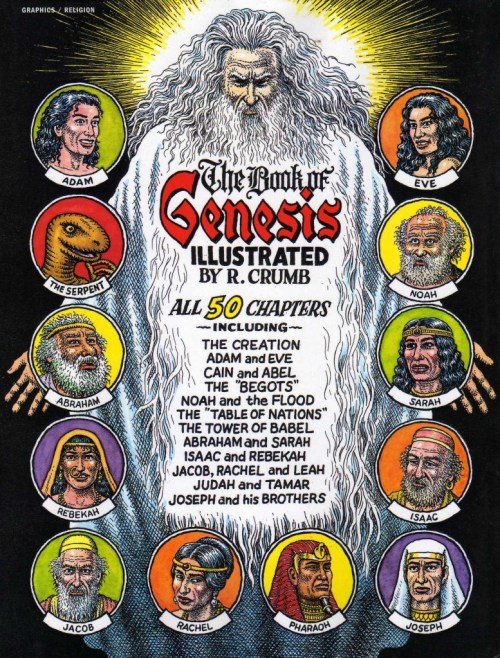
In 1974 PKD had what can be called a religious experience. The comic artist R. Crumb illustrated some of that experience, as related by PKD. You can view the entire comic here.

PKD Crumb 1

“There will come a time when it isn’t ‘They’re spying on me through my phone’ anymore. Eventually, it will be ‘My phone is spying on me’.” ― Philip K. Dick

Comic Book Plus: Digital Superheroes

Comic Book Plus
If it isn’t apparent from previous posts, the premier pop cultural medium of these times (meaning the last century) may not be movies or music or television or any of the usual suspects. It is comic books, and while explaining that in detail will have to wait for another post, just ask the entertainment enterprises that have built billion-dollar franchises on that foundation. Hint: Don’t just look at the movies; look at video games, which are sometimes expressly, sometimes implicitly interactive comic books at heart.

Digital has provided new ways to enjoy the old and the new. Comixology, for example, offers an excellent cross-device platform for digital comics. But if you love comic books as essential cultural artifacts, the digital pickings have been slim and erratic. Of course comic book connoisseurs and scholars have been scanning and distributing them for as long as there has been an internet, but organization, information and, above all, copyright integrity has been missing.

The developers of the Comic Book Plus are digital and cultural superheroes. “Free and Legal” they trumpet, and nowhere in the universe can you both read and download such a collection representing decades of this historical basis of American—of world—culture. Free and legal. (Note: The downloads are in special comic book file formats that require some sort of reader. One way to deal with this is with Calibre, the world’s most popular free ebook manager and converter. Calibre will convert the comics to any format you choose, e.g., epub or pdf, to be read on your existing readers.)

If you love comic books and graphic novels, no more needs to be said. If you love pop culture and its origins, immerse yourself in the sequential art of these digital waters. Just make sure you have some time to spare because you won’t want to come out. And for those in the know, just tell them Will Eisner sent you.