Bob Schwartz

Category: Judaism

Leonard Cohen on Yom Kippur: Who By Fire

A signature prayer of the Days of Awe is Unatenah Tokef:

On Rosh Hashanah it is written, and on Yom Kippur it is sealed.
How many will pass and how many will be created?
Who will live and who will die?
Who in their time, and who not their time?
Who by fire and who by water?
Who by sword and who by beast?
Who by hunger and who by thirst?
Who by earthquake and who by drowning?
Who by strangling and who by stoning?
Who will rest and who will wander?
Who will be safe and who will be torn?
Who will be calm and who will be tormented?
Who will become poor and who will get rich?
Who will be made humble and who will be raised up?
But teshuvah and tefillah and tzedakah [return and prayer and righteous acts]
deflect the evil of the decree.

Unatenah Tokef inspired Leonard Cohen to write the song Who By Fire. He restates the prayer poetically, and adds this question:

And who shall I say is calling?

On Yom Kippur, some number of Jews who don’t usually attend services will find themselves not only at a service, but at one on the holiest day of the year, being asked to consider their lives in light of a theology of divine judgment. Some will believe that individual acts are weighed, some will believe that the whole year or a life are taken into account, and some will not believe in any of it at all.

That is where the question comes in. If you engage in the communication on Yom Kippur, or at any time, who is on either end? Is there someone here, is there someone there? Who shall I say is calling?

Who By Fire by Leonard Cohen:

And who by fire, who by water
Who in the sunshine, who in the night time
Who by high ordeal, who by common trial
Who in your merry merry month of May
Who by very slow decay
And who shall I say is calling?

And who in her lonely slip, who by barbiturate
Who in these realms of love, who by something blunt
And who by avalanche, who by powder
Who for his greed, who for his hunger
And who shall I say is calling?

And who by brave assent, who by accident
Who in solitude, who in this mirror
Who by his lady’s command, who by his own hand
Who in mortal chains, who in power
And who shall I say is calling?

Rosh Hashanah 5779 – Abraham Joshua Heschel on Repentance

In the realm of spirit, there is no difference between a second and a century, between an hour and an age. Rabbi Judah the Patriarch cried: “There are those who gain eternity in a lifetime, others who gain it in one brief hour.” One good hour may be worth a lifetime; an instant of returning to God may restore what has been lost in years of escaping from Him. “Better is one hour of repentance and good deeds in this world than the whole life in the world to come.” (Avot 4:22)
Abraham Joshua Heschel, The Sabbath

More About Compassion Toward Things

These are the creatures and objects that are spoken of as the possessions of this individual: his animals and his walls, his garden and his meadow, his tools and his food. In so far as he cultivates and enjoys them in holiness, he frees their souls. “For this reason a man must always be compassionate toward his tools and all his possessions.”
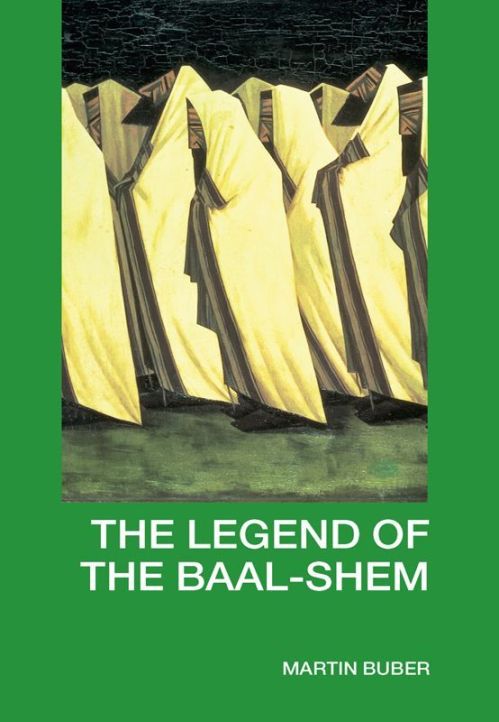
Martin Buber, The Legend of the Baal Shem Tov

I earlier wrote about the concept of compassion toward your things. Here is a bit more.

What does it mean to be compassionate toward your things, to be “feeling with” them? This is easier to conceive if the thing is something alive like a pet, or something once growing but now picked like some of the food on your plate. But a chair is just a chair; does it really need your compassion to set its soul free?

Could it be that by stretching to find compassion for those things—for all those other things, no matter how insignificant they seem—we are exercising our practice and ability to be compassionate toward everything and everyone all the time? Could it be that by stretching to find the reality of those things, we are exercising our practice and ability to understand everything and everyone all the time?

The Buddhist concept of the trichiliocosm (also known as trisāhasramahāsāhasralokadhātu) “posits that any given thought-moment perfectly encompasses the entirety of reality both spatially and temporally…. the microcosm contains the macrocosm and temporality encompasses spatiality. Thus, whenever a single thought arises, there also arise the myriad dharmas; these two events occur simultaneously, not sequentially.” (Princeton Dictionary of Buddhism):

Trisāhasramahāsāhasralokadhātu. In Sanskrit, literally “three-thousandfold great-thousandfold world system,” but typically translated as “trichiliocosm”; the largest possible universe, composed of (according to some interpretations of the figure) one billion world systems, each of which have a similar geography, including a central axis at Mount Sumeru, four surrounding continents, etc.

In his translation of The Diamond Sutra, Red Pine reflects on a related point:

Chapter 1: One day before noon, the Bhagavan put on his patched robe and picked up his bowl and entered the capital of Shravasti for offerings. After begging for food in the city and eating his meal of rice, he returned from his daily round in the afternoon, put his robe and bowl away, washed his feet, and sat down on the appointed seat. After crossing his legs and adjusting his body, he turned his awareness to what was before him.

In ancient India, the main staple was glutinous rice, which was eaten with the hands by forming it into balls. The term pinda occurs again at the end of the sutra in Chapter Thirty, where it includes the biggest of all lumps: a universe of a billion worlds. This is not accidental, for the practice of charity and the concept of an entity, either compounded of smaller entities or compounding a greater entity, run throughout this sutra. In the chapters that follow, the Buddha takes us through a series of synonyms for the entities of reality and compares the results of offering such things as a ball of rice, a universe of jewels, numberless existences, or a four-line poem.

The Buddha said, “Subhuti, what do you think? Are all the specks of dust in the billion-world-system of a universe many?”

The Buddha turns from this teaching to the sanctuary where this teaching was being taught, namely, the vihara outside Shravasti where both he and Subhuti were sitting. If the teaching of prajna is no teaching, what about the world in which it is taught? The Buddha begins with the smallest perceivable constituents of matter and the largest conceivable entity that they comprise.

Chapter Thirty: “Furthermore, Subhuti, if a noble son or daughter took as many worlds as there are specks of dust in a billion-world universe and by an expenditure of limitless energy ground them into a multitude of atoms, Subhuti, what do you think, would there be a great multitude of atoms?…The Buddha said, “Subhuti, attachment to an entity is inexplainable and inexpressible. For it is neither a dharma nor no dharma. Foolish people, though, are attached.”

All things big and small are locked in an endless sleight of hand in which each negates the reality of the other. And yet we all look for something to grab. Sometimes, we grab the biggest thing we can find. Sometimes, we grab the smallest. The people of Shravasti offered the Buddha balls of rice. Were the balls of rice real, or the grains of rice? The Buddha ate what he found in his bowl. So, too, do Zen masters swallow the world and all its mountains and rivers. And the reason they can do this is because mountains and rivers do not themselves exist but are simply names we give to momentary combinations of causes and conditions that are themselves momentary combinations of causes and conditions: universes made of specks of dust made of specks of dust made of specks of dust that form universes that form universes that form universes. Zen masters swallow names and concepts, while the entities they represent change. Mountains and rivers and the ten-thousand things all change. If they did not, we would be in trouble. We would have no hope of liberation. But because nothing exists as an independent, permanent entity, there are no obstructions on the path to enlightenment. Foolish people, though, refuse to walk this path. They see nothing but obstructions. Buddhas see offerings and turn these offerings into dharmas.

Compassion Toward Your Things

Much is said and written, in many traditions, about awareness, mindfulness and realization. But this one thought, said just this way, is new to me.

Speaking for the Baal Shem Tov, the first ancestor of Hasidic Judaism, Martin Buber writes about our relationship not just with creatures but with our things. The idea of being compassionate toward your possessions may seem eccentric. Nothing could be more central. If everybody—and everything—is not free, who is?

From The Legend of the Baal-Shem:

Around each man—enclosed within the wide sphere of his activity—is laid a natural circle of things which, before all, he is called to set free. These are the creatures and objects that are spoken of as the possessions of this individual: his animals and his walls, his garden and his meadow, his tools and his food. In so far as he cultivates and enjoys them in holiness, he frees their souls. “For this reason a man must always be compassionate toward his tools and all his possessions.”

Chaim Rumkowski, Hannah Arendt and the Banality of Evil

Mordechai Chaim Rumkowski, Jewish council chairman in Lodz ghetto, seen here speaking amongst Jewish ghetto policemen. Lodz, Poland, ca. 1942.


It [evil] possesses neither depth nor any demonic dimension. It can overgrow and lay waste the whole world precisely because it spreads like a fungus on the surface.
Hannah Arendt

Citizens and respected leaders alike, in disgust and frustration, are heard comparing Trump policies and enablers to fascism and Nazis. This is treated by many, even those sympathetic to this disgust and frustration, as understandable but unhelpful and far too extreme.

In some ways, though, this is not entirely unhelpful. Theorize and moralize all we want, at some point we must look to concrete lessons from history for context and insight. Just because those examples seem so far outside an American context doesn’t mean that something can’t be learned.

Chaim Rumkowski:

During World War II, the Germans established Jewish councils, usually called Judenraete. These Jewish municipal administrations were required to ensure that Nazi orders and regulations were implemented. Jewish council members also sought to provide basic community services for ghettoized Jewish populations.

Forced to implement Nazi policy, the Jewish councils remain a controversial and delicate subject. Jewish council chairmen had to decide whether to comply or refuse to comply with German demands to, for example, list names of Jews for deportation. In Lvov, Joseph Parnes refused to hand over Jews for deportation to the Janowska forced-labor camp and was killed by the Nazis for his refusal. In Warsaw, rather than aid in the roundup of Jews, Jewish council chairman Adam Czerniakow committed suicide on July 22, 1942, the day deportations began.

Other Jewish council officials advocated compliance, believing that cooperation would ensure the survival of at least a portion of the population. In Lodz, Mordechai Chaim Rumkowski, who tried in vain to persuade the Nazis to reduce the number of Jewish deportees, urged ghetto residents to report for deportation as ordered. Rumkowski also adopted a policy of “rescue through labor,” believing that if the Germans could exploit Jewish labor, deportation might be averted….

On German orders Rumkowski delivered a speech on September 4, 1942 pleading with the Jews in the ghetto to give up children 10 years of age and younger, as well as the elderly over 65, so that others might survive. “Horrible, terrifying wailing among the assembled crowd” could be heard, reads the transcriber’s note to his parlance often referred to as: “Give Me Your Children”. Some commentators see this speech as exemplifying aspects of the Holocaust:

“A grievous blow has struck the ghetto. They [the Germans] are asking us to give up the best we possess – the children and the elderly. I was unworthy of having a child of my own, so I gave the best years of my life to children. I’ve lived and breathed with children. I never imagined I would be forced to deliver this sacrifice to the altar with my own hands. In my old age, I must stretch out my hands and beg: Brothers and sisters! Hand them over to me! Fathers and mothers: Give me your children!”

— Chaim Rumkowski, September 4, 1942 [27]

Hannah Arendt:

Born in Germany in 1906, philosopher Hannah Arendt gained much attention for her writings on totalitarianism and Jewish affairs after World War II. Arendt’s Origins of Totalitarianism (1951) addressed the rise of the totalitarian state out of the collapse of traditional nation-states. Following the war crimes trial of Adolph Eichmann, she wrote Eichmann in Jerusalem (1963). She died in New York City in 1975….

Arendt completed her Ph.D. at the University of Heidelberg in 1928, after writing her doctoral thesis on Saint Augustine under the direction of Karl Jaspers. The following year, she married Gunther Stern. With the rise of the Nazi Party in Germany, Arendt soon found herself in trouble for gathering evidence of the regime’s anti-Semitism.

In 1933, Arendt fled her native Germany for the relative safety of Paris, France. There, she worked for Youth Aliyah, an organization that helped rescue Jewish children from Eastern Europe. In 1940, Arendt married her second husband, Heinrich Blücher. Their wedded bliss was short-lived, however: The pair was soon interned at a concentration camp in Gurs, France. After managing to escape, the couple made their way to the United States in 1941….

In 1961, Arendt covered the trial of infamous Nazi war criminal Adolf Eichmann, held in Jerusalem, for The New Yorker magazine. Her writings on the trial were later published as Eichmann in Jerusalem: A Report on the Banality of Evil (1963), and she was criticized for some of the views she expressed in the work. Among these views, Arendt posited that Eichmann was more of an ambitious bureaucrat than a figure of extreme evil.

The Banality of Evil

Arendt’s coining of the term “banality of evil” and what some perceived to be her blaming the Jews for their own victimhood remain hotly controversial. Some think that seemingly characterizing the sort of evil perpetrated by Eichmann and other bureaucrats as banal and ordinary is dangerous and mistaken; if anything, they say, it should be forever described as radical and extraordinary.

Arendt on Eichmann:

What he [Eichmann] said was always the same, expressed in the same words. The longer one listened to him, the more obvious it became that his inability to speak was closely connected with an inability to think, namely, to think from the standpoint of somebody else. No communication was possible with him, not because he lied but because he was surrounded by the most reliable of all safeguards against the words and the presence of others, and hence against reality as such.

Arendt on the banality of evil:

It is indeed my opinion now that evil is never “radical,” that it is only extreme, and that it possesses neither depth nor any demonic dimension. It can overgrow and lay waste the whole world precisely because it spreads like a fungus on the surface. It is “thought-defying,” as I said, because thought tries to reach some depth, to go to the roots, and the moment it concerns itself with evil, it is frustrated because there is nothing. That is its “banality.” Only the good has depth that can be radical.

https://www.youtube.com/watch?v=RB1UJxA03mE

L’dor Vador (Ramadan)

L’dor Vador (Ramadan)

Jews begat
Christians begat
Muslims.
Thousands became
Millions became billions.
Blessed and blind warriors
Pages of holy books
Edged in gold
Sharp as swords.
Angry and bitter blood transmutes
To sweet water in the scorching desert
Of seeking souls.

©

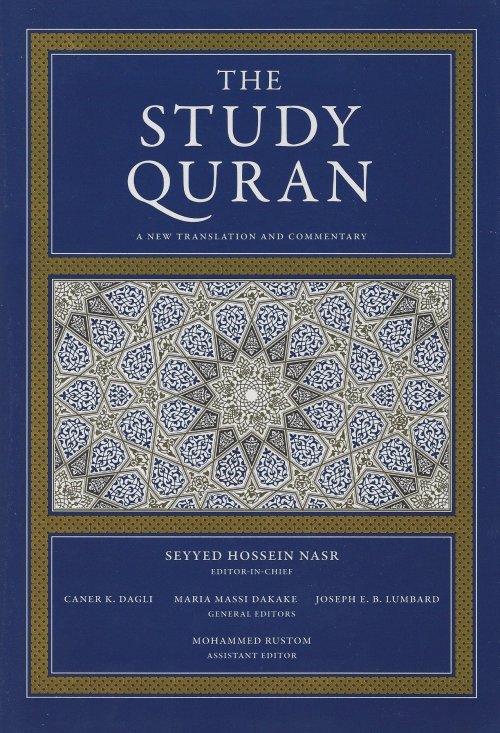
Note: We are in the midst of the Muslim holy month of Ramadan, commemorating the first revelation of the Qur’an to Muhammad. It is sad astonishment to students of all three Abrahamic faiths to see how zealously ignorant and contentious some of the faithful of each may be to each other. (Jews who will not dare to touch, let alone read, the New Testament; Jews and Christians who will not dare to touch, let alone read, the Qur’an.)

In fact, each faith has produced extraordinary core texts that should be the first stop for anyone claiming to know anything—not only about the other, but about their own traditions. The golden threads of Judaism are woven into Christianity, the golden threads of Judaism and Christianity are woven into Islam. The ugliness and terror are man-made; the best parts are from the compassionate and caring.

L’dor vador. From generation to generation. One family.

Democrats: Micah 2020

Dana Milbank writes in today’s Washington Post:

Hey Democrats! What’s the big idea? No, really. What’s the big idea?

A dozen possible Democratic presidential candidates assembled at a downtown Washington hotel Tuesday for one of the first cattle calls of the 2020 campaign. The good news: There were, on that stage, all of the personal qualities and policy ideas needed to defeat President Trump. The bad news: These qualities and ideas were not in any one person….

For November’s midterm elections, it may be enough for Democrats to say they are against Trump. Congressional Democratic leaders took a stab at a unified agenda for 2018 — “A Better Deal” — and were roundly mocked by progressives.

But to beat Trump, they’ll need more. Trump convinced tens of millions of Americans that they are losing ground because of immigrants, racial and religious minorities, and foreigners. What will Democrats advance to counter that grim message?

Given how lost the Democrats are (and how that might lead to further losing), I suggest that they consider the Bible. Not the weaponized, sectarian and exclusionary interpretation of the Bible that is so popular with selfish and heartless ideologues. But the Bible that demands humane conduct—something that we see slipping away election by election, day by day (and that means you too, Democrats).

The prophet Micah is a great touchstone. The revealed solution for an aggrieved people does not involve greater piety, more sacrifices, or brutal nationalism. All that is required is justice, goodness and humility:

With what shall I approach the Lord,
Do homage to God on high?
Shall I approach Him with burnt offerings,
With calves a year old?

Would the Lord be pleased with thousands of rams,
With myriads of streams of oil?
Shall I give my first-born for my transgression,
The fruit of my body for my sins?

“He has told you, O man, what is good,
And what the Lord requires of you:
Only to do justice
And to love goodness,
And to walk modestly with your God;
Then will your name achieve wisdom.”

Micah 6:6-9 (NJPS)

Micah is not available to run in an election. But justice, goodness and humility are always available as a platform.

Heschel on Politicians

“I consider the heart of the problem of human existence is to fight against mendacity, against lying. I would like to use a word which may be too often used, but it’s still the most important word—and that is “honesty,” or “sincerity,” or “trust.””

“I am against the word “politician.” I have great respect for the word “statesman.” It’s very interesting, the word “statesman” is not used. “Politician” is used. “Statesman” is a great word….The task of a statesman is to be a leader, to be an educator, and not to cater to what people desire almost against their own interests. To be a leader.”

From an interview with Abraham Joshua Heschel at the University of Notre Dame in 1967, published in Moral Grandeur and Spiritual Audacity, essays by Heschel.

Q: Your esteem for religious colleagues is greater than your esteem for politicians. I think you once said that the most depressing word in the English language is “politician.” Politicians are necessary, aren’t they? Why disparage them?

A: No, I’m not against politicians in their vocation. I’m against politicians in their tactics. Against the very meaning, the semantic meaning of the word “politician.”

Now let me elaborate. It may take me two minutes to explain it to you. I consider the heart of the problem of human existence is to fight against mendacity, against lying. I would like to use a word which may be too often used, but it’s still the most important word—and that is “honesty,” or “sincerity,” or “trust.”

The tragedy of our time is, we don’t trust each other. The Golden Rule today is not “Love thy neighbor as thyself” but “Suspect thy neighbor as thyself.” We suspect all politicians because we know in advance they don’t mean what they say and they don’t say what they mean.

Q: Is that justified? That suspicion?

A: Ask the people in the country. You’re asking me? I’m only one citizen. I have only one vote.

If you go to the country and ask them, “What do you think of politicians?,” they’ll say a politician is a synonym for a person who is not necessarily truthful. Right? Do you mind my elegant way of speaking?

We have a type of politician today—I suppose we’ve always had, and I don’t want to identify anyone—who tells us that he is doing what the peoples want. And, in fact, that may be so. Of course, that doesn’t reach to the question of leadership. Should our leaders give us what we want, or is there some other role?

I think there is another role. By the way, I am against the word “politician.” I have great respect for the word “statesman.” It’s very interesting, the word “statesman” is not used. “Politician” is used. “Statesman” is a great word.

Now, about doing what the people want—I’ll tell you what the people want. One of the major inclinations in every human being is a desire to be deceived. Self-deception is a major disease.

Q: To be told what one wants to hear?

A: Yes. You want to be deceived.

The task of a statesman is to be a leader, to be an educator, and not to cater to what people desire almost against their own interests. To be a leader.

The great question of today is mendacity. We live in a world full of lies. And the tragedy that our young people—or maybe it’s good—the young people have discovered how many lies are uttered daily and every moment. They can’t stand it. If there’s anything they despise, it’s someone who is phony, false rhetoric. We call it “credibility gap”—what we mean really is lying.

Yom HaShoah—Holocaust Remembrance Day

Birkenau – Gerhard Richter

Today is Yom HaShoah, Holocaust Remembrance Day. It is a memorial day for those who died in the Holocaust, a Greek word meaning “sacrifice by fire.” Established by Israel in 1951, the day is now commemorated around the world. In the U.S., Congress has made it part of the week-long Days of Remembrance.

A new study released today “finds significant lack of Holocaust knowledge in the United States.” Without repeating the painful findings, it is enough to say that if trends continue, in a couple of generations a large majority of Americans will have very vague and erroneous views of what took place, if they know anything about the Holocaust at all. Painful but not surprising, given that Americans’ knowledge of their own history is pretty vague and often erroneous.

In 2018, and at any point in history, the phenomenon of the Holocaust matters for a lot reasons. Here at just a few.

The depths of human depravity exceed our imagination. The heights of human heroism, which the Holocaust also demonstrated, exceed our imagination too.

Whatever identity group you belong to, you can never be confident that you will not be the next despised “other” who must be totally eliminated. Which means that hatred of the other is to be avoided and acceptance of the other is to be applauded.

Science and technology can be very evil. It is true that Hitler couldn’t rely only on sophisticated chemical gas to kill Jews, supplementing that with old-fashioned mass shootings and body pits. But if he had had the opportunity to complete his work on rockets and atomic bombs, for example, who knows what the number of eliminated non-Aryans might have been?

As important as remembrance is, it is not as important as living, acting and speaking in ways to relieve current suffering. Dead and displaced at the hands of an evil leader is not history. It is now. “Never again” cannot be just for what happens to Jews. “Never again” is for everybody, or it is for nobody.

Books for Passover and Easter

Passover

If you are celebrating Passover or just interested in it, you are familiar with the Haggadah—the book used as a roadmap for the seder meal and rituals that take place on the first couple of evenings of Passover.

There are widely adopted traditions for the seder that include the retelling of the Exodus story and the eating of symbolic foods. But the exact content and form of the seder have long been flexible, and this variety is reflected in different Haggadot. There are hundreds of versions.

For the Passover observant and the P-curious, I recommend a deeper dive than the typical Haggadah—a set of books from Jewish Lights entitled My People’s Passover Haggadah: Traditional Texts, Modern Commentaries – Volume 1 and Volume 2.

From the editors:

In two volumes, this empowering resource for the spiritual revival of our times enables us to find deeper meaning in one of Judaism’s most beloved traditions, the Passover Seder. Rich Haggadah commentary adds layer upon layer of new insight to the age-old celebration of the journey from slavery to freedom—and makes its power accessible to all.

This diverse and exciting Passover resource features the traditional Haggadah Hebrew text with a new translation designed to let you know exactly what the Haggadah says. Introductory essays help you understand the historical roots of Passover, the development of the Haggadah, and how to make sense out of texts and customs that evolved from ancient times.

Framed with beautifully designed Talmud-style pages, My People’s Passover Haggadah features commentaries by scholars from all denominations of Judaism. You are treated to insights by experts in such fields as the Haggadah’s history; its biblical roots; its confrontation with modernity; and its relationship to rabbinic midrash and Jewish law, feminism, Chasidism, theology, and kabbalah.

No other resource provides such a wide-ranging exploration of the Haggadah, a reservoir of inspiration and information for creating meaningful Seders every year.

These are a bit bulky for the seder table itself. But they are the sort of books you would read if you wanted to understand why people are sitting at the seder table in the first place and why the traditions are so broad and sometimes so misunderstood. If Passover is just going through the motions, any seder and any Haggadah will do. If Passover is one piece of a much bigger picture to be investigated, these enlightening commentaries are what you need.

Easter

Close to each other. Very close. Passover begins tonight on Friday March 30. Easter is this Sunday April 1.

The calendar isn’t all that’s close. The Jewish story and the Christian story, in general and in the context of these particular holidays, are essentially and inextricably linked. The nature of those stories and those connections is the source of faith, enlightenment, misunderstanding, mistrust, even hatred and violence. Among Jews and Christians.

Any big moment on the Jewish and Christian calendars (and these holidays qualify) is an opportunity not just for ritual celebration but for study. How well do we—Jews, Christians, others—understand the texts and traditions outside the comfortable conventions of our belief and practice? Not just understanding that will confirm our faiths, allowing us to nod our heads and pat ourselves on our collective backs, but new and even startling understanding that might shake us and even make us uncomfortable. Everything we know about Judaism or Christianity, about the Bible, about history, may not be wrong, but maybe we could benefit from another open and learned perspective.

The second edition of the The Jewish Annotated New Testament was published last year; any and every Jew or Christian should read at least a little of it. So should everyone else who wants to know something about the foundations of this consequential moment in scripture, history and religion. Believers and nonbelievers may think they know what they’re dealing with. Many don’t.

The editors explain:

It is almost two millennia since the earliest texts incorporated into the New Testament were composed. For the most part, these centuries have seen a painful relationship between Jews and Christians. Although Jewish perceptions of Christians and Christian perceptions of Jews have improved markedly in recent decades, Jews and Christians still misunderstand many of each other’s texts and traditions. The landmark publication of this book is a witness to that improvement; ideally, it will serve to increase our knowledge of both our common histories and the reasons why we came to separate…

The Jewish Annotated New Testament represents the first time a gathering of Jewish scholars wrote a complete commentary on the New Testament. It reached a wide Jewish and Christian audience, and in doing so it has begun to increase both Jewish literacy of the New Testament and Christian awareness of the New Testament’s Jewish context. It has become widely used in colleges, universities and seminaries, as well as in Jewish, Christian, and joint Jewish-Christian study groups. Many Christian clergy and religious educators from different Christian denominations and church settings have told us that they have integrated the insights of this book into their preaching and devotion. Because of this volume, we have been told numerous times, sermons have been corrected, anti-Jewish teaching and preaching have been avoided, and Christians in churches and classrooms and Bible studies have learned more about Jesus and his followers. Jewish readers have told us how the volume has encouraged them to read the New Testament for the first time, to begin to consider the complex relationship between Judaism and Christianity, and how better to understand both their Christian neighbors and their own Jewish history….

For Christian readers The Jewish Annotated New Testament offers a window into the first-century world of Judaism from which the New Testament springs. There are explanations of Jewish concepts such as food laws and rabbinic argumentation. It also provides a much-needed corrective to many centuries of Christian misunderstandings of the Jewish religion.

For Jewish readers, this volume provides the chance to encounter the New Testament–a text of vast importance in Western European and American culture–with no religious agenda and with guidance from Jewish experts in theology, history, and Jewish and Christian thought. It also explains Christian practices, such as the Eucharist.

The Jewish Annotated New Testament, Second Edition is an essential volume that places the New Testament writings in a context that will enlighten readers of any faith or none.