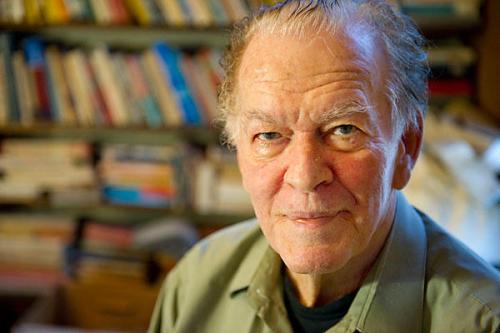
Bob Schwartz

Category: Government

John Boehner and the Judgment of History

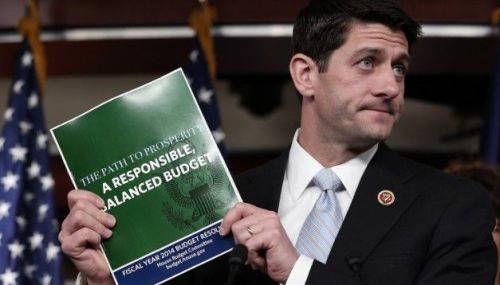
John Boehner
John Boehner says he isn’t worried that compromising on taxes will result in his losing his job as House Speaker. It is a matter of principle.

He may be telling the truth, but it doesn’t matter.

When asked whether Americans will blame the Republicans for the stalemate, his answer isn’t that he doesn’t care, but that it would be wrong. President Obama and the Democrats are to blame, even if polls say that many people believe otherwise.

That doesn’t matter either.

The question isn’t whether Boehner cares about keeping his job (which he does) or whether he cares that many Americans blame him and the Republicans (which he does).

The question is about history.

Republicans have for quite a while seemed to be unconcerned about the judgment of history. There’s a practical reason for this: people vote, not history. And most people aren’t that interested in history. Anyway, history is often equivocal, so in those moments when people do care, history can be spun to say almost anything.

But, for example, history continues to be a problem for the Republicans and their most historic President. The principles of and lessons from Lincoln are not always congruent with current GOP practice and rhetoric. This is how Southern Republicans during the Civil Rights era didn’t just come to distance themselves from the Great Emancipator; they fled the party.

History is turning on the Republicans. An entire two-term Presidency—eight years of George W. Bush—has had to be nearly buried so that the party could move on. The most recent financial misstep, the 2011 debt ceiling debacle, looked at first like it could be blamed on an ineffectual President. But history has stepped in. Obama’s leadership has been established and electorally endorsed, And now that event looks like a dark mirror of this moment—a mirror featuring John Boehner’s face.

When the movie of this moment is made, the question for Boehner is who he wants to be. He’s not going to be Lincoln, he’s not going to be Thaddeus Stevens. The way it looks now, he may be one of those supporting characters, a middling Congressional leader serving as an antagonist, helping to move the action along by opposing it. He is a decent man, he may yet keep his Speakership, and the country may yet, hopefully, avoid another crisis. But history won’t care about any of that. It is ruthless in its judgment, and John Boehner still has time to sway it.

In Praise of Congressional Mediocrity

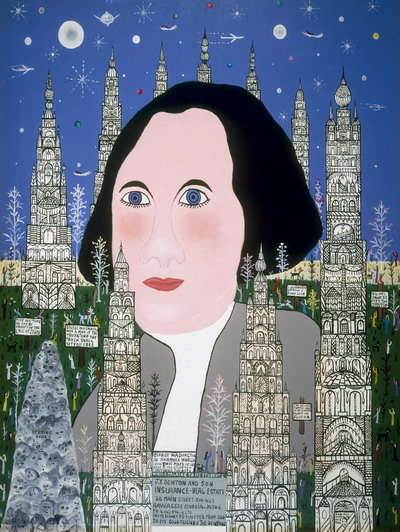
Roman Hruska
Roman Hruska was United States Senator from Nebraska from 1954 to 1976. He was a leading conservative, and was anything but a mediocre legislator. But when Richard Nixon appointed G. Harold Carswell to the Supreme Court in 1970, Hruska had this to say about claims that Carswell was less than qualified:

“Even if he were mediocre, there are a lot of mediocre judges and people and lawyers. They are entitled to a little representation, aren’t they, and a little chance? We can’t have all Brandeises, Frankfurters and Cardozos.”

Carswell was not confirmed. And despite Hruska’s accomplishments, he is best known today for his defense of public mediocrity.

As we watch many in Congress talk and talk and talk about why they are not doing anything—except talking—we might remember what Lincoln said: “Better to remain silent and be thought a fool than to speak out and remove all doubt.” Or we might go back to Hruska.

Both the Senate and the House have had their share of greatness. The Senate has been a particularly notable body, even if we can’t have all Henry Clays, Daniel Websters and Robert Tafts. The House is a more mixed bag and, as “the people’s house,” maybe it should be.

But at the heart of Hruska’s statement is the question that faces us every day when we look at our national legislators. Do we want to be represented by people at least as good and capable as us—as honest, as hard-working, as smart, as trustworthy, as caring as us? Do we lower that down to a standard of people merely capable of getting elected? Or do we, contra Hruska, raise our standard and look for people better than we are in all the ways that matter? Even if we can’t have all the best, should we ever settle for mediocre?

Reductio Ad Scalia

Justice Antonin Scalia
Supreme Court Justice Antonin Scalia was asked yesterday why his writings compare homosexuality to bestiality and murder. Answering a Princeton freshman, Justice Scalia said:

“It’s a form of argument that I thought you would have known, which is called the ‘reduction to the absurd’. If we cannot have moral feelings against homosexuality, can we have it against murder? Can we have it against other things?”

(“I thought you would have known” seems a bit of a put down. This may have something to do with Justice Scalia having attended Georgetown undergrad, as opposed to Justices Samuel Alito, Sonia Sotomayor and Elena Kagan, all of whom attended Princeton.)

This is a common theme in the logical argument against cultural and moral relativism, particularly when it comes to homosexuality. And it is a provocative argument, as far as it goes. If we are to make no moral judgments about sexuality, then each and every type and instance of behavior is a matter of choice—polygamy, bestiality, you name it. Once we admit morality, we are broadly entitled to hold to it and the distinctions we make, even in the face of popular disagreement.

This is something worth thinking about as we make private and public policy, but it is far from dispositive. Some think we are at our best and doing our best when we hold strictly—including the “strict” construction of the Constitution, or for that matter of the Ten Commandments. But the real world has a funny way of demanding flexibility and fluidity from our philosophers, lawmakers, law interpreters and enforcers.

So Justice Scalia is not entirely wrong. He and all of us are, to avoid the absurd, allowed to attach particular values to homosexuality, bestiality, polygamy, divorce, whatever. There are probably still some out there who believe that slavery is moral; we know at least that it still thrives in the world. As for killing, morals differ for different circumstances; if not we would have outlawed killing entirely, or would admit that we don’t make a clear enough distinction when we seem to be legislating hypocritically.

But the story doesn’t end when we prove logically that different morals are legitimate. In the real world, people suffer at the hands of our “moral feelings” as Justice Scalia calls them. In some ways, it’s always about the suffering. In the face of “moral feelings” among some that there was nothing wrong with slavery, much of America agreed to its greatest national conflict to relieve an equally great suffering. Those who have legitimate “moral feelings” about homosexuality and marriage might want to be weighing their profound discomfort against the suffering of millions, not to mention against the arc of history.

Republicans and the Heroism of Doing the Right Thing

Sir Walter Raeligh
Most of the time, there are no medals for doing the right thing. Holding open a door for someone whose arms are laden with packages is just a civil idea. Laying down your cloak so that the Queen doesn’t get her feet wet probably earns you some bonus points (and a dirty cloak), but it’s not exactly heroic.

It’s now clear that at this moment, the right thing to do about the fiscal [precipice you can fall from] is to extend tax cuts for all but the highest incomes, and have the just-elected new Congress come back in a month to do the hard work of reaching a long term solution. Who knows? Maybe that Congress will find a way to maintain lower tax rates for incomes above $250,000, along with carefully considered spending cuts and overall tax reform.

Republicans and their leaders find themselves caught between irreconcilable considerations. Among them is not just the past election but the evidence that, more than not, they will be blamed if no agreement is reached. Pulling another direction is an absolutist and ideological demand that anything looking like a tax increase is almost literally profane.

In spite of that, there are reports that at least some Republicans are in the mood to make that tax deal—maybe because of realpolitik, but maybe because it is the right thing. Either way, there seems to be some fear in the party that those Republicans will be seen as weak and capitulating to the President and the Democrats. That is one of the last cards that hardliners will play.

Those sensible Republicans shouldn’t worry. They will be seen as heroes by many Americans. That’s one of the dynamics going on right now. Some Republicans are worried about being on the wrong side of demographics and national electoral politics, and they should be. It’s worse, though it takes a bit more vision, to see that you might be on the wrong side of history.

Somewhere in between is being on the wrong side of heroism. Not being a hero is not equivalent to being a coward. Standing by and letting the wrong, or at least not optimal, thing happen is not universally indictable. But nothing beats being hero. Here’s another chance.

The Story of the Generals: Prurience or Public Interest? Desperately Needed Break?


I see a little silhouetto of a man,
Scaramouche, Scaramouche, will you do the Fandango?
Thunderbolt and lightning, very, very frightening me.
Queen, Bohemian Rhapsody

Responsible media personalities have had to admit that they are hanging on every detail of the The Story of the Generals, even as they question whether private behavior, however crazy, however famous the players, rises above the level of celebrity gossip.

That’s a great and important question—in general. But in this particular case, something is happening. The details are growing exponentially, to the point that every story about it, even in this up-to-the-microsecond digital news age, is old the moment it is published. And practically all of the revelations have a public facet. It was tantalizing to learn that Jill Kelley had an identical twin sister who, among other things, was involved in a bitter child custody battle that ended with her losing custody and being branded “psychologically unstable” by the judge. It was another thing entirely to learn that both General Petraeus and General Allen had written letters to the court supporting her. And it was still another thing to learn that this sister’s ex-husband at one time worked for the Coalition Provisional Authority in Iraq.

On the public-private scale, stories all deserve the benefit of the doubt that leans toward privacy, and it’s better to err on that side. That’s what all of us would want for ourselves and our families. But this story sits at a previously unknown nexus of the strange personal and strange public. It is sui generis (and if it turns out not to be one of a kind, we are in serious terra incognita). We are stuck being unable to extricate prurience from public interest until we know it all, or at least much more. The evidence is compelling that there is something here we might deserve to care about as citizens, not just as voyeurs.

One of the other factors that plays into the fascination with this story is that we need a civic break. That is no comfort for the genuine pain that surrounds it, nor is it an acceptable excuse for prying. But it is a fact. We are supposed to immediately care about how we will resolve the looming fiscal crisis, about who is in leadership positions in Congress, about why Mitt Romney lost and Barack Obama won, about who will be running in the 2016 Presidential race, etc. Enough, for just this moment, is enough. Yesterday brought two horrific reports, one from Arizona about a Romney supporter who ran over and critically injured her husband in a parking lot because he had failed to vote, another from Florida about a man who committed suicide because Obama was re-elected.

That’s a reason we can’t get enough of this story, and miraculously, the story keeps growing to distract us in unimaginably original ways. And who knows? Maybe while we are so distracted, those who are elected to solve our problems—and a few who lost their jobs because they didn’t—will take the opportunity while we aren’t looking to start solving them in a cooperative way. That would be a much shinier and more substantial story to mesmerize us.

Why Vote?


If you are someone who thinks that voting is pointless, that “they” (the people in power) only use it to give you the illusion of power, that “they” (those same people) are all the same, no matter what their party, you are misguided but not beyond redemption.

Today is an early voting day, and those who showed up at the county board of elections offices understand some of the reasons to vote:

It Matters

Do the math. In local elections especially, your vote may represent a fraction of a percent of a major public decision. Even in the broader-scale elections, at the state or national level, we know that elections are regularly decided by a few hundred votes. Yours could be one of them.

It’s Valuable

This is a line that seems a corny cliché, but if you think so, shame on you. Americans have died so that their countrymen and people around the world can enjoy this privilege. Things worth dying for are by definition valuable.

It’s Community

Absentee voting is effective and important, but if you vote at a polling place, you get a unique experience, especially at early voting. Precincts tend to be homogeneous in most places, in terms of class, race, etc. But entire counties tend to cut across those lines. We have precious few opportunities to stand up with the people who live nearby but not next door. Again, it may be corny, but in that polling place, it is no more or less than one person, one vote. Everything else is irrelevant.

It’s Fun

The naysayers and sophisticates may say that, sure, voting is fun, the same way that beanbag and Keystone Cops silent comedies are fun—for a bunch of really ancient and out of touch citizens. Not true. Fill in a little oval on the ballot and you can elevate the worthy and kill the evil, electorally speaking. What could be more fun than that?

You Get A Sticker

Seriously.

Stamping Eid al-Adha


The relationship between American society and Islam is complicated.

At this point in history, there are few sentences that could be more absurdly understated. In so many spheres, that relationship is, to be polite, messed up beyond all reason.

There is a long and growing list of events and phenomena that contribute to and reflect those complications. How the world’s largest or second-largest religion (depending on accounting) became so toxic in the world’s most tolerant democracy is a story still being written. No doubt having a black President whose father was a Muslim, who spent part of his youth in the world’s most Muslim country, and whose middle name is Hussein is the latest part of that.

The Postal Service, out of a sense of decency and diversity and political realities, rushes in where others fear to tread. This is itself a complicated thing.

October 26 is Eid al-Adha (“Feast of the Sacrifice”), the major holiday on the Muslim calendar.

Islam shares many stories with its Abrahamic precursors, Judaism and Christianity, though some of the scripture is added to or modified. So it is with the story of Ibrahim (Abraham) and his son Ishmael (Isaac). Ibrahim and Ishmael are said to have built the Kaaba, the building in Mecca that is the centerpiece of the commanded pilgrimage—the hajj. Ibrahim was also told in a dream to sacrifice his son as a sign of obedience to Allah and, as in the Old Testament, was stopped only at the last moment when Ishmael was replaced by a sacrificial sheep.

Eid al-Adha marks the end of the annual pilgrimage and Ibrahim’s faithful near-sacrifice of his son. (For discussion elsewhere, the question of how this deep and fascinating father-son sacrifice in the Old Testament—see, e.g., Kierkegaard’s Fear and Trembling—is not on the Jewish calendar, but became such a central event of the Christian and Muslim calendars.)

Some think that the Postal Service should not be in the business of commemorating religious holidays and people, given the wall—the admittedly porous wall—between church and state. The Mother Teresa stamp issued in 2010 is just one of those flash points. The Postal Service explains:

Following the announcement of the Mother Teresa stamp, groups such as the Freedom from Religion Foundation objected to the Postal Service’s seeming violation of its own guidelines.

“We received numerous letters saying that we should not be doing religious stamps,” says Terry McCaffrey, manager of stamp development. “But we are honoring her for her humanitarian work, not for being a member of a religious order.”

After all, McCaffrey asks, to what extent should religious inspiration disqualify an otherwise worthy subject?

Over the years, many religious figures have been depicted on stamps in recognition of their contributions to society, independent of their personal motivations or beliefs. Stamp honorees have included Dr. Martin Luther King, Jr., for leading the struggle for civil rights, Father Edward Joseph Flanagan for his work with delinquent and homeless boys, and Padre Félix Varela for his advocacy for the immigrant poor.

Still, the signs of protest for Mother Teresa were stronger than with most stamps.

As for minority religions, the Postal Service shies away (but see Hanukkah below). No Buddhism, for example. Interestingly and somewhat surprisingly, the Postal Service did dip its toe in Mormon waters. In December 2005, it gave a nod to the 200th anniversary of Joseph Smith’s birth, not with a stamp, but with the much less substantial cancellation mark. Note below that the Postal Service did not issue this postcard; that is privately produced. The only government involvement is the cancellation mark. Also notable is that given it was holiday season, this postcard includes a Madonna stamp to go along with the Joseph Smith cancellation.

Holidays provide a little bit of cover for the Postal Service. Instead of unacceptably eliminating Christmas, the Postal Service went to religious inclusiveness and diversity. So we have a Hanukkah stamp for Judaism—even though Hannukah is a relatively minor holiday on the Jewish calendar.

A few years ago, we were offered a Muslim stamp for the Eid feasts:

This stamp commemorates the two most important festivals — or eids — in the Islamic calendar: Eid al-Fitr and Eid al-Adha, and features the Arabic phrase “Eid mubarak” in gold calligraphy on a blue background. Eid mubarak translates literally as “blessed festival,” and can be paraphrased “May your religious holiday be blessed.”

Employing traditional methods and instruments to create this design, calligrapher Mohamed Zakariya of Arlington, VA, working under the direction of Phil Jordan of Falls Church, VA, chose a script known in Arabic as “thuluth” and in Turkish as “sulus.”

As shown above, the Postal Service modified the Eid stamp in 2011, keeping the exquisite calligraphy, changing the color from blue to red, and issuing it as a Forever® stamp:

The U.S. Postal Service® commemorates the two most important festivals — or eids — in the Islamic calendar: Eid al-Fitr and Eid al-Adha. On these days, Muslims wish each other Eid Mubarak, the phrase shown in calligraphy on the stamp. Eid Mubarak translates literally as “blessed festival” and can be paraphrased “May your religious holiday be blessed.” This Eid stamp features gold calligraphy against a reddish background.

Saying that the original Eid stamp was issued “a few years ago” is imprecise. It was actually issued on September 1, 2001—ten days before 9/11. It seems that this small step in the direction of recognition and tolerance got lost in some twisted history that as a country we are still trying to straighten out.

The stamp is available for purchase from the Postal Service. And even if you are not among the 1.7 billion people celebrating Eid al-Adha next week, it is still a beautiful addition to any piece of mail—and a beautiful statement.

Romney Needs Women


Mitt Romney’s talking about being handed “binders of women,” a quote from the second Presidential debate, is not on its face all that funny, no matter how much it’s gone viral. But as a signal of a bigger picture, it seems to people meaningful.

In the wonderful depths of Mad Men in dealing with personal and social issues of the 1960s, the very first episode of the Emmy-winning series is on point. The execs at Sterling Cooper are about to meet prospective client Menken’s Department Store. In advance, Don Draper asks whether there are any Jews at the agency, and Roger Sterling laughingly doubts it. But at the meeting, there appears “David Cohen from the Art Department”, a nebbish who Roger has actually dug up from the mailroom.

This probably isn’t exactly how it went when Romney realized that as the new chief executive of Massachusetts state government, it would be appropriate to fill some of the jobs with qualified women. But what people are keying on is that it sounds a little like that. Do we have any women around here who are really qualified for these demanding jobs? Does anybody here know where we start to look for them? Hence, the binders of women.

By 2003, Massachusetts had been known for more than two centuries as the home of extraordinary women. While Abigail Adams was long gone, she should have offered a hint of the possibility that one of the most educated and vital states in America might include women of note and achievement. If you believed that they were actually out there, and weren’t some rare and exotic creature like a unicorn. And if you had a clue where to look—outside the mailroom or the binders.

The Presidential Campaign: How Do They Get Away With This Stuff?


The refrain of this Presidential campaign, in the face of the breathtakingly nonsensical and mendacious, should be “How do they get away with this stuff?”

Consider these two related items.

1. In the view of most political scientists and pundits, the single most significant impact of being elected President of the United States is the power to appoint Supreme Court justices.

2. A recent FindLaw.com survey found that only 34 percent of Americans can name any member of the Supreme Court. Only 1 percent could name the entire Court. The percentage who can name any particular justice:

John Roberts – 20%
Antonin Scalia – 16%
Clarence Thomas – 16%
Ruth Bader Ginsburg – 13%
Sonia Sotomayor – 13%
Anthony Kennedy – 10%
Samuel Alito – 5%
Elena Kagan – 4%

Presumably, a number of the people paying attention to the campaign and voting for President are the same people who don’t know the name of a single Supreme Court justice.

That’s how.

The Book On Lying


“Truthfulness can be required even where full truth is out of reach.”

In a season of seeming lies, there is only one book to read.

Sissela Bok’s classic Lying: Moral Choice in Public and Private Life (1978) is the essential work on the topic. At the time of its publication, no philosopher had tried to create such a brief, readable and accessible analysis. It has not been done better since.

This book was widely read and debated when it was published in 1978. That’s not surprising. Watergate was still a fresh presence in our public life. Before that crisis, people suspected—even expected—that some politicians were engaged in lying. Discovering the President and his inner circle all engaged in high-level big-scale deception confirmed the worst suspicions.

Bok begins with some fundamentals:

“I shall define as a lie any intentionally deceptive message that is stated….The moral question of whether you are lying or not is not settled by establishing the truth or falsity of what you say. In order to settle this question, we need to know whether you intend your statement to mislead.”

“As dupes we know what as liars we tend to blur—that information can be more or less adequate; that even where no clear lines are drawn, rules and distinction may, in fact, be made; and that truthfulness can be required even where full truth is out of reach.”

“When we undertake to deceive others intentionally, we communicate messages meant to mislead them, meant to make them believe what we ourselves do not believe.”

She analyzes some of the justifications that arise in special circumstances, as when we believe we are justified in lying to liars or lying to enemies:

“Enemies, through their own unfairness, their aggressive acts, or intentions, have forfeited the ordinary right of being dealt with fairly.”

“For the harm from lies to enemies is peculiarly likely to spread because of this very casual way in which enemy-hood is so often bestowed. Most claims that lies to enemies are justified would not then stand up in the face of reasonable scrutiny.”

Bok makes it clear that even when seemingly justified, all lies of all kinds have moral consequences:

“Because lines are so hard to draw, the indiscriminate use of such lies can lead to other deceptive practices. The aggregate harm from a large number of marginally harmful instances may, therefore, be highly undesirable in the end—for liars, those deceived, and honesty and trust more generally. One can’t dismiss lies merely by explaining that they don’t matter. More often than not they do matter, even when looked at in the simple terms of harm and benefit.”