Bob Schwartz

Category: Economics

Black Friday

The shopping day after Thanksgiving, Black Friday is so named because for retailers, it can mean the difference between loss and profit–being in the black.

Like it or not, the Christmas shopping season is an important contributor to this consumer economy. But the term is an overwhelmingly bleak one, particularly in relation to Christmas. In all other contexts, Black Friday is historically associated with financial crises, weather disasters, fires, military attacks and massacres. Rather than concerning Christmas and the birth of Jesus, the death of Jesus is marked by what is called Good Friday–also known as Black Friday.

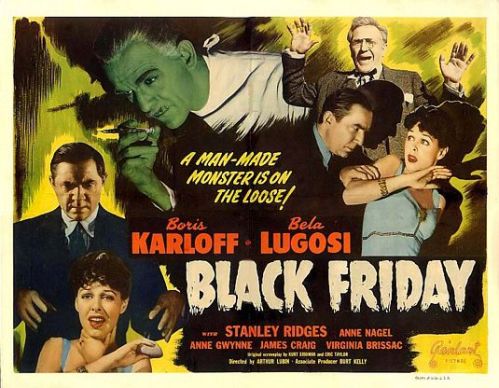
And then there is the 1940 horror movie (see above)…

The Unspoken Election Issue: The Economy

If you want to find the real issues that need addressing, just look at what is not talked about in the election campaign.

The economy has been a topic at a very superficial level, but the deeper issues have been avoided like poison. From a political standpoint, this is completely understandable. But as for problem solving, it is dangerous.

The economy is in the midst of a structural, existential transformation. Big time. One reason not to talk about it is that economics is substantially psychological, depending on a degree of optimism, and no one wants to enable pessimism and tank an already fragile economy. Another reason for politicians to avoid the topic is that they either have no good strategies, or the strategies require the sort of complex and long-winded discussion that citizens supposedly tune out or reject.

Too bad. We have to have “the talk” before it’s too late. It is a little like parents not having the sex talk with their children, only to discover those same children unexpectedly expecting children of their own.

The political question is who is most able to lead us into and through that talk, when the time comes that we can no longer delay and deny it. The answer is that we need leaders who are curious, creative, courageous and flexible. That doesn’t mean discarding guiding principles of ancient and venerable origin, principles such as honesty, integrity, compassion. But it does mean that trying to fit the future of the economy into the paradigms of the past is like watching a child trying to pound a square peg into a round hole. Which is not nearly as frightening as watching grown-up politicians trying to pound a 21st century economy into a 19th/20th century hole.

Predicting tomorrow’s election is a fool’s errand. But here’s a prediction you can take to the bank: This will be the last election that addresses the economic future in such simplistic and maladaptive terms. Because if the immediate future of leadership doesn’t end the tired nostrums and doesn’t include these big vision, big picture, new world considerations of the changes happening right now, the economic context of the next Presidential election could be much, much worse than this one.

The Politics of Economics: Fix the Broken and Ease the Pain

The great political lesson of the Great Depression was to fix the broken economy and ease the people’s pain. More than politics, this was a moral lesson too. Anything less—one and not the other—would have simply been wrong, politically and morally.

In many situations—the medical is one of them—it may not be possible to fix what’s broken without causing more pain in the process. But that doesn’t relieve you of the responsibility to do everything possible to at least diminish that pain, both the original and whatever has been added.

In some ways, this is precisely where the politics of this election sits right now.

Even with the complex metrics of how bad things have been and how much or how fast they may be improving, neither party is unaware that there are problems to be fixed.

The Republican party wants us to believe that they are the ones to better fix these problems. Maybe they are, maybe not.

But the real distinction concerns the pain.

The Republicans seem to say that the pain already being felt and the pain that the fixes may inflict are a necessary and unavoidable phenomenon. Easing the pain will only make things worse and extend the problems, something we cannot afford. In response, some have pointed out that a number of the Republican policy makers are themselves feeling little or no pain.

The Democrats, in a position that is somehow ridiculed, seem to believe that while pain can never be eliminated, there is every reason to ease it whenever possible. That won’t always be possible, but at least it is worth exploring and trying.

In the medical context, there are still people who refuse to take painkillers, believing that it somehow makes you weak or that you are subject to becoming an addict. But medicine also recognizes that pain itself is tremendously stressful on the body, and the healing itself can be compromised by deep, chronic, unrelieved pain.

The same thing goes for the body politic. For those of us who were not there for the Great Depression, we have only family stories or history books. While our current woes are thankfully not that severe, there is plenty of pain to go around, and some of will it stay around for a while. Easing that pain is every bit as important as fixing problems. Mercy is never weakness, whatever some politicians may say.

Should the U.S. Disguise Itself As An Emerging Market?

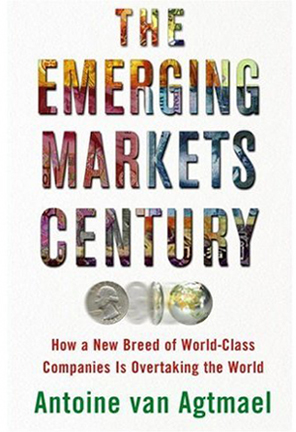
The term “emerging market” was coined in 1981 by Antoine van Agtmael. According to the Economist:

He was trying to start a “Third-World Equity Fund” to invest in developing-country shares, but his efforts to attract money were being constantly rebuffed. “Racking my brain, at last I came up with a term that sounded more positive and invigorating: emerging markets. ‘Third world’ suggested stagnation; ‘emerging markets’ suggested progress, uplift and dynamism.”

The term stuck, but like many neologisms, its meaning has expanded and shifted according to the times. The Economist suggests that it has outlived its usefulness:

Is it time to retire the phrase “emerging markets”? Many of the people interviewed for this special report think so. Surely South Korea, with sophisticated companies such as Samsung, has fully emerged by now. And China already has the world’s fourth-largest economy.

Whatever they are called, emerging markets continue to be prime targets for investment, with clear risks but enormous upside potential.

The U.S. is having problems getting investors to loosen their purse strings and flood our businesses with cash. Our economy is long past and beyond emerging; the perception among some is that it is post-post-emerged, which is to say a little old and over the hill.

That is a perception, not a reality, but perceptions matter as much in investment as elsewhere. So let us change the perception.

The proposal is to declare the U.S. an emerging market. There is a huge underclass just waiting for the means and opportunity to take their place in the middle. There is a middle class with upside potential of its own: although that potential is due to its having receded recently, potential is still potential.

Will investors be fooled by such a trick, what amounts to a name change and disguise? It wouldn’t be the first time. Anyway, as Antoine van Agtmael might say, “emerging market” sounds more positive and invigorating than “mired in recession.”

Money, Power & Wall Street: The Don’t-Miss Can’t-Watch Documentary

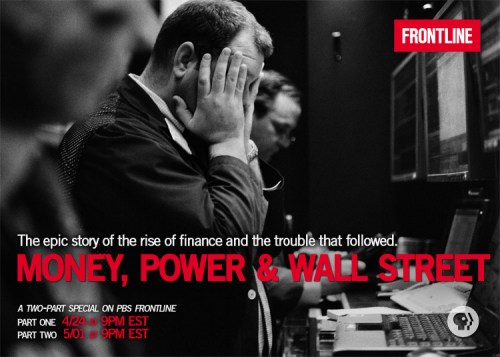
It is hard to recommend the four-part PBS Frontline documentary Money, Power & Wall Street and hard not to. Difficult as it is to watch the financial crisis unfolding, the film is superior even by Frontline’s high standard of excellence. As a history and prospectus, it is an insightful, even-handed and essential work of reporting. As a source of optimism, it is a complete failure, because the conclusion is that nothing has substantially changed, and that maybe nothing will.

It is as good as any disaster movie in pulling us in and moving us inexorably along. We see the scenes in detail, meet the cast of characters—lead and supporting actors—and have a growing sense of foreboding: this can’t end well.

It is different than most disaster movies in two ways. Most have some heroes, and with a few exceptions, there are no heroes here. And most disaster movies end with some movement toward rebuilding and reform, and with a sense of lessons learned: we will keep better watch for asteroids, we will build a system of asteroid warning and protection, we will come out this with a fundamentally better society. There is none of that here.

Yet Money Power & Wall Street has to be seen by every American. Those with political agendas will no doubt point to particular decisions or non-decisions, or particular actions or inactions, to prove a partisan point. But when they do, they will have missed the bigger point. In a world where financial forces become too big to understand or control, it is still our job as citizens and public servants to understand and control them. Because when it finally hits, ideologies and political badges are not really going to matter.

Could We Have Survived a Great Depression?

The Great Recession did not turn into a(nother) Great Depression, and the prospects of continuing towards prosperity, or at least less economic insecurity, seem good. The big question that we now have a limited luxury to ask is this: Could we have survived a Great Depression? The study of that question may be the most valuable we can make.

The Great Depression has spawned an industry for scholars, historians, and thinkers of all stripes, and that has been a good thing. Systems and people are seen truest at their moments of greatest stress, and hardly anything before or since qualifies

Looking at how we managed to survive the last Great Depression – whether it was leadership and action, the normal cycle correcting a horrific anomaly, the fortunate unfortunate impact of a global war, or all/none of the above – tells us something about how we might handle the next. A couple of small starting points:

Creativity matters. Dismissing creative civic solutions out of hand and out of political pique is something we can never afford, and in the worst times something we should never tolerate. Love him or hate him, FDR got boldly creative, pushing the bounds of constitutionality, convention, and common sense. But when things fall apart as they did, common sense is cold comfort. Herbert Hoover, who was in fact a man of civic accomplishment, lacked the boldness and sense of adventure needed for the unprecedented times.

The question is: At that moment in 2008, if things had gone from bad to worse, would there have been the will to be creative and to try things, even if that meant setting aside ideology and political advantage. The answer is that nothing at the time, and nothing today, tells us that there would have been.

Optimism matters. One of the latest political ads from Rick Santorum depicts a cautionary apocalyptic vision of Obama America, something straight out of the Book of Revelation. During the Great Depression, there was no need for a fanciful version of the Apocalypse; it was already there. Books, songs, and movies painted an accurate vision of hardship, but they also tried for uplift and hope. The best and smartest politicians realized that when the spirit of America was already broken, the last thing people needed was a reminder that things could and might yet get worse. Happy days might not have been there again, as the song said, but there was no point in saying that they never would.

So as with the dismissal of creative solutions, the question is, in the face of a 21st century Great Depression, whether today’s politicians could find a way to set aside the darkness and pessimism for a brighter vision of good times ahead, even if it meant faking optimism, even if it meant losing political advantage. There is little evidence of that.