Why all this talk about stagflation?
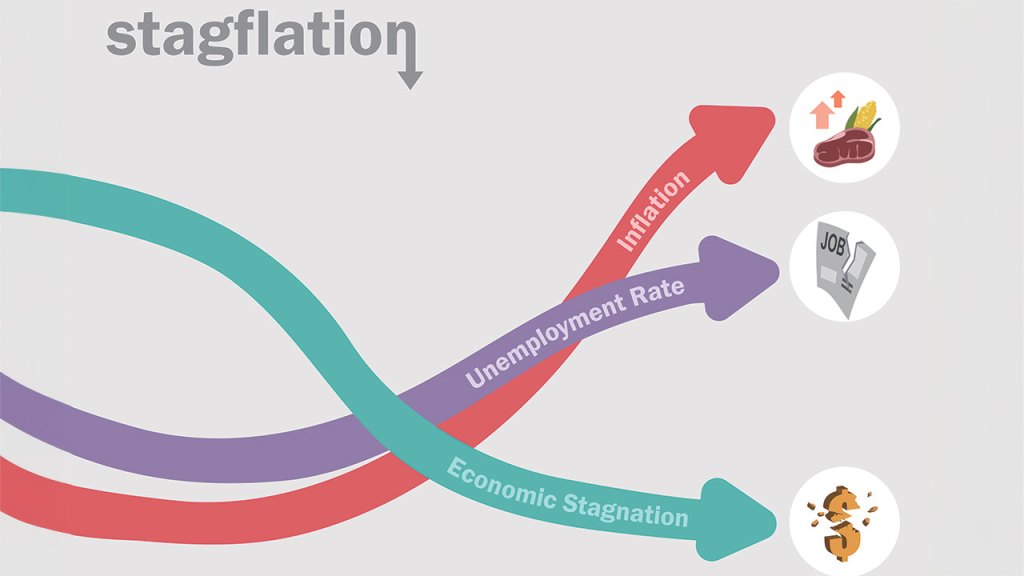
Stagflation is the simultaneous occurrence of high inflation, high unemployment, and slow (or negative) economic growth. It defies classical economic theory, which held that inflation and unemployment move in opposite directions (the Phillips Curve trade-off) — meaning policymakers can’t use standard tools without making one problem worse.
Raising interest rates curbs inflation but deepens unemployment. Stimulus spending reduces unemployment but worsens inflation. Policymakers face a genuine dilemma with no clean solution.
The defining American stagflation episode ran roughly 1973–1982. Unemployment hit 9% in 1975 while inflation ran above 10% — numbers once considered theoretically impossible together.
Fed Chairman Paul Volcker deliberately induced a severe recession (1981–82) by pushing the federal funds rate above 20%, breaking inflationary expectations. Unemployment peaked near 11%, but inflation was crushed from 13% to 3% by 1983.
A couple of Americans generations have no experience of stagflation. If they pay attention to the possibility at all (as noted, once considered a theoretical impossibility), it is an arcane matter of economic history.
Hints of stagflation have been showing up over the past year, and more so in recent months. Inflation has been stubborn, though not stratospheric, while employment has been shrinking and the economy less than robust.
The previous stagflation began in 1973 with the OPEC oil embargo. Then as now, despite attempts to promote alternatives, oil is a primary driver of the economy. The current serious oil disruption, with concomitant inflation not only at the gas pump but in many sectors, might not be enough by itself. But despite what you might be hearing from some sources, the economy is less strong than it has been in a while. So even if there is a quick wrap up of this war on Iran, with relief on the shipping of oil, there are other areas of concern.
Could we again see ever higher inflation and ever higher unemployment? Do we have the best and the brightest economic minds leading the nation, able to respond effectively to the not theoretical scourge and suffering of stagflation? Only when the best and the brightest return to American leadership do we have a chance.
 Bob Schwartz