Music: John Coltrane and Miles Davis
You like jazz. You don’t like jazz. You are allergic to jazz. You haven’t listened to enough or any jazz to know.
Not liking jazz is like not liking fruit. So many types, so many songs, so many performers and performances.
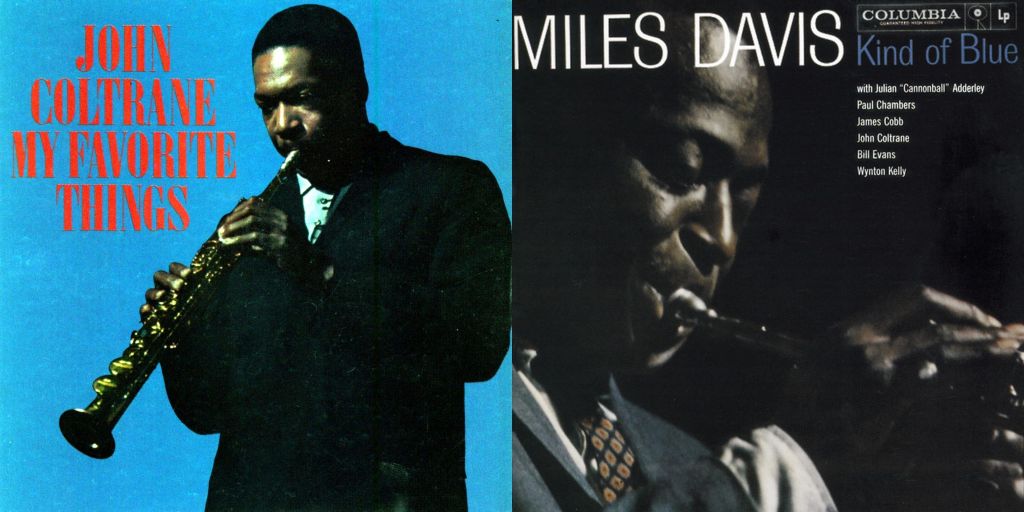
Here are a couple of tracks and a couple of artists that might get through to you. Both are from epochal albums by epochal artists, My Favorite Things (1960) by John Coltrane and Kind of Blue (1959) by Miles Davis.
With all respect, appreciation and affection for all the other genres I’ve spent millions of hours listening to, jazz is the most liberating. It does a lot of other things, as all the other genres can, but no other genre has so many artists trying to liberate themselves, which is why listening to it is also liberating.
It is not a coincidence that following the historic horror of World War I the Jazz Age was born. In the face of existential threat—or certainty—freedom was the theme. It isn’t the only music that reflects the possibility or the imperative of breaking free. But it is one that, if you’ve missed it, you shouldn’t miss.
John Coltrane, My Favorite Things from My Favorite Things (1960).
Coltrane took the saxophone where it had never been before. On this album, accompanied by other greats McCoy Tyner on piano and Elvin Jones on drums, he plays with standards from George Gershwin, Cole Porter, and this one from a Broadway musical, Rodgers and Hammerstein’s Sound of Music.
Miles Davis, Freddie Freeloader from Kind of Blue (1959).
Kind of Blue is a jazz milestone, for Davis and for the music. Here he is with Bill Evans on piano and John Coltrane and Cannonball Adderley on sax. Coltrane was for a time part of Davis’s ever-changing lineup of stars.
 Bob Schwartz