Bob Schwartz

The Grinches will not steal our winter solstice

Today is the winter solstice in the northern hemisphere. The shortest daylight of the year, the start of the inexorable amble to…more light!

During difficult times—war, pandemic, etc.—it can be hard to look away from whatever shady public events overwhelm our attention. It has been said this year that like the Grinch, some seem committed to stealing Christmas from us.

“They” haven’t stolen Christmas and “they” will not steal the winter solstice.

If you are in the northern hemisphere (some of you are not, so happy summer solstice), the winter solstice is a little different in different places. Warmer places get a little colder while more moderate places get a lot colder.

Here is the good news. The earth, our home planet, is circling and spinning. The day lights will get longer, the dark nights will get shorter. Spring will arrive in three months. Ever thus.

“They” will not and cannot change that.

Happy Winter Solstice!

The Magi

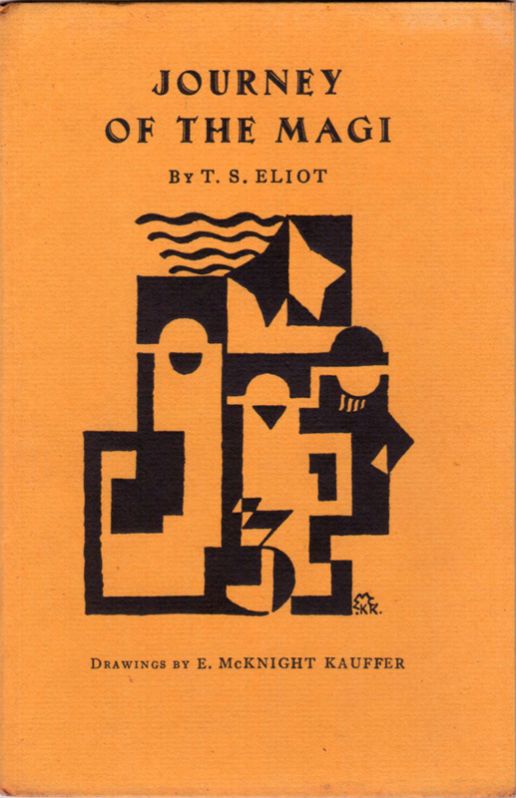
Journey of the Magi
The magi are for everyone, whatever your beliefs.

These three figures in the Christmas tradition appear in only one of the four Christian gospels, and even that role in Matthew is sketchy. They are foreigners bringing gifts for the infant Jesus and they return home by a different route to evade Herod. That’s it.

Translations and interpretations of what they brought vary, and even less clear is exactly who these foreigners were supposed to be in the story. They may be kings, wise men, astrologers or, as some have it, Zoroastrian priests from Persia.

This is why the particulars don’t matter much at all: the story is so basic and illuminating that it has captured the imagination of millions in its various retellings. Christian faithful have one view of it, and the more literal vision is that of concrete history. But for those who lean away from that, there is much to be gotten out of this compelling story:

  • Some people of discernment—in terms of wisdom, astrology or otherwise—had a sense that something special was going on outside of their ordinary sphere. Maybe they saw a light.
  • They travelled a long way to discover what was going on, and having found out, expressed their gratitude humbly and generously.

Again, that’s it. Some may want to think about theology. Others may want to think about other sorts of lights they’ve glimpsed, journeys they’ve made or haven’t made, and about possibilities. Christmas or just winter solstice and New Year, there is no better time to think about possibilities and all the rest.

T.S. Eliot wrote a brief but cinematic poem about the magi. It is written from a believer’s perspective, as the magi suffer twice, once on the journey, once again when they return home and find themselves so spiritually transformed by the experience that they feel like strangers in their own land. This is certainly a Christian view of the holiday, but non-Christians may just as well consider the more general phenomenon of all sorts of enlightenment, sitting between the way you have been and the way you discover you could be or already are. The magi say they would be glad of another death like that.

© 2025 Bob Schwartz


The Journey of the Magi
T.S. Eliot

‘A cold coming we had of it,
Just the worst time of the year
For a journey, and such a long journey:
The ways deep and the weather sharp,
The very dead of winter.’
And the camels galled, sorefooted, refractory,
Lying down in the melting snow.
There were times we regretted
The summer palaces on slopes, the terraces,
And the silken girls bringing sherbet.
Then the camel men cursing and grumbling
and running away, and wanting their liquor and women,
And the night-fires going out, and the lack of shelters,
And the cities hostile and the towns unfriendly
And the villages dirty and charging high prices:
A hard time we had of it.
At the end we preferred to travel all night,
Sleeping in snatches,
With the voices singing in our ears, saying
That this was all folly.

Then at dawn we came down to a temperate valley,
Wet, below the snow line, smelling of vegetation;
With a running stream and a water-mill beating the darkness,
And three trees on the low sky,
And an old white horse galloped away in the meadow.
Then we came to a tavern with vine-leaves over the lintel,
Six hands at an open door dicing for pieces of silver,
And feet kicking the empty wine-skins.
But there was no information, and so we continued
And arriving at evening, not a moment too soon
Finding the place; it was (you might say) satisfactory.

All this was a long time ago, I remember,
And I would do it again, but set down
This set down
This: were we led all that way for
Birth or Death? There was a Birth, certainly
We had evidence and no doubt. I had seen birth and death,
But had thought they were different; this Birth was
Hard and bitter agony for us, like Death, our death.
We returned to our places, these Kingdoms,
But no longer at ease here, in the old dispensation,
With an alien people clutching their gods.
I should be glad of another death.

The scariest episode of the original Twilight Zone, It’s a Good Life, features a powerful and petulant six-year-old boy who destroys the world and demands that everyone think good thoughts about him.

“A monster had arrived in the village. Just by using his mind, he took away the automobiles, the electricity, the machines, because they displeased him. And he moved an entire community back into the Dark Ages, just by using his mind.”

Rod Serling introduces the Twilight Zone episode It’s a Good Life (Season 3, Episode 8):


Tonight’s story on The Twilight Zone is somewhat unique and calls for a different kind of introduction. This, as you may recognize, is a map of the United States, and there’s a little town there called Peaksville. On a given morning not too long ago, the rest of the world disappeared, and Peaksville was left all alone. Its inhabitants were never sure whether the world was destroyed and only Peaksville was left untouched, or whether the village had somehow been taken away. They were, on the other hand, sure of one thing – the cause. A monster had arrived in the village. Just by using his mind, he took away the automobiles, the electricity, the machines, because they displeased him. And he moved an entire community back into the Dark Ages, just by using his mind. Now I’d like to introduce you to some of the people in Peaksville, Ohio. This is Mr. Fremont. It’s in his farmhouse that the monster resides. This is Mrs. Fremont. And this is Aunt Amy, who probably had more control over the monster in the beginning than almost anyone. But one day she forgot. She began to sing aloud. Now the monster doesn’t like singing, so his mind snapped at her, and turned her into the smiling vacant thing you’re looking at now. She sings no more. And you’ll note that the people in Peaksville, Ohio, have to smile. They have to think happy thoughts and say happy things because, once displeased, the monster can wish them into a cornfield, or change them into a grotesque walking horror. This particular monster can read minds, you see. He knows every thought, he can feel every emotion. Oh, yes, I did forget something, didn’t I. I forgot to introduce you to the monster. This is the monster. His name is Anthony Fremont. He’s six years old with a cute little-boy face and blue guileless eyes. But when those eyes look at you, you’d better start thinking happy thoughts. Because the mind behind them is absolutely in charge. This is the Twilight Zone.


Serling closes the episode:


No comment here. No comment at all. We only wanted to introduce you to one of our very special citizens, little Anthony Fremont, age 6, who lives in a village called Peaksville, in a place that used to be Ohio. And if by some strange chance you should run across him, you had best think only good thoughts. Anything less than that is handled at your own risk. Because if you do meet Anthony, you can be sure of one thing: you have entered the Twilight Zone.


Below is a five-minute clip from the episode. If you can and are willing, you will find this episode streaming. It was originally scary, but today you might find it scarier that a man-child with infinite power demands that people have good thoughts about him—or else.

The Twilight Zone.