Everything says: You must change your life.
by Bob Schwartz
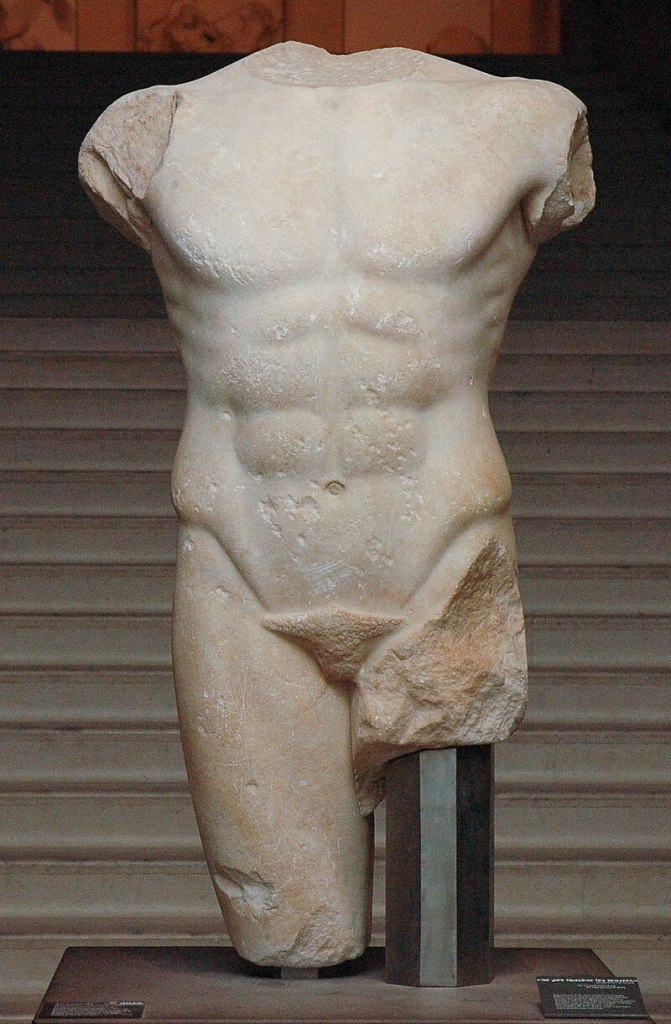
Archaic Torso of Apollo (1908)
By Rainer Maria Rilke
Translated By Stephen Mitchell
We cannot know his legendary head
with eyes like ripening fruit. And yet his torso
is still suffused with brilliance from inside,
like a lamp, in which his gaze, now turned to low,
gleams in all its power. Otherwise
the curved breast could not dazzle you so, nor could
a smile run through the placid hips and thighs
to that dark center where procreation flared.
Otherwise this stone would seem defaced
beneath the translucent cascade of the shoulders
and would not glisten like a wild beast’s fur:
would not, from all the borders of itself,
burst like a star: for here there is no place
that does not see you. You must change your life.
The famous last sentence of this poem has inspired much analysis.
It is thought that the above statue in the Louvre is the subject of Rilke’s poem. In any case, the message he took away from gazing at a statue is profound: You must change your life.
I am not Rilke or any of the talented exegetes of poetry or philosophy. But I have a suggestion.
Everything says: You must change your life.
It might be a situation or circumstance. It might be something you hear, not even a song but just a sound. It might be something you see in a museum. It might be something, anything, you encounter in the course of your day, of your day in a life. Anything, everything says: You must change your life.
There is a perspective, from science and religion, that says that everything is in a state of constant change. So if everything is constantly changing, why not you? Why not your life?
 Bob Schwartz