Colleges under attack in America can take comfort from the comic book hysteria of the 1950s
by Bob Schwartz

“We know that the dreams of adults often contain images of forbidden acts in which one of the participants belongs to a group of people considered socially inferior by the dreamer. In this way the forbidden act itself can break through the psychic censorship. Through such psychological mechanisms comic books give children a feeling of justification for violence, and sadism, frequently in fantasy and sometimes in acts. They supply a rationalization for these impulses. A large part of the violence and sadism in comics is practiced by individuals or on individuals who are depicted as inferior, sub-human beings. In this way children can indulge in fantasies of violence as something permissible.”
Fredric Wertham, Seduction of the Innocent
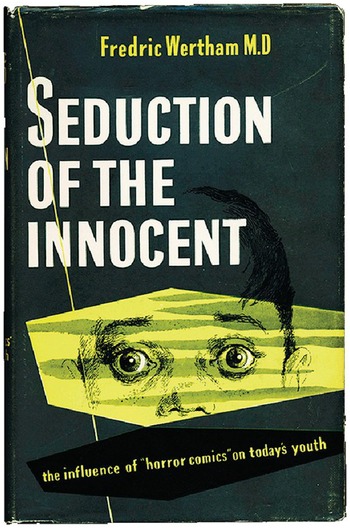
It may seem that colleges now under attack have nothing to do with or learn from the history of comic books in America. They do.
Comic books have been a major cultural force for decades. In the 1950s, between a million and a million-and-a-half copies were being sold each month in America, mostly to young people.
Then in 1954, psychiatrist Fredric Wertham published a book, Seduction of the Innocent. His treatment of young people and his observation of juvenile delinquency in America convinced him that the culprit was comic books.
His book and his analysis were a national sensation, reaching Congress and a series of damning hearings. The comic book industry, seeing its sales fall, established a self-policing Comics Code, assuring that horror, violence and weirdness were eliminated.
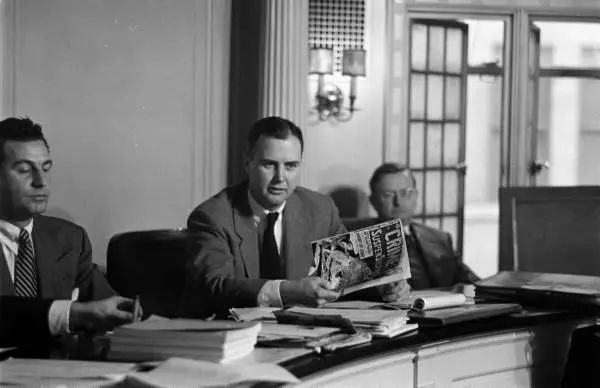
We know that comic books came back from this as a major multimedia cultural force. A force so overwhelming that it has generated not one but two huge media universes—the DC Universe (DCU) and the Marvel Universe. Generations of extraordinary crowd-pleasing creativity has been let loose, not to mention billions of dollars.
Colleges take heart. It would be better if colleges weren’t asked to compromise their freedom and independence, just as it would have been better for the comic book industry. The colleges may choose to self-police, just as the comic book publishers did. But there is a tomorrow where your greater, freer, more independent days are ahead. It worked for comic books. It can work for you.
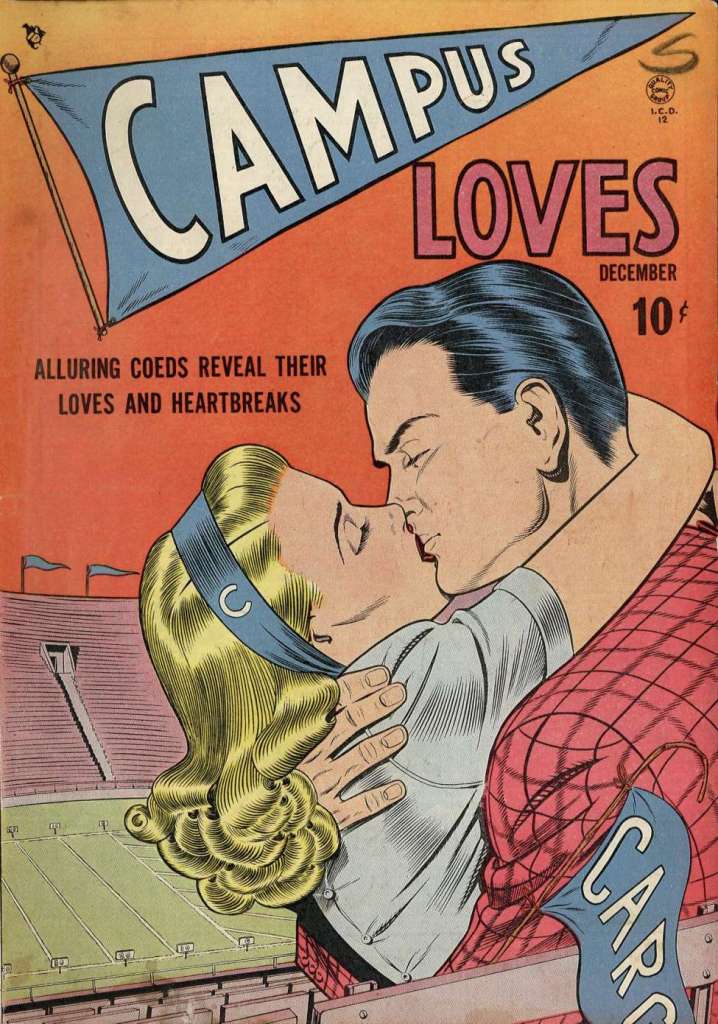
I could not resist looking back at how colleges were being handled in the comic books of that era. The good news is that college was not a place of horror, violence and weirdness. Campus was apparently a place of love and romance. No nightmares there.

© 2025 Bob Schwartz
 Bob Schwartz