The problem with the new U.S. Department of Labor social media campaign is not only the depiction of all white men. The real problem is that it looks like Nazi Germany worker propaganda.
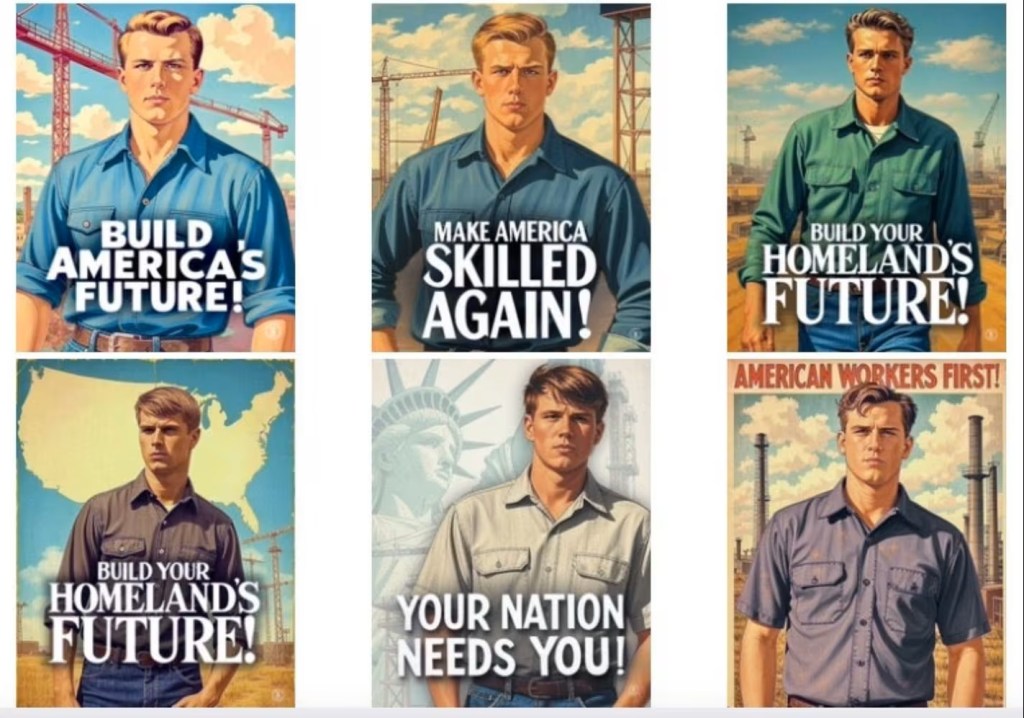
“In the Nazi worldview, there was a close link between the German spirit and productive labor for the advancement of the Volksgemeinschaft. Tapping the full potential of worker productivity rested on improving worker morale and increasing worker support for the regime more generally.”
The Washington Post writes:
Labor Department social media campaign depicts a White male workforce
The campaign has drawn scrutiny, with critics saying the agency is not realistically portraying the diversity of the country and is sending messages that feel exclusionary.
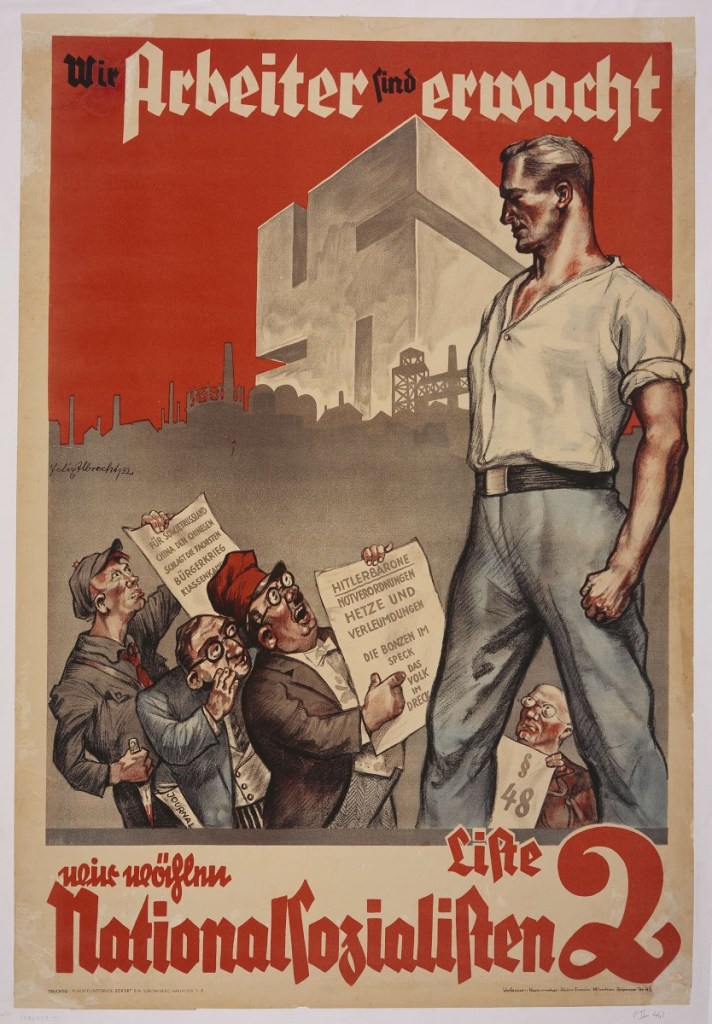
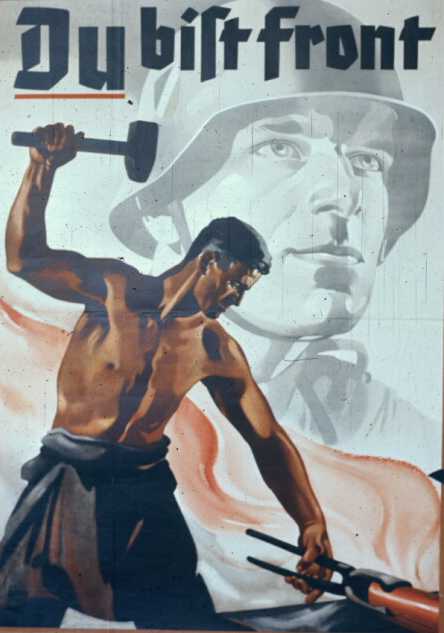
While the male whiteness of the campaign is problematic, that wasn’t my first impression. What it looked like to me was a workforce campaign you might have seen in Nazi Germany, not just because of the handsome and rugged Aryan men, but in the very style of the art. The inclusion of the word “homeland” doesn’t help, although it is better than “Build Your Fatherland’s Future.”
Or am I just oversensitive to those visual and verbal echos?


 Bob Schwartz