Starting in the early 1970s, Weather Report and its virtuoso composers and players—Joe Zawinul on piano, Wayne Shorter on sax, and by the time of this track Jaco Pastorius on bass—were part of the loosely-defined jazz fusion movement. Fused with what? With whatever sounded good to master musicians, in hope that listeners would come along. Their motto might have been “listen without prejudice”. Listeners did and made Weather Report musical stars.
I’ve picked A Remark You Made from the Heavy Weather album (1977), not just because it might be more pleasing to non-jazz people, but because it is so beautiful and contemplative, as indicated by one YouTube listener commenting, “I want this played at my funeral.”
To honor the Blue Jays, the Trump tantrum, etc., I offer a once-in-a-generation musical moment.
Martin Scorcese’s The Last Waltz (1978) is a documentary about the last performance of The Band, accompanied by many musical friends, at Winterland in San Francisco. The movie begins with the words “This film should be played loud!” and it should be.
The Band, all but one of them Canadians, were joined by two other legendary Canadians, Neil Young and Joni Mitchell.
Here are Neil Young, The Band and Joni Mitchell performing Young’s Helpless.
Polls matter little in non-democratic countries. The vast majority of citizens might vehemently disapprove of national leadership, but how does that matter? The only way forward is for opponents to band together, even in the face of jailing or disappearance, and do whatever is possible to change leadership and restore democracy.
I had a related question which I asked my occasional thought partner Claude:
Q: If there had been public opinion polling in Nazi Germany, can we speculate about how the German people would have answered the question of whether they approved or disapproved of the job Hitler was doing?
In part, here is what Claude answered:
Based on what we know from various sources – SD (security service) reports, private diaries, emigrant accounts, and postwar testimonies – we can make some educated speculations:
Early-to-mid 1930s (1933-1937): Approval likely would have been quite high, possibly 60-80%. Hitler achieved what many Germans saw as remarkable successes:
Dramatic reduction in unemployment (from 6 million to under 1 million)
Restoration of national pride after Versailles humiliation
Late 1930s through early war (1938-1941): Still likely majority approval, though perhaps more mixed. Military victories came quickly with relatively light casualties, and life for “Aryan” Germans improved materially.
Mid-to-late war (1942-1945): This would have become increasingly complicated. Approval likely declined as:
Casualties mounted
Cities were bombed
Food shortages worsened
Defeat became inevitable
I draw a couple of conclusions from this.
Approval ratings only matter if they can practically lead to change. Had there been polls in Nazi Germany, even as approval declined, the only way to topple a powerful absolute ruler is to have internal comrades or external forces successfully make the change. Even so, if Hitler’s commanders had managed to get away with overthrowing him, democracy would not have been restored.
The early years of Nazi Germany had a lot of approving citizens, except of course those who were threatened, injured, jailed or killed. These citizens had a lot of complaints and held a lot of grudges, and they had a leader who seemed to be taking care of all that—or at least he claimed to be. If there was a price to pay for improving conditions, national pride, and elimination of the wrong people, those approving citizens were not (yet) paying it. Until they did.
There are two ways to look at the extraordinary claim that you are responsible for everybody’s suffering—including your own:
It is actually true.
It is virtually true.
Actually, in this life, you have caused others to suffer and caused yourself to suffer. This is something to address, though in your mind it falls far short of everybody.
Virtually, with a different concept, you have been around before this life, as have all others. These others have been friends, enemies, or strangers to you in those lives. And now those others are back as friends, enemies, or strangers to you. Did you cause any of them suffering before this? Did you cause all of them suffering before this? Are you causing any or all of them suffering now?
Call it a trick of the mind. No matter your metaphysical beliefs, if you consider it a possibility that you owe everybody your compassion—as if that is so—what have you lost? Is there some fine point of moral philosophy or justice that you are stubbornly determined to prove by making distinctions—and continuing to cause suffering?
Once you have opened up to that, it is not even a step to include yourself in that company. Yes, you are one of the everybody that you have made suffer. So yes, you are just as deserving of the compassion you are extending to everybody.
Some are allergic to jazz, just like some are allergic to many delicious and nourishing foods, or think they are. I get it.
Alice Coltrane’s Journey to Satchidananda (1970), from the eponymous album, is jazz, but gentle jazz, also delicious and nourishing. It features Alice Coltrane on harp and Pharaoh Sanders on sax.
Some politicians, without naming names or pointing fingers, do what will get themselves elected/reelected (by votes) or keep them in the race (by not being primaried), and convince themselves that their actions are therefore “the right thing”. This gives them some peace, as in not anguishing and losing sleep, by bridging the gap between pragmatism and principle.
This has been on display for as long as there has been politics. But it has been especially evident in these times, as the gap between political action and the right, humane, legal, constitutional, reasonable thing grows wider.
Again, not naming names, but the most recent weekly message from our Congressman reflects this. To supplement the above thoughts, one might say that the gap between politics and principle is frequently filled with, to be polite, nonsense. Ever thus. But knowing that is the case, especially these days, does not make it easier.
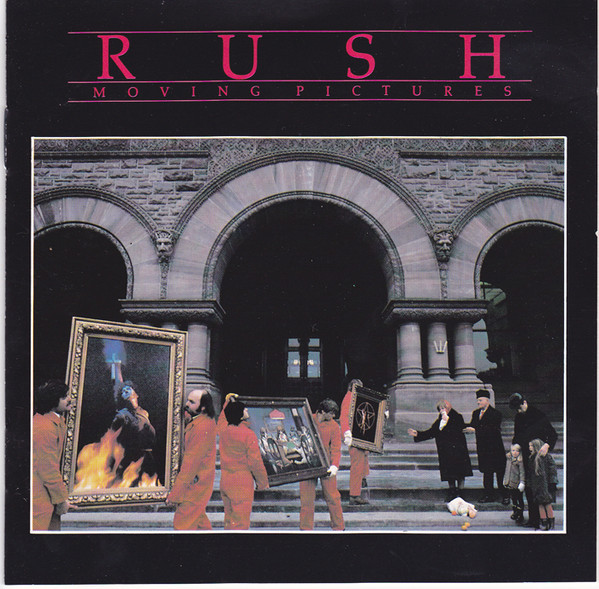
I wanted to pick just one song by one musical Blue Jays fan, so here it is. Geddy Lee of Rush (45 million albums sold) is frequently seen at Blue Jays games. Hard to pick just one Rush track, so here it is.
Tom Sawyer (1981) has nothing to do with baseball. Or does it? Maybe you don’t like Rush. Maybe you don’t like this kind of music or music in general. Maybe you don’t like Canada. Maybe you don’t like baseball. As I wrote in my last post, it’s a free country?
Anyway, if you let this move you, lift you, perplex you, it will.
The Toronto Blue Jays have won the championship of the MLB American League, heading to the World Series against the Los Angeles Dodgers.
When the Arizona Diamondbacks (National League champion in 2023) failed to make this year’s playoffs, I temporarily moved my fandom for this season to the Toronto Blue Jays.
Why? Because I already liked our North American neighbor Canada, but when Trump began his campaign of disdain and disrespect—idiotically suggesting that it should become the 51st state—I became a bigger Canada supporter and promoter.
It is still a question whether the Blue Jays can defeat the Dodgers, though it would be great to have a Canadian team as world champion of the American game (they have before, 31 years ago).
I am guessing that some MAGA people, often uninformed and irrational, will clamor for this Canadian team to be excluded entirely from Major League Baseball. Or, alternatively, will push harder for Canada as a 51st state.
I’m not saying that if you don’t love Trump you should love the Blue Jays. I’m not not saying that. Maybe you love LA, maybe you love the Dodgers. It’s a free country?
All I’m saying is that the Blue Jays are a very good baseball team, that Canada is a very good independent country with lots to recommend it, so rooting for the Blue Jays is worth considering. O Canada! Go Canada!
I have been listening to music through ear devices for decades. Being older, that includes single-earphones cabled to a monoraul, low-fi transistor radio.
Over the years, as stereo devices—radios, players, phones—took over, I’ve had many different personal listening tools. Wired, wireless, over the ear, in the ear.
When it comes to amplified music, through speakers or earphones, I have good ears but not smart or genius ears. I would never call myself an audiophile, and neither would those who call themselves audiophiles. But I know better sound when I hear it, so I’m willing to go a little above the bottom tier of amps and speakers, but not a lot.
Spotify, my music streamer of choice, finally is offering what it calls lossless audio. It is not the absolute highest level of audio that other services offer, but it is very good.
There is a small issue about lossless for those who listen, as I mostly do, via Bluetooth. Bluetooth cannot carry lossless, though even degraded it is still high quality. But I did want to try out this new level, and the only way to do that is through wires, to speakers or to earphones.
I still do use wired earphones sometimes, nice but plain vanilla ones (that is, relatively inexpensive). When I looked around, I discovered something that audio people know all about, but as I said, I am not that audio guy.
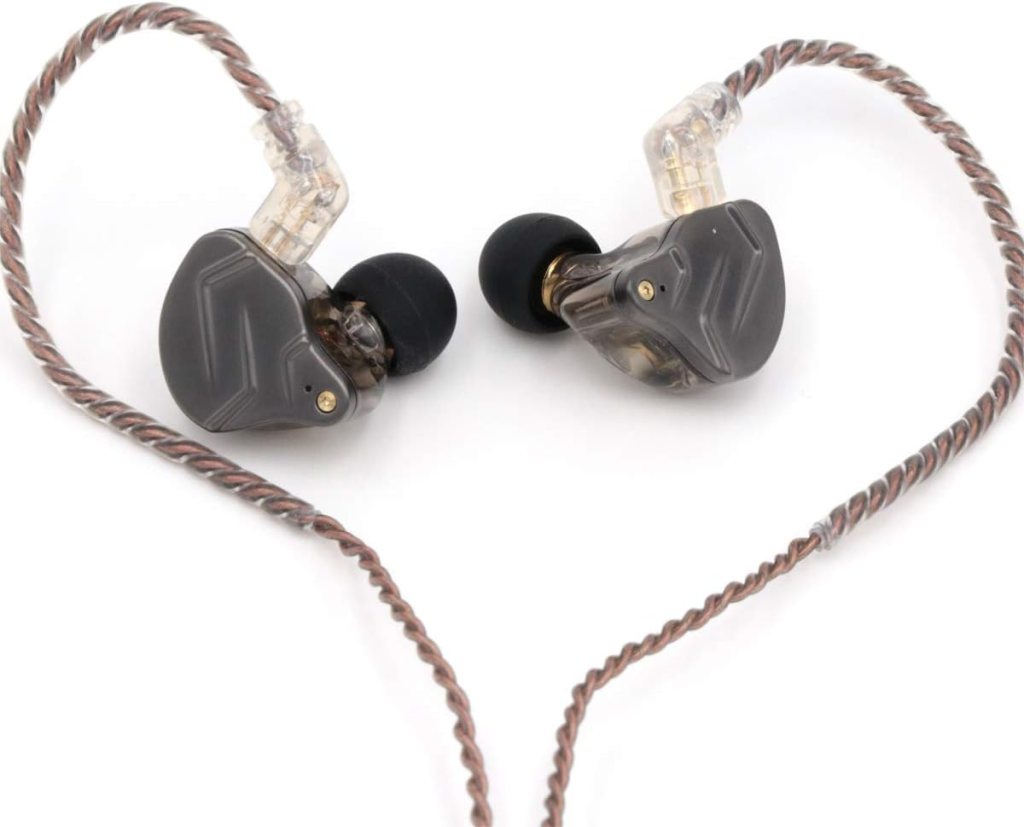
In-ear monitors (IEMs) are often used by music professionals, on stage or in studio, because the fidelity is greater. To put it in simple terms, they are like tiny powerful speakers you put in your ears.
I got a very modest ($18) pair of IEMs from a reputable tech company. The sound is as good as promised. The lossless audio really does sound better, even to an inexpert ear.
Now the issue, which I could have figured out if I had thought. Instructions for standard earphones and headphones warn about high volume, which they should. But the instructions for these spent lots of time on the matter.
After I tried them, I knew why. I always keep the volume down. Years ago, with earphones in, I accidentally plugged in with my device at unsafe volume and, in the vernacular, I blew my ears out. It was not permanent, but it was a warning.
When I started listening through these IEMs, at a safe low volume, trying out a few classical tracks, it was great. But when I took them out, I felt a bit the way you do after a very loud live concert.
I checked it out, and indeed, IEMs, when used too loud or too often, can cause hearing loss. Which, if you go back to something I said before, is not a surprise, since these are like tiny powerful speakers in your ears.
What now? Is the extra bit of audio quality worth it, or should I just be listening to this excellent audio through speakers or less dangerous earphones?
A lot of star musical artists have lost their hearing because of their art. I am not a star or musical artist, standing among columns of speakers, playing to millions. I’m definitely not Beethoven. I’m just a guy who loves listening to music.
The new IEMs are sitting here. Will I use them again? We’ll see. And hear.
At this moment, six of the nine universities who were offered the White House deal to get money in exchange for losing control of their schools have turned it down. Only the University of Arizona, Vanderbilt University and the University of Texas are still considering it. Today is a deadline, so by the time you read this, there may be more decisions made.
Strategically, while the White House would be happy with all or most of the schools accepting the agreement, Trump can be okay if only one university accepts. Here’s why:
The accepting school or schools will be showered—flooded—with federal money in ridiculous amounts. Meanwhile, the schools that rejected the offer will see funds dry up. This will serve as a terrorizing demonstration, a tactic that Trump continues to use in a variety of domains, global and domestic. Not just a high-powered version of carrot and stick. A threat, a warning, of what could happen to those who don’t comply with whatever the latest demand is.
To use the coarse language that Trump sometimes uses in public, and probably uses frequently in private, he wants to show resistant universities that he is not fucking around. He isn’t.



 Bob Schwartz