My view sometimes, maybe yours sometimes, is to see myself as superior. It may not be direct or obvious. Holding an opinion of someone or something, what to do or not to do, what to believe or not believe, is seemingly just application of our knowledge, experience and reason. But underneath may be this: I know better, or maybe, I am better.
A step back from viewing ourselves as superior is to view all others as equal to us. Not just in the sense of legal and moral rights and judgments, but as a matter of being, theirs and ours. To see others , detailed differences aside, as needing and wanting exactly what we need and want, as suffering exactly as we suffer. As being equal.
If this seems hard, it is. Think of the person you have most criticized or reviled in recent days and say: He is just like me. I am not superior to him. He and I are equals. Hard indeed.
But it gets harder.
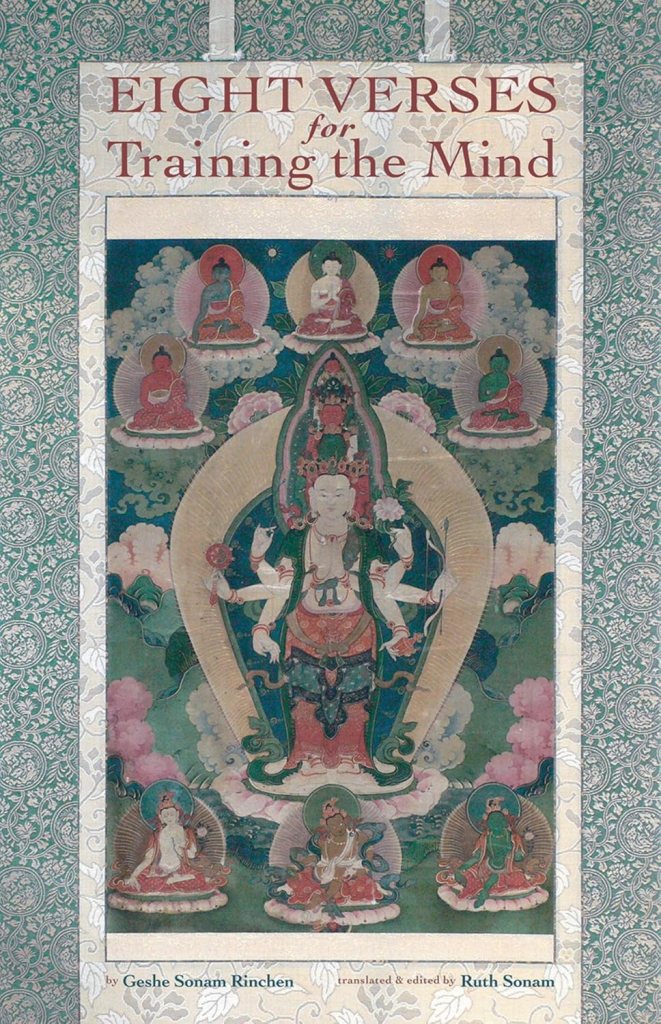
Eight Verses for Training the Mind says:
Whenever I am in the company of others, May I regard myself as inferior to all And from the depths of my heart Cherish others as supreme.
As I said, harder. But incomparably valuable, if we are to move ourselves away from always or often putting ourselves first.
Why do we do, say and think what we do, say and think?
What we do, say and think is important. But it is also important, more important, why we do, say and think what we do, say and think.
We are advised to transform ourselves beyond our self-importance and self-cherishing. Even when our acts, words and thoughts appear to be worthy and laudable, they may be driven by motives that are intended to feed our self-importance and self-cherishing.
We are advised to learn how to set aside our worldly concerns, including seeking gifts, fame, praise and pleasure. Are our good deeds and kind words motivated, in whole or in part, by these concerns?
It isn’t easy to investigate our motives and intentions. It is a way to make what we do, say and think better and purer.
“Cinema can protect memory and can keep Palestinians on the ground because films are like dreams, ideas. Nobody can occupy dreams. Nobody can occupy ideas. Nobody can occupy memory … Nobody can occupy your imagination.” Director Rashid Masharawi
From Ground Zero (streaming) is a collection of 22 short films made in Gaza. Initiated by Palestinian director Rashid Masharawi, the project was born to give a voice to 22 Gazan filmmakers to tell the untold stories of the current war on film. It was Palestine’s entry to the 2025 Academy Awards.
‘Nobody can occupy your imagination’: From Ground Zero’s producer on documenting his native Palestine
Rashid Masharawi, who produced the anthology of 22 films that was Palestine’s official entry to the Academy Awards, has remarkable optimism about the future of Gaza
Being a Palestinian under Israeli occupation will not help someone make a good film, according to Rashid Masharawi, but a good film-maker will help Palestine.
With his anthology film From Ground Zero (in Arabic: From Zero Distance) he attempts to do just that by bridging the space between the Palestinians in Gaza who have endured a campaign of annihilation behind closed doors to those around the world watching as an incomprehensibly vast tragedy unfolds in real time.
The result is a collection of 22 shorts by Palestinian film-makers, ranging from documentary to vignettes and animation, which turns our attention not only to the past – and to the unrelenting violence of the present, when the death toll in Gaza continues to climb – but also to the future and what cannot be taken.
“Cinema can protect memory and can keep Palestinians on the ground because films are like dreams, ideas. Nobody can occupy dreams. Nobody can occupy ideas. Nobody can occupy memory … Nobody can occupy your imagination,” said Masharawi in an interview in London ahead of the film’s release in UK cinemas on 12 September.
“We have to be optimistic. We have to tell the people: ‘Tomorrow it’s a better day. Keep dancing, keep creating, keep making films, because it means you have the future.’”
Personal transformation is not about changing what you do or what you say. It is about changing what and how you think, thinking that leads to the what you do and say. It is about changing who you are.
It has been going on as long as there have been people. It is unique to people. Other beings act according to their nature, and can respond to circumstances and environment according to their nature and experience. But only people can explore that nature and make a choice to follow it or to transform it, or at least to try.
Changing circumstances and environment are challenges and catalysts for personal transformation. When those changes happen, people may act in different and adaptive (or non-adaptive) ways. Some people will conclude that changing what we do will never go far enough, and changing who we are is needed.
Again and again, the twentieth century threw new circumstances at us. While every earlier era had done the same, this time seemed different. For just one example, three times, in the course of thirty years, global warfare and destruction climbed to heights and descended to depths once only imagined in fiction.
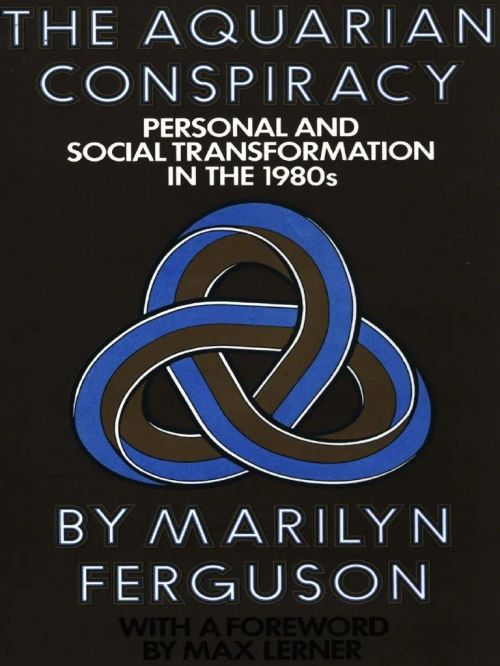
Sometime around the 1950s and 1960s, two intertwined movements emerged. One strand was cultural, social and political, that is, external, a movement that came to be tagged a counterculture. At the same time, not entirely unrelated to psychoactive agents, a spiritual and transformative movement emerged. Down the road, we see that leaving two legacies. Practices like yoga exploded on the transformative side. On the other hand, while drugs as transformative tools never left, there was/is a lot of getting wasted up/down/sideways.
Starting around 1980, the transformative counterculture morphed into what has been called the New Age movement. In essence, we are at a new era, where we recognize that changing ourselves and changing things—which are increasingly challenging—are inextricably linked. If we don’t change, things won’t change, whatever well-meaning strategies and initiatives we try.
The current complexity needs no recap. There has never been a time like this. Whatever we think about the New Age movement, an interesting little moment in cultural history or a still much needed development, remember: If we don’t change things won’t change.
The similarities between Israel and America are so striking that they might as well be twin nations.
Israel and America have stopped caring, to the extent they ever did, about what the world or their neighbors think.
Israel and America believe the whole world is against them.
Israel and America have stopped behaving according to the established conventions of statecraft or the rule of law, national or international.
The leadership of Israel and America is supported by a minority of the citizenry and the majority of the citizenry oppose the regimes.
The leadership of Israel and America use real emergencies (Israel) and pretext pretend emergencies (America) to justify their agenda, maintain office and extend power.
Self-portraits, of which selfies are a modern version, are nothing new. Whether by words or images, telling and showing about yourself is as old as telling and showing.
Selfies can be viewed different ways. They say: I was here, in this place, with this person or these people. They might also say, in the same breath: Here I am, not just in the picture but essential to the picture, the most important thing in the picture.
When the following note was written, Trump was still in the first year of his first term. So much has happened since that we may forget that Trump 1.0 was just an earlier model of Trump 2.0. I was then speculating that things could be worse with a smarter and more skilled demagogue. What I didn’t imagine was that the next demagogue wouldn’t be smart, skilled, knowledgeable, attractive, or capable, but would be Trump himself.
Donald Trump thinks of himself as the greatest demagogue America has ever seen, a popular savior and Supreme Leader at a time of widespread dissatisfaction, whose loyal cult of personality allows him to get away with anything.
He has turned out to be wrong, for the simple reasons that he has no real governing skills, that he is psychologically unstable, narcissistic and childish, and that he is monumentally ignorant of national and world affairs.
Some think that once this peculiar chapter is over, and a potentially tragic and dangerous chapter it still may be, America will choose to swing back to stability, sanity, intelligence, competence and moderation in its leader.
But here is a different thought. What if America still has a passion for radical change in its government, and the next time chooses a real demagogue who is everything Trump is not, someone smart, knowledgeable, attractive, and actually capable of running the government? You know how people say that with Trump, the old rules of politics don’t seem to apply? What if that is true even after Trump, and what if we haven’t seen anything yet?
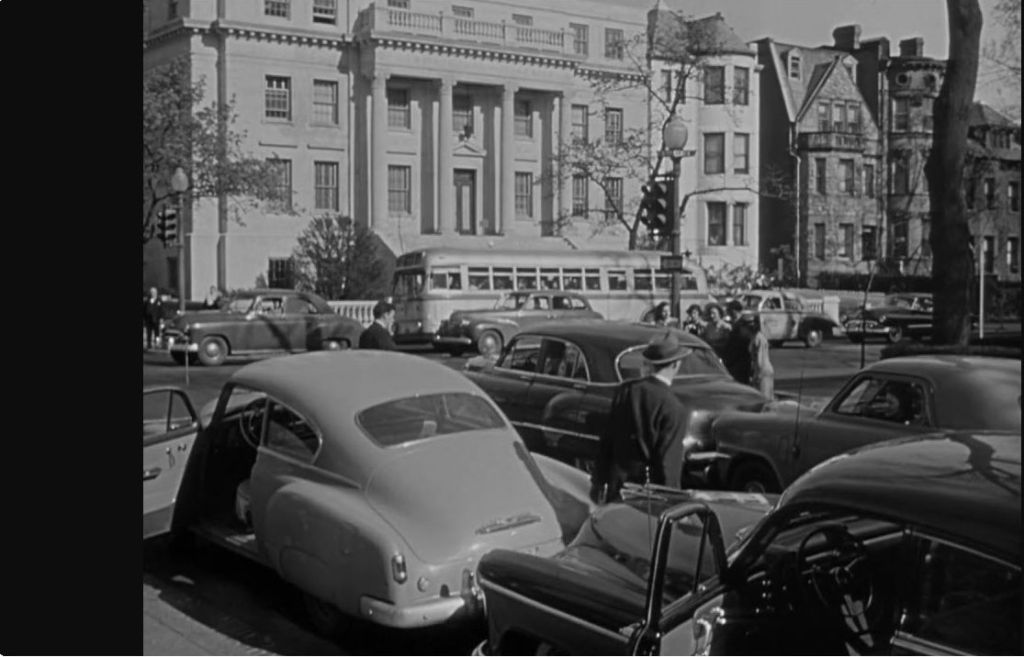
In it, Klaatu arrives from a distant world to warn people of earth that their selfish destructive ways threaten the order of the entire universe, and they must stop.
He asks Professor Barnhardt (a stand-in for Albert Einstein) to help. Klaatu is to address an assembly of all world leaders. He says that if people of earth don’t change their ways, the earth will be destroyed.
KLAATU I came here to warn you that, by threatening danger, your planet faces danger — very grave danger. I am prepared, however, to offer a solution.
BARNHARDT Would you care to be more specific?
KLAATU What I have to say must be said to all concerned.It is too important to be entrusted to any individual.
BARNHARDT I gather that your efforts on the official level were not entirely successful.
KLAATU I come to you as a last resort — and I confess that my patience is wearing thin.Must I take drastic action in order to get a hearing?
BARNHARDT What — what sort of action do you mean?
KLAATU Violent action — since that seems to be the only thing you people understand.Leveling the island of Manhattan, perhaps — or dropping the Rock of Gibraltar into the sea.
BARNHARDT Would you be willing to meet with the group of scientists I am calling together?. Perhaps you could explain your mission to them, and they in turn could present it to their various peoples.
KLAATU That’s what I came to see you about.
BARNHARDT It is not enough to have men of science. We scientists are too easily ignored — or misunderstood. We must get important men from every field. Educators — philosophers — church leaders — men of vision and imagination — the finest minds in the world.
KLAATU I leave that in your hands.
BARNHARDT You’d have no objection to revealing yourself at this meeting?
KLAATU No — not at all.
BARNHARDT What about your personal safety in the meantime? What about the Army — and the police?
KLAATU My name is Carpenter and I’m a very earthy character living in a respectable boarding house.
BARNHARDT I’m afraid I can’t offer you any real protection. I have no influence in cases of inter-planetary conspiracy.
KLAATU I’m sure I’ll be quite safe until the meeting.
BARNHARDT One thing, Mr. Klaatu. Suppose this group should reject your proposals. What is the alternative?
KLAATU I’m afraid you have no alternative. In such, a case the planet Earth would have to be — eliminated.
BARNHARDT Such power exists?
KLAATU I assure you such power exists.
BARNHARDT The people who came to the meeting must be made to realize this. They must understand what is at stake.You mentioned a demonstration of force–
KLAATU Yes.
BARNHARDT Would such, a demonstration be possible before the meeting?
KLAATU Yes — of course.
BARNHARDT Something that would dramatize for them and for their people the seriousness of the situation. Something that would affect the entire planet.
KLAATU That can easily be arranged.
BARNHARDT I wouldn’t want you to harm anybody — or destroy anything.
KLAATU Why don’t you leave it to me? I’ll think of something.
BARNHARDT Maybe a little demonstration.
KLAATU Something dramatic — but not destructive.It’s quite an interesting problem.Would day after tomorrow be all right? Say about noon?
The dramatic demonstration he arranges is to stop all power in the world, with the exception of that needed for health and safety. Normal life is brought to a standstill.
People of America are concerned. Maybe those who are concerned can borrow an idea from Klaatu. Maybe we can stop all that we are doing—with the exception of health and safety—for an hour at noon. Maybe that will be a demonstration of our concern that won’t be ignored.





 Bob Schwartz