Yom Kippur, the Day of Atonement, begins on Wednesday evening. Al Chet is the long confession recited many times on the holiday. The Hebrew al chet means “for the sin”, followed by a long list of confessed transgressions (“God pardon us, forgive us, atone for us”).
The purpose of the detailed list is to make sure we don’t miss anything. The effect of the long list, no matter how sincere we are, can be to overwhelm us and even make us feel bad about ourselves.
To simplify, within Al Chet is a single confession that ultimately is the most significant and has the greatest chance of not just changing what we do and say but of transforming who we are and will be in the year ahead:
Al chet shechatanu l’fanecha b’hirhur halev The ways we have wronged you through our innermost thoughts
Buddhism asserts that no matter how properly and appropriately we speak and act, it begins with our mind:
We are what we think. All that we are arises with our thoughts. With our thoughts we make the world. Speak or act with an impure mind And trouble will follow you As the wheel follows the ox that draws the cart.
We are what we think. All that we are arises with our thoughts. With our thoughts we make the world. Speak or act with a pure mind And happiness will follow you As your shadow, unshakable. How can a troubled mind Understand the way?
Your worst enemy cannot harm you As much as your own thoughts, unguarded.
But once mastered, No one can help you as much, Not even your father or your mother.
Dhammapada
You may be taking part in Yom Kippur and reciting that long list of confessions. You may be engaging in another practice or incident where you confess, seek atonement, and commit to do better. You might keep in mind that you may do better, speak better and be better when you work to train, transform and master your mind.
Yom Kippur, the Jewish Day of Atonement, begins on the evening of October 1.
In the Yom Kippur liturgy, God’s compassion is mentioned dozens of times. Implicitly, as we review the year past and commit to the year ahead, we are urged to emulate that compassion.
In the story of the Hebrew Bible, God engages in some actions that don’t seem on their face compassionate. God kills Aaron’s sons Nadav and Abihu for a minor ritual infraction. Moses is denied the outcome he worked his life for, as God taunts him by showing him the promised land he will never be allowed to reach. Job suffers miserably as a result of a bet between God and Satan.
Is God’s version of compassion too esoteric for us to understand? The character Job literally gives up trying to understand God, saying simply “It’s a mystery to me”. Or is conditional compassion the easier way for us, since a more constant and impartial compassion is difficult, going against our reflexive self-important human traits and passions—the very same ones we spend Yom Kippur trying to renounce.
This Yom Kippur, we might think a little less about God’s compassion, and much more about our own.
To see a World in a Grain of Sand And a Heaven in a Wild Flower Hold Infinity in the palm of your hand And Eternity in an hour
William Blake, Auguries of Innocence
It is a cliché. Someone intoxicated by marijuana or other psychedelics is fixated on the tiniest item, maybe followed by “oh, wow!” or laughter. Cliched because it can be true. Maybe you’ve had personal experience.
Getting high is far from the only path there. Buddhism describes and recommends perceiving tathata, thusness, suchness, things as they are, or in the words of Suzuki Rosh, things as it is.
The follow-up beat is that no matter how much you perceive the thusness of any particular thing, you can know that everyone and everything is thus. Everyone and everything is deeply itself and also the same, interdependent and equally important. Everyone and everything matters.
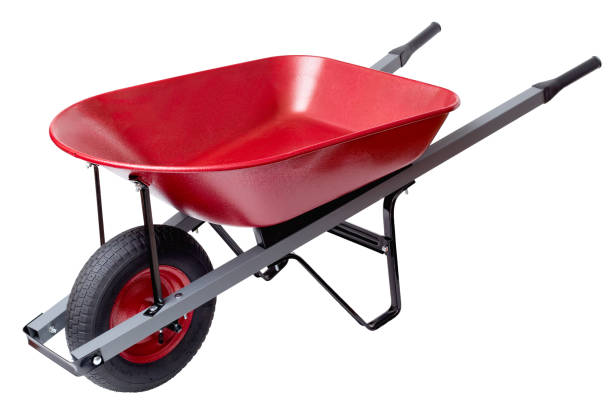
Williams’ red wheelbarrow and Blake’s grain of sand are things. And everything.
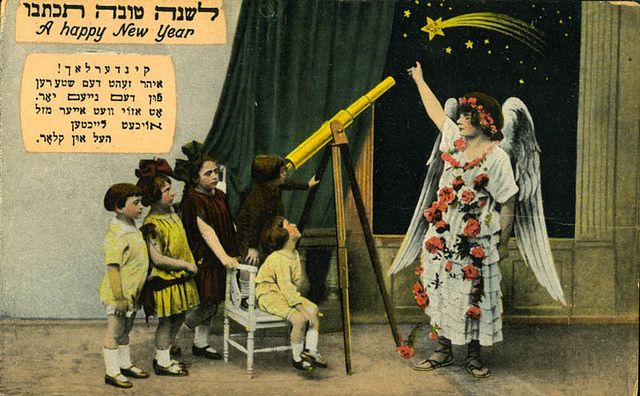
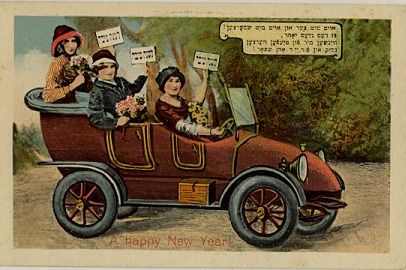
Rosh Hashana 5786, the Jewish New Year, began on the evening of September 22. The High Holidays, the Days of Awe, end on Yom Kippur, October 2.
Following are some of the Rosh Hashanah postcards created over the last century. You may specially note the last two, one that appears to be a Pop Art version, one that wishes a good year by sitting on a sofa, mustached and open shirted, lasciviously open groping a short-skirted friend. I’m not sure that’s a kosher way of greeting the holiest days of the year, but who knows? God knows!
There are three national flags on my desk: Tibet, Palestine, Ukraine.
There are three national flags not on my desk: China, Israel, Russia.
The flags represent nations that have been subject to incursion and occupation.
Tibet was taken over by China in 1959. China began systematically destroying thousands of monasteries in this Buddhist country. Tibetans fled to India and then globally, bringing with them their Buddhist traditions and practices.
In the most recent action against Palestinians, Israel responded to the Hamas massacre and hostage-taking in 2023 with ongoing daily deadly attacks on the infrastructure and people of Gaza, with little hope of a ceasefire.
Russia invaded Ukraine in 2022, claiming that it is not a sovereign nation but a part of Russia. The destructive war of invasion continues, with Russia taking Ukrainian territory, and with little hope of a ceasefire.
There are three national flags on my desk, honoring the courage of those who endured and endure deadly and unjust belligerence.
ABC indefinitely suspended Jimmy Kimmel. Trump celebrated the suspension, suggesting that any broadcaster should lose their license for treating him negatively.
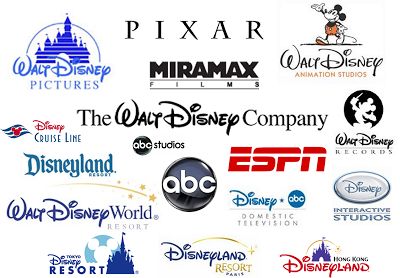
For your information, here are the Walt Disney Company subsidiaries, including ABC. Millions of Americans are familiar with and are consumers of these media and entertainment assets.
Are we spending too much time and money on media and entertainment anyway?
Disney Entertainment
Walt Disney Studios Motion Pictures
Walt Disney Animation Studios
Pixar Animation Studios
Marvel Studios
Lucasfilm
20th Century Studios
Searchlight Pictures
Disney Theatrical Group
Disney Music Group
ABC Entertainment
ABC News
Disney Channel
Disney Junior
Disney XD
FX Networks
Freeform
National Geographic
Disney+
Hulu
ESPN+
ESPN (Sports)
ESPN
ESPN2
ESPNU
ESPN Classic
SEC Network
ACC Network
ESPN Deportes
ESPN International
ESPN Radio
The Athletic
Disney Experiences (Parks, Experiences and Products)
For them that must obey authority That they do not respect in any degree Who despise their jobs, their destinies Speak jealously of them that are free Cultivate their flowers to be Nothing more than something they invest in…
And if my thought-dreams could be seen They’d probably put my head in a guillotine But it’s alright, Ma, it’s life, and life only
Bob Dylan, It’s Alright, Ma (I’m Only Bleeding)
I was going to write about and recommend listening to Bob Dylan, particularly to the three albums Bringing It All Back Home (1965), Highway 61 Revisited (1965), Blonde On Blonde (1966). Given that these albums are from sixty years ago, I thought it might be a helpful mention for those newer ears who resist some old songs by some old guy.
But I decided it was pointless, partly because literally thousands have written about Dylan, partly because I’m not sure how much impact it would have anyway on those who resist listening to some old songs by some old guy, however famous and influential he is—including influencing current artists.
So instead of a whole piece, I picked out just one example, It’s Alright Ma (I’m Only Bleeding) from Bringing It All Back Home, with video and lyrics below. By the way, all Dylan lyrics and more are available on the Bob Dylan website.
It’s Alright, Ma (I’m Only Bleeding)
Darkness at the break of noon Shadows even the silver spoon The handmade blade, the child’s balloon Eclipses both the sun and moon To understand you know too soon There is no sense in trying
Pointed threats, they bluff with scorn Suicide remarks are torn From the fool’s gold mouthpiece the hollow horn Plays wasted words, proves to warn That he not busy being born is busy dying
Temptation’s page flies out the door You follow, find yourself at war Watch waterfalls of pity roar You feel to moan but unlike before You discover that you’d just be one more Person crying
So don’t fear if you hear A foreign sound to your ear It’s alright, Ma, I’m only sighing
As some warn victory, some downfall Private reasons great or small Can be seen in the eyes of those that call To make all that should be killed to crawl While others say don’t hate nothing at all Except hatred
Disillusioned words like bullets bark As human gods aim for their mark Make everything from toy guns that spark To flesh-colored Christs that glow in the dark It’s easy to see without looking too far That not much is really sacred
While preachers preach of evil fates Teachers teach that knowledge waits Can lead to hundred-dollar plates Goodness hides behind its gates But even the president of the United States Sometimes must have to stand naked
An’ though the rules of the road have been lodged It’s only people’s games that you got to dodge And it’s alright, Ma, I can make it
Advertising signs they con You into thinking you’re the one That can do what’s never been done That can win what’s never been won Meantime life outside goes on All around you
You lose yourself, you reappear You suddenly find you got nothing to fear Alone you stand with nobody near When a trembling distant voice, unclear Startles your sleeping ears to hear That somebody thinks they really found you
A question in your nerves is lit Yet you know there is no answer fit To satisfy, insure you not to quit To keep it in your mind and not forget That it is not he or she or them or it That you belong to
Although the masters make the rules For the wise men and the fools I got nothing, Ma, to live up to
For them that must obey authority That they do not respect in any degree Who despise their jobs, their destinies Speak jealously of them that are free Cultivate their flowers to be Nothing more than something they invest in
While some on principles baptized To strict party platform ties Social clubs in drag disguise Outsiders they can freely criticize Tell nothing except who to idolize And then say God bless him
While one who sings with his tongue on fire Gargles in the rat race choir Bent out of shape from society’s pliers Cares not to come up any higher But rather get you down in the hole That he’s in
But I mean no harm nor put fault On anyone that lives in a vault But it’s alright, Ma, if I can’t please him
Old lady judges watch people in pairs Limited in sex, they dare To push fake morals, insult and stare While money doesn’t talk, it swears Obscenity, who really cares Propaganda, all is phony
While them that defend what they cannot see With a killer’s pride, security It blows the minds most bitterly For them that think death’s honesty Won’t fall upon them naturally Life sometimes must get lonely
My eyes collide head-on with stuffed Graveyards, false gods, I scuff At pettiness which plays so rough Walk upside-down inside handcuffs Kick my legs to crash it off Say okay, I have had enough what else can you show me?
And if my thought-dreams could be seen They’d probably put my head in a guillotine But it’s alright, Ma, it’s life, and life only
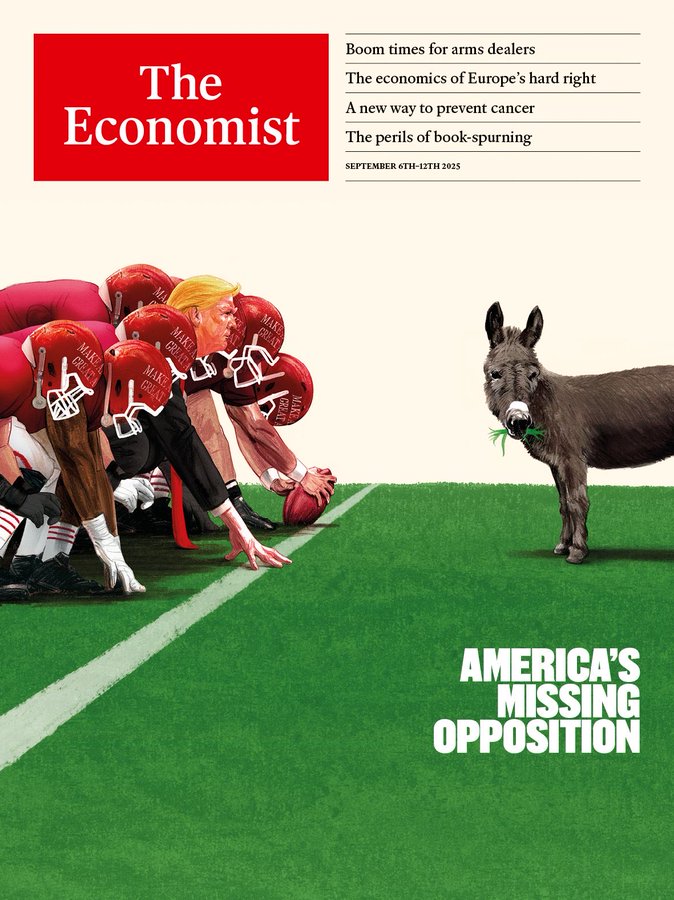
A couple of weeks ago, The Economist ran the above cover and story (see below). It is, as so many of their covers are, perfect.
Can those who oppose the current regime depend on Democrats? Should we give up on them?
Many already have given up on the Democratic Party as effective opposition. Not surprising, because along with two spectacular losses to Trump, and failure to take over at least one house of Congress, Trump and his servants have run roughshod over democracy, the economy, and constitutional, legal, civil and human rights—with limited push-back.
There is no good answer to the question of whether to give up on the Democrats. America is, unlike the rest of the world, nationally a structural two-party country. If one of those parties is unwilling and unable to stand up and fight, we are not better if they then just go away, and, as the cover illustration suggests, surrender and cede the field to the other team. But if the Democrats aren’t willing to take the first step and admit that they have big problems—not little but BIG problems—nothing is going to change, except things getting worse.
Donald Trump is unpopular. Why is it so hard to stand up to him? Republicans are servile. Courts are slow. Can the Democrats rouse themselves? The Economist Sep 4th 2025
IF A SINGLE political idea has tied Americans together over their first quarter of a millennium, it is that one-person rule is a mistake. Most Americans also agree that the federal government is slow and incompetent. Together, these things ought to make it impossible for one man to govern by diktat from the White House. And yet that is what this president is doing: sending in the troops, slapping on tariffs, asserting control over the central bank, taking stakes in companies, scaring citizens into submission.
The effect is overwhelming, but not popular. President Donald Trump’s net approval rating is minus 14 percentage points. That is little better than Joe Biden’s after his dire debate last year, and no one fretted that he was over-mighty. This is a puzzle. Most Americans disapprove of Mr Trump. Yet everywhere he seems to be getting his way. Why?
One answer is that he moves much faster than the lumbering forces that constrain him. He is like the TikTok algorithm, grabbing attention and moving on to the next thing before his opponents have worked out what just happened. The Supreme Court has yet even to consider whether deploying troops to Los Angeles in June was lawful. While the justices take their time, the president may soon use the same routine in Chicago. The court may not rule on the legality of his tariffs for months. So far the president has obeyed Supreme Court rulings, but if one legal avenue is closed he will try another and the clock resets.
Another answer is that the Republican Party always lets him have his way. It is not just that he dominates it, with an approval rating among Republicans of almost 90%. It is that the party’s organising idea is that Mr Trump is always right, even when he contradicts himself. Policy debates have turned into theological disputation in which sides fight over the real meaning of his words.
Independent institutions—companies, universities or news organisations—might oppose him. But they suffer from a co-ordination problem. This is much easier to point out than to fix, because organisations that compete with each other would have to collaborate. What is bad for Harvard may not be bad for its rivals. If a single law firm can be picked off, its business may go to a competitor.
Behind all these lurks the ugly reality of Mr Trump’s vindictiveness and intimidation. Previous presidents were influenced by independent-minded experts and the cabinet. The new definition of an expert in the Oval Office is someone who agrees with the boss. Bearers of bad news are sacked; awkward Republicans primaried; business leaders punished; opponents investigated. For each, the rational response is to apologise, settle and hope that someone else will do the right thing. Having seen what that entails, someone else may prefer a quiet life.
Politically, therefore, the main task of opposition falls to the Democrats. They are, to put it kindly, confused. Should they fight Mr Trump with ALL CAPS posts, as Gavin Newsom is doing? Is it all about mastering curated authenticity, like Zohran Mamdani? Do they move left? Do they occupy the centre? Is the problem merely one of messaging that can be fixed if only activists would stop calling women “birthing people”?
The fact that Democrats can neither constrain Mr Trump nor even communicate clearly leaves their base angry. Mr Trump’s ratings are low, but he is more popular than the Democratic Party—not because Republicans and independents disapprove of it (though they do), but because Democrats disapprove of themselves.
In the short run the self-loathing may be overdone. The midterms are a year away. In ten of the 12 elections for the House of Representatives this century, voters have turned against the party that holds the presidency. Gerrymandering, which will reduce the number of competitive seats in the House from few to almost none, means that even a president this unpopular is unlikely to suffer a landslide defeat in 2026. But a Democratic House with subpoena power would provide a crucial check on presidential corruption and incompetence.
In the long run, though, that looks like false comfort. The Democratic brand is damaged. Democrats are more trusted by the electorate on health care, the environment and democracy. But on many issues voters care about, including crime and immigration, they prefer Republicans. In the 2024 election Kamala Harris was seen as more extreme than Mr Trump. Saying the voters are wrong or sexist to think this way is not helpful.
Demography is no longer the Democrats’ friend. Under Mr Trump, Republicans have made progress with non-white and young voters. The Democrats have lost the white working class. Although the most educated voters like them, only 40% of Americans aged 25 or over have a college degree. These changes mean the story Democrats have long told themselves—that they represented the real majority in America, but Republican machinations kept them out of power—is no longer true, if it ever was. Now they benefit from a lower turnout.
Ten years into the Trump era, Democrats are still underestimating him. His skill in setting traps for them is extraordinary. Take the looming vote in Congress on annual government funding: Democrats will have to choose between more cuts to foreign aid and shutting the government. Or take sending troops into cities, supposedly to fight crime. Democrats decry executive overreach; Mr Trump places them on the side of criminals and danger. Or take drone strikes on alleged drug-smugglers. It is hard to oppose the lack of any due process without sounding like a defender of violent gangs.
They alone can fix it
Democrats have choices about whether to walk into those traps. Lots of them think, rightly, that Mr Trump poses a danger to the country’s democratic values and conclude that this alone should make him toxic to most voters. Alas, it does not. Instead, the question Democrats need to keep asking themselves is this: why do voters think they are the extremists, rather than the guy trying to establish one-man rule?
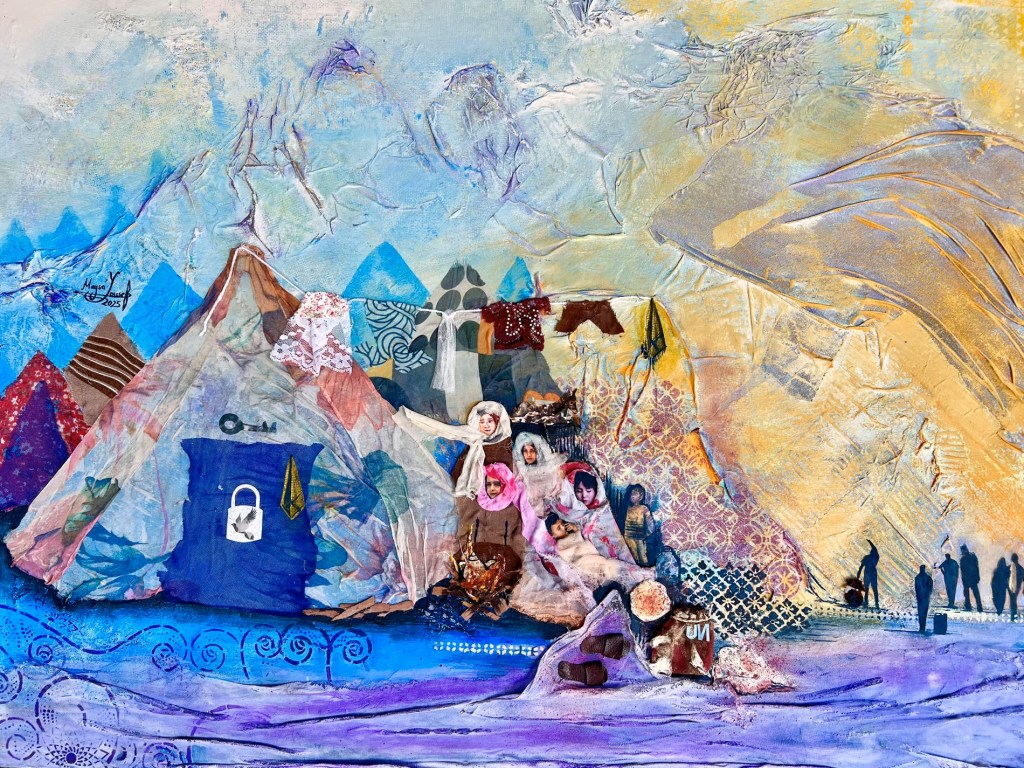
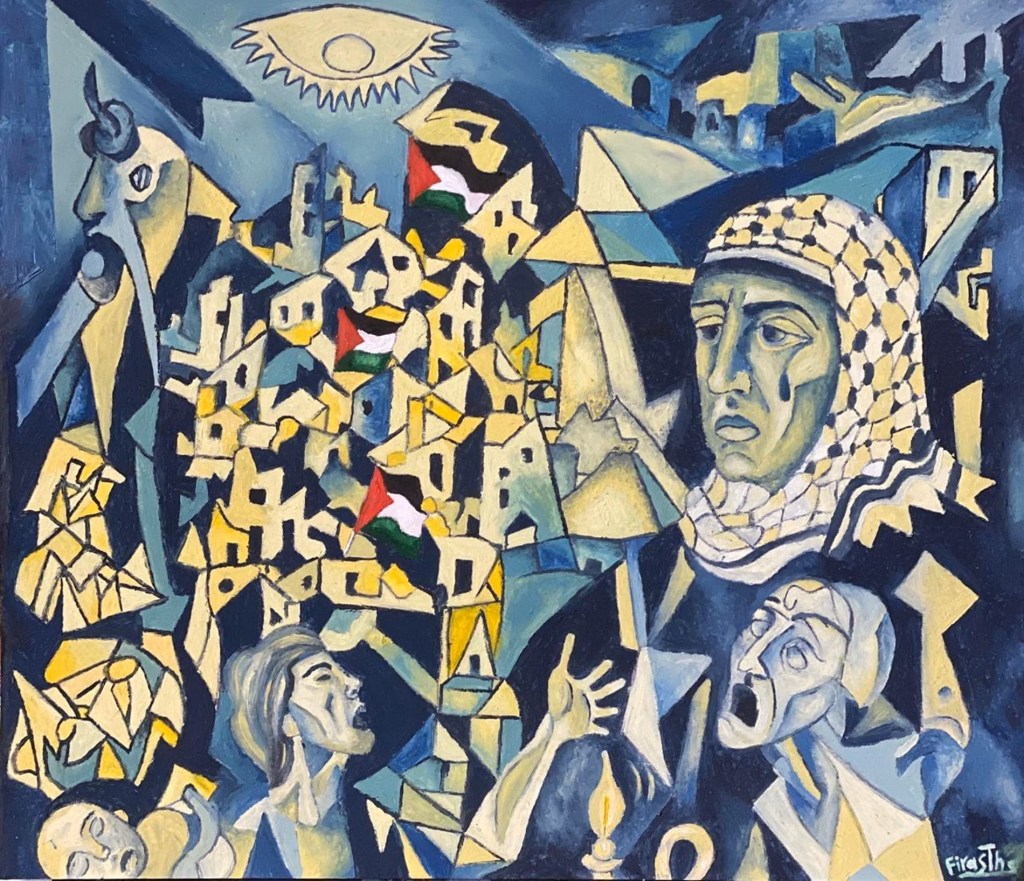
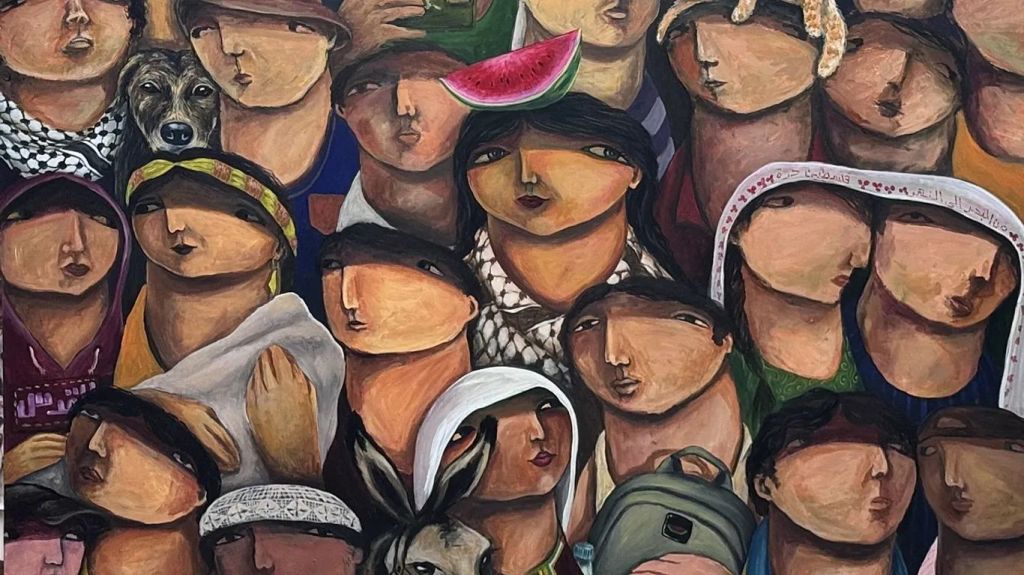
The Gaza Biennale, a platform of resistance and international solidarity that highlights Gaza’s contemporary art scene, is being hosted in 14 cities worldwide, including New York, London, Berlin, Copenhagen, and Valencia. It is the first major international showcase for a new generation of Palestinian artists.
Firas Thabet – GaznicaHamada El Kept – Under SurveillanceMurad Al-Assar – Noise of Death












 Bob Schwartz