Bob Schwartz

Month: August, 2025

Adversity into advantage and Three Finger Brown

Few sports feats are more complicated than pitching a baseball. There are just so many ways to throw a football. There are infinite ways for a pitcher to grip a baseball and move his hand, wrist, arm, body, all with the intent of fooling a batter or getting contact that leads to outs. That’s why great pitchers are rare, and great or good pitchers may have bad games or bad seasons. It’s that hard.

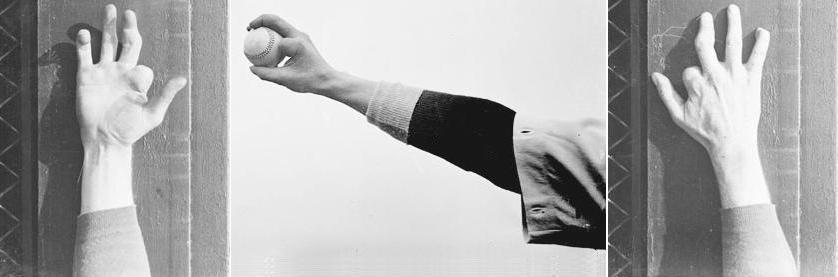
Mordecai “Three Finger” Brown played in the major leagues from 1903 to 1916. His record of 239 wins–130 losses, with a 2.06 Earned Run Average, puts him in the elite of all-time pitchers. He did this with a pitching hand, due to youthful accidents, that had just three fully-working fingers. He adjusted his grip, in a way that gave him a unique curve ball.

We all have three working fingers on our pitching hand, however it happened, whether or not we know or acknowledge it. Rather than delude ourselves, we can practice a different grip that takes advantage of it, leaving batters perplexed and fans amazed.

© 2025 by Bob Schwartz

xlg_cover

Hurricane Katrina (20th anniversary)

Browsing my image collection today, thinking about posting something fun, I stopped at the picture above.

It is an image of the forecast track for Hurricane Katrina. Exactly twenty years ago today, Hurricane Katrina had just grazed the tip of Florida, heading into the Gulf. By Monday it was forecast to hit somewhere around Mississippi, maybe close to New Orleans. That it did.

For a while, ignore all news that isn’t about American democracy

At least four things are working against intense focus on the actual demise of American democracy.

Media consumers are interested in lots of things besides the state of American democracy. And among those are citizens who are not concerned, and in fact support the current trajectory.

Media providers are interested in media consumers, and if those consumers are interested in lots of other things, they will be offered lots of other things. And since some of those consumers are citizens who support the current trajectory, media providers try not to risk losing them with what might be perceived as opinion. Better for those media providers to offer lots of non-controversial stories about entertainment, sports, weather, crime, etc.

Americans are generally confident that whatever is happening in government, America has always found a way to a relatively stable middle ground, so the ultimate risk to democracy is non-existent. As the cliché goes: It can’t happen here.

And of course, there really are things going on in America and the world that do deserve our humane attention and care.

All of us have interests and passions that have nothing to do with the state of American democracy. We pursue those interests with varying degrees of intensity. It might be personal and family situations and relationships. It might be social and cultural interests. The list is long.

Here is the challenge.

If we don’t pay close and constant enough attention to the state of American democracy, if the media providers—including social media—don’t pay close and constant enough attention to the state of American democracy, if we remain irrevocably confident that “it can’t happen here”, it might be and already has.

I am not giving up my interests and passions, and neither do I expect others will. Instead, I am suggesting that to the extent possible, regularly ignore all the tempting news about those interests and passions. Just reprioritize your attention.

If there are not armed federal troops in your city, don’t assume you are immune. If your house has not been searched, don’t assume you are immune. If you think your social media life and personal information isn’t being monitored by your government, you are simply wrong. These and other anti-democratic actions have been or are being taken.

Thomas Jefferson said “Eternal vigilance is the price of liberty.” If the media is not vigilant enough, it is up to you to try to be.

Trump tries to invite Alfred Nobel to the White House

Alfred Nobel (1833-1896) was a Swedish chemist, engineer, inventor, businessman, and philanthropist. His invention of dynamite and other weapons led to his being known as “the merchant of death.” To counter that reputation, he established a set of prizes in many fields, include a Peace Prize.

Trump covets the Nobel Peace Prize, which has gone to many Americans he hates. He was not very aware of the man behind the prize. When he learned about Nobel’s fortune and success as a businessman, Trump was ecstatic. This is his kind of guy, one he could work with to capture the prize.

Trump asked that Nobel be invited to the White House for a meeting in the Oval Office. Those who work for Trump were confounded. They did not want to tell him that Nobel had been dead for 130 years. Instead, they pretended that it was impossible to reach him, because he was on a secret mission involving the most important weapon of his career.

At first Trump was annoyed, suggesting he might triple the current tariff on Swedish goods from 15% to 45%. Then he forgot about it for a while. Whenever he asked again, he was given new details about the Nobel mission.

The next time his pursuit of the Nobel Peace Prize came up, he announced that he had already talked with Alfred Nobel about it, that Nobel was coming to the White House, and that Nobel enthusiastically supported his receiving it.

America AC/After Covid (December 8, 2020). The ongoing opportunity.

December 8, 2020, Vaccination Push Meets Skepticism

I found the following in my notebook, dated December 8, 2020. It was the early days of the pandemic. A lot has happened since.

As it says, I could see a couple of possibilities. One is that there would be an almost obsessive drive to get back to “normal” and to the way things were or imagined to be. The other is that the situation could be taken as an opportunity to do things, see things, think things differently—better.

The way things were. The way things could be. Extreme situations can be opportunities, if we take them. I constantly quote Tennyson in Ulysses: “’T is not too late to seek a newer world.”


America AC

New world. New age. New nation.

The tragedy of the pandemic in America can’t be overstated. Comparison to past national disasters —the Civil War, the Great Depression —seems appropriate but painful.

Looking at tragedy as opportunity seems a cliche, even if constructive and forward looking.

The natural first response to the pandemic was finding the shortest path back to the way things were before. Then it became clear that certain adaptations might have to be made, at least temporarily. Then it became clear that changes were being forced that might not go away even when the pandemic did.

The years leading up to the pandemic already revealed problems in America. Not necessarily new problems. More likely ones that had been minimized or not given enough attention.

So as we emerge slowly, we have an opportunity that hasn’t presented itself in a long time, maybe ever in our history.

Bob Schwartz, December 8, 2020

Trump’s wisdom on overconsumption

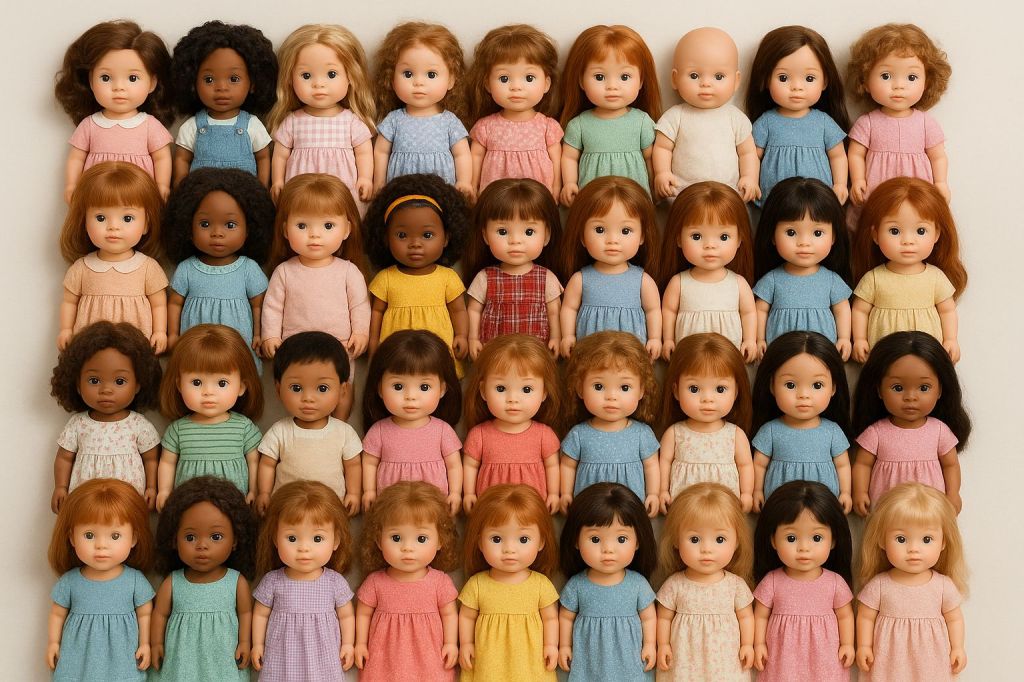
37 Dolls

Even a blind pig can find an acorn.

In May, Trump tried to explain why any impact from his China tariffs was justified:

“All I’m saying is that a young lady, a 10-year-old girl, 9-year-old girl, 15-year-old girl, doesn’t need 37 dolls.”

and

“I don’t think that a beautiful baby girl needs — that’s 11 years old — needs to have 30 dolls. I think they can have three dolls or four dolls because what we were doing with China was just unbelievable.”

Most observers got lost in the sheer looniness and cringiness of the details, as they understandably often do.

But in there is a message that is surprising coming from an ultra-maximalist buyer and seller (though perhaps not entirely surprising from someone who is known to appreciate beautiful younger girls). It is a message endorsing prudent consumption. Do beautiful baby girls (11 years old?) really need 30 or 37 dolls? Three or four may be enough.

Overconsumption is both an issue in America and the way we support the economy. If Trump’s wisdom was embraced, toy sales might be reduced by 90%. If we extrapolated that to sales in general, the recession would be almost instant.

Still, a wise guy like Trump deserves credit for a moment of unexpected clarity. Of course, when he finds those beautiful girls who don’t have all the dolls they want, maybe he can help.

“Wily coyotes thrive in Central Park as animals adapt to urban life across US”

Coyotes, Minnesota (2013)

It appears that coyotes have been the focus of or at least mentioned in 20 of my previous posts. Here is one more from today’s Guardian:

Wily coyotes thrive in Central Park as animals adapt to urban life across US
Romeo and Juliet among at least 20 coyotes in New York City as animals gradually expand eastward into cities.

Here in the desert coyotes are as plentiful as they are—used to be—rare in other places. Their thriving was once threatened by stupid and pointless federal programs aimed at wiping them out (sound familiar?). They were branded vicious indiscriminate predators, which they are not. As it turned out, the feds considered themselves smarter and more powerful than the coyotes, which they were not (sound familiar?). Instead, coyotes are smart, tricky, infinitely adaptable to circumstances and environment, and they can sing. Which is why they are the most famous figure in native American stories. And in some askew cartoons.

If you want the full story, please read the unsurpassed Coyote America: A Natural and Supernatural History by Dan Flores.

Trump is the front man for very smart and serious revolutionaries

If there was a time Trump had an overall vision for America—and given his intellectual limitations that may never have been—it isn’t any more. Yet he remains a popular figurehead, so that however disorganized and incomprehensible his speech and tactics seem, a number of people go along.

His circle includes a few different sorts of followers. Some believe in him as a leader. Some don’t believe in him, but believe that he will advance them, financially or politically. Some don’t believe in him, but believe he is a popular front man for a big cause: a legal, social and cultural revolution in America, a turnaround they believe has been too long in coming.

The revolutionaries don’t mind if there is negative focus on Trump. They don’t even mind the Epstein controversy. They encourage any distractions that don’t have to do with government and democracy, and there are plenty of those distractions. They might prefer Trump being generally more popular, but as long as he can keep Congress and the Supreme Court in line, as long as he controls the federal government, a beloved Trump isn’t necessary.

If the revolutionaries are astonished by anything, it is that they published their revolutionary playbook, chapter and verse, and somehow the constitutionalists, democrats, and advocates of social justice were unable to leverage it politically.

There is some increase in talk about authoritarianism and fascism in America, and that this is a culture war. It might be better to talk about a revolution by some very smart and serious revolutionaries. Trump seems a disorganized thinker and a compromised clown, albeit a supremely powerful one. But those behind him are organized, thoughtful and not at all clowns. We need to avoid distractions, including Trump, and keep our eyes on them.

Taixu_Standing