Bob Schwartz

Month: July, 2025

Trump’s hollow deadlines
Raylan Givens and Tommy Bucks in Justified

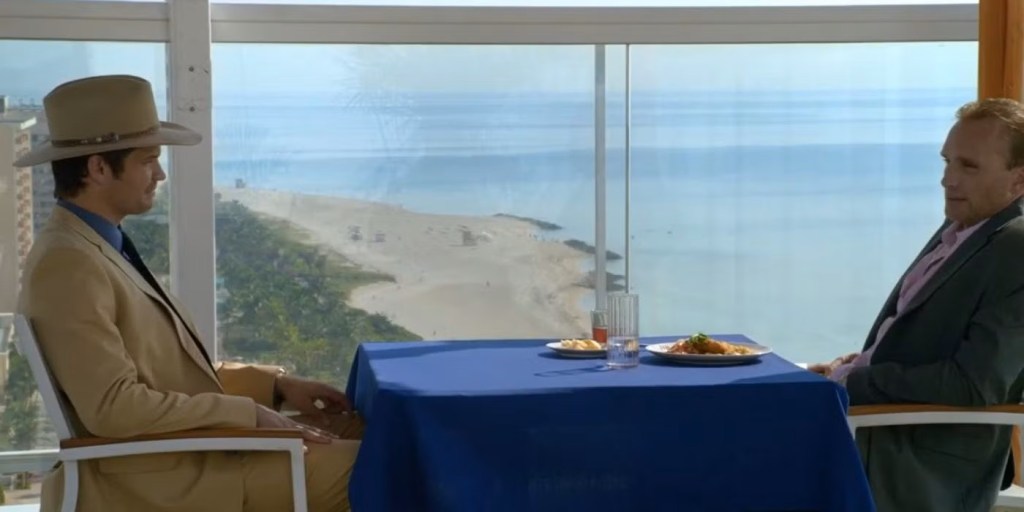
The opening scene of the TV series Justified shows Deputy U.S. Marshal Raylan Givens sitting across from drug kingpin Tommy Bucks at a Miami restaurant.

Givens has given Bucks 24 hours to get out of Miami, a High Noon moment. But Givens has a history with Bucks, and changes the deadline to right now. Bucks tries to pull a gun, Givens kills him across the table.

It’s the deadline and the change of plan that is relevant here.

Trump’s latest deadline, in a change of position, is giving Russia 50 DAYS to do something about its war in Ukraine. It isn’t clear what and besides, the cliched TACO (Trump always chickens out) applies.

You need two things to move up a deadline like Givens did: courage and ability. And to some extent a developed sense of right and wrong, which for Givens and anybody is a tricky one. You have to be willing to take a risk and live with consequences.

If you don’t have courage, ability, a developed sense of right and wrong, and a willingness to take risks and live with consequences, you should stay away from being a Deputy U.S. Marshal or from any job with power and authority. And you should stay away from hollow deadlines.


The Rewatchables: Chinatown

Here is one thing I’ve learned from having a near-infinite choice of media—music, movies, TV, books—to consume. The more I search, I still go back to the greats to relisten, rewatch, reread.

Today, after a search, I ended up at Roman Polanski’s Chinatown (1974), which I’ve watched countless times. It is fifty years old, so you do hear some newer generation movie aficionados saying “I don’t get why it is on so many best of lists.” Best of lists are never objective, even those generated by “experts”, because we are all still affected by different tastes.

But in the opinion of many lists, including mine, Chinatown is one of the greats, near the top. You can find millions of words written and spoken about it, so I won’t add to them. I will say that if you love movies as entertainment and/or as craft, you owe it to yourself to watch Chinatown.

Maybe you will never watch it again. Maybe you will think about the two hours and ten minutes you could have spent doing something else. Or maybe like me, you will watch it again and again, relishing and remembering every scene.

“Whatever you want, others all want as much; so act accordingly!”

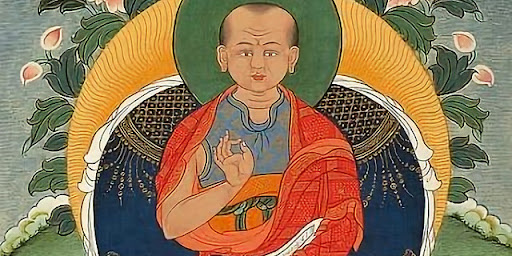
Patrul Rinpoche

“Whatever you want, others all want as much; so act accordingly!”
Patrul Rinpoche (1808–1887)


The Kadampa teachings say that if we use our activities to open ourselves to the world with loving-kindness, patience, and understanding, we’ll bring the lojong spirit into everything we do. While our practices may be diverse, if our bodhichitta* attitude is natural and self-correcting, we’ll be doing everything with one intention. Patrul Rinpoche relates the following story to illustrate this:

When Trungpa Sinachen asked him for a complete instruction in a single sentence, Phadampa Sangye replied, “Whatever you want, others all want as much; so act accordingly!”
(Patrul Rinpoche, Words of My Perfect Teacher)

Traleg Kyagbon, The Practice of Lojong

*Bodhichitta. There are two aspects to enlightened heart: an ultimate and a relative one. Ultimate enlightened heart refers to the nature of the mind and relative enlightened heart refers to the cultivation and generation of compassion.


This sounds familiar, like a version of the Golden Rule, which instructs us not to do to others what we would not have done to us. A difference is that this goes beyond what we and they do. It is about what is in our and their mind, what you and they want. Which, surprisingly or not, is elementally the same. What we do or don’t do follows from what we think. So this might be considered the precursor or foundation of the Golden Rule.

Under Pressure

Can’t we give ourselves one more chance?
Why can’t we give love that one more chance?
Why can’t we give love, give love, give love, give love
Give love, give love, give love, give love, give love?

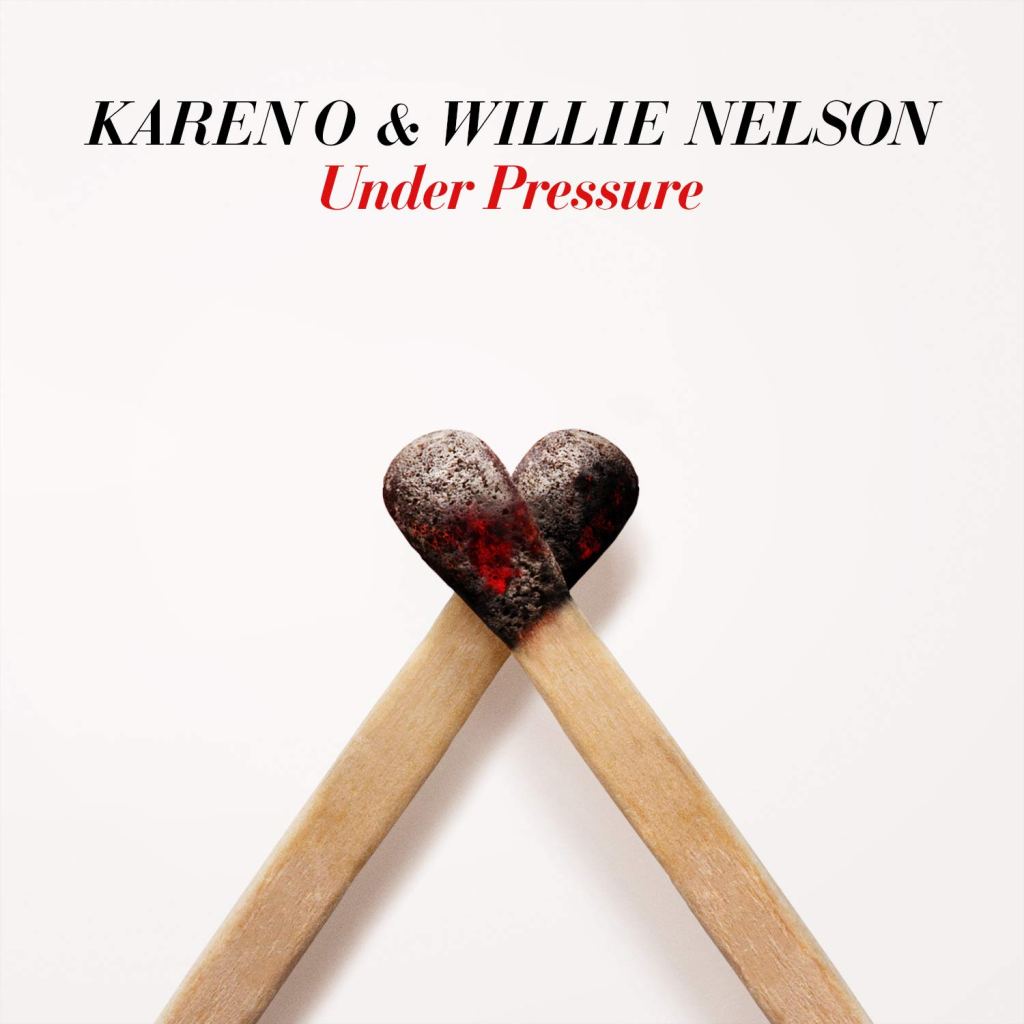
When I saw a playlist with a 2020 cover recording of Under Pressure by Karen O and Willie Nelson, I was curious but skeptical. I shouldn’t have been.

The original by Queen and David Bowie (1981) is fast, loud and desperate—pressurized. This version is slow and lyrical. Which gives us a chance to hear the lyrics below.

As appropriate as any song I’ve heard lately.


Under Pressure

Pressure
Pushing down on me
Pressing down on you
Under pressure
That burns a building down
Splits a family in two
Puts people on streets

It’s the terror of knowing what this world is about
Watching some good friends screaming, “Let me out”
Pray tomorrow gets me higher
Pressure on people, people on streets

Chipping around, kick my brains ’round the floor
These are the days, it never rains, but it pours

Turned away from it all like a blind man
Sat on a fence, but it don’t work
Keep coming up with love, but it’s so slashed and torn
Why, why, why?
Love, love, love, love, love
Insanity laughs under pressure we’re breaking

Can’t we give ourselves one more chance?
Why can’t we give love that one more chance?
Why can’t we give love, give love, give love, give love
Give love, give love, give love, give love, give love?

‘Cause love’s such an old-fashioned word
And love dares you to care for
The people on the edge of the night
And love dares you to change our way of
Caring about ourselves

This is our last dance
This is ourselves
Under pressure

Multi-state hurricanes and FEMA: Hard realities make politicians and officials sound stupid

Hurricanes and other storms don’t recognize American state borders. That’s a fact. Some states may be harder hit than others, but a number of states can be severely affected at once.

Which is just one of the reasons federal involvement is essential and mandated by Congress. Yet up to this moment, the demand from the administration is that the states take care when disaster strikes, to the point of eliminating the Federal Emergency Management Agency.

It isn’t necessary to list all the states that each of our worst hurricanes have devastated. We can hope against hope that future hurricanes, including this season, limit any damage to just one state, if there is damage at all.

Hard realities make ideologically-driven politicians and officials sound stupid. If sounding stupid is all it is.

Humility and inferiority

Geshe Langri Thangpa

Our theistic religions promote humility, mostly in relation to a supreme God. Before God all are inferior. That is humbling.

What if we are inferior to everyone else, not just God?


Whenever I am in the company of others,
May I regard myself as inferior to all
And from the depths of my heart
Cherish others as supreme.
Geshe Langri Thangpa (1054–1123), Eight Verses for Training the Mind


This does not fit easily into our lives. If we look around our congregations, we may struggle, thinking, “Am I really inferior to him or her? I don’t think so.” And then if we look around at others in our community or the world, the comparison is even harder.

Regarding our inferiority, as hard as it is on our self-importance, is an essential step to humility and compassion. You can make a list of the ways that you are evidently and certifiably superior to others. But to what purpose?


We should think of ourselves as the lowest of all beings. This is not an attitude of low self-esteem. In fact, it is the opposite. If we put ourselves in the lowest, humblest seat, we remove any chance of feeling insecure. From the lowest seat, there is no place to fall down. Such humility naturally comes with a sense of nobility, which enables us to focus on other beings and bring them great benefit.
Dzigar Kongtrul, The Intelligent Heart


Flowers awake

Flowers awake

At six a.m. the flowers coyly closed
Soon the sun is high, hot and bright
The flowers open petals spread
In colored invitation
To eye and heart, bee and hummingbird
Awake

© 2025 by Bob Schwartz

Tyranny of total transactionalism

Let’s make a deal.

Transactions are part of life.

Commerce and trade, individual and institutional, depend on it. It is the same for personal, social and even religious dynamics. This for that. Do this to get that.

Transactions can become a dominant ideology and style. Let’s call it total transactionalism. Everything becomes a transaction.

We don’t have to look far to see this on display. We may have to look a little harder to see it in ourselves.

We can’t stop all transacting and can’t ask others to stop all transacting. We might investigate how much of what goes on and what we do is a transaction. We can determine whether that transactionalism is for the best.

It probably isn’t.

© 2025 by Bob Schwartz

Money by Pink Floyd

Money, get back
I’m alright, Jack, keep your hands off of my stack
Money, it’s a hit
Don’t give me that do goody-good bullshit

When Pink Floyd released the album Dark Side of the Moon in 1973, they were already successful creatively and commercially. But not nearly as successful and rich as they would become in the decades ahead.

So was the track Money on Dark Side observational, critical, ironic, aspirational or all those? Anyway, it is uncannily right on the moment…and the money.


Money, get away
Get a good job with more pay, and you’re okay
Money, it’s a gas
Grab that cash with both hands and make a stash

New car, caviar, four-star daydream
Think I’ll buy me a football team

Money, get back
I’m alright, Jack, keep your hands off of my stack
Money, it’s a hit
Don’t give me that do goody-good bullshit

I’m in the hi-fidelity first class travelling set
And I think I need a Learjet

Money, it’s a crime
Share it fairly, but don’t take a slice of my pie
Money, so they say
Is the root of all evil today

Moon + Clouds @ Sunset


Are these photos “real”?

Sometimes our discussions these days sound less like analysis by scientists and philosophers and more like a bunch of people sitting around stoned and asking “What is reality, man?”

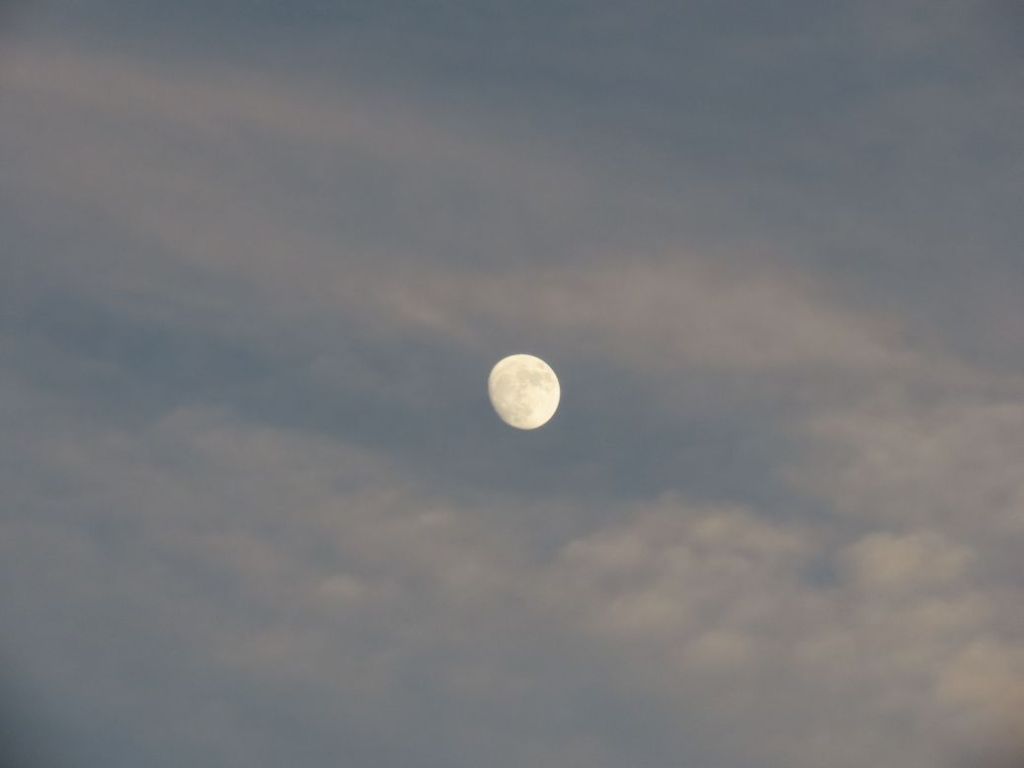
In this case, that is the moon and those are clouds and the sun was setting (though the moon was not rising and the sun was not setting; the earth was turning). The light fell on a camera sensor and the data was recorded on a memory card. I know all this because I was there and experienced it.

And yet if you or I asked an AI image generator to create this exact picture, or something close, it could. In fact, if you thought the cloud formations were not quite right or if you wanted more and different colors than the sunset created, you could get that.

So what is reality, man?

A great question. And an amazing sky.

© 2025 by Bob Schwartz