Bob Schwartz

Month: May, 2025

Patience: “If something can’t be fixed, what good is it to be displeased?”
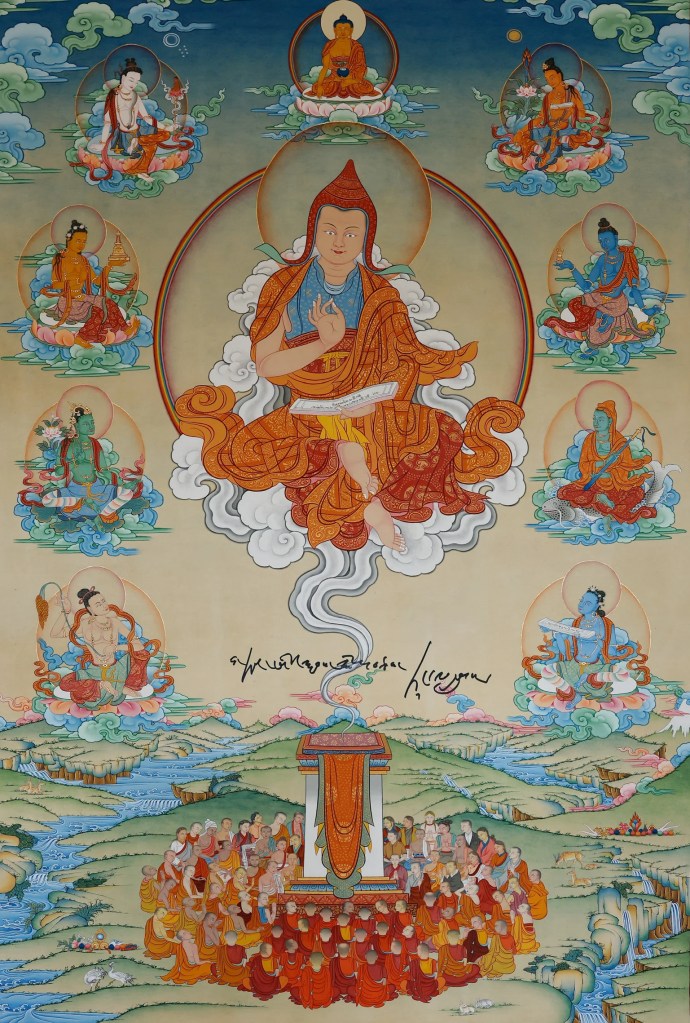
If there’s a remedy when trouble strikes,
What reason is there for dejection?
And if there is no help for it,
What use is there in being glum?
Shantideva, The Way of the Bodhisattva


Patience

10.
If there’s a remedy when trouble strikes,
What reason is there for dejection?
And if there is no help for it,
What use is there in being glum?
Translated by the Padmakara Translation Group

10.
If something can be fixed, what need
Is there to be displeased?
If something can’t be fixed, what good
Is it to be displeased?
Translated by David Karma Choephel

    10.
    If something can be remedied
    Why be unhappy about it?
    And if there is no remedy for it,
    There is still no point in being unhappy.
    Translated by Geshe Kelsang Gyatso Rinpoche

    His Holiness the Dalai Lama comments:

    “We should try never to let our happy frame of mind be disturbed. Whether we are suffering at present or have suffered in the past, there is no reason to be unhappy. If we can remedy it, why be unhappy? And if we cannot, what use is there in being depressed about it? That just adds more unhappiness and does no good at all.”


    Shantideva (695–743). Indian Buddhist scholar and author of the The Way of the Bodhisattva (Bodhicharyavatara).

    The Way of the Bodhisattva is a guide to cultivating the mind of enlightenment and generating the qualities of love, compassion, generosity, and patience. The text has been studied, practiced, and expounded upon in an unbroken tradition for centuries, first in India, and later in Tibet. It outlines the path of the Bodhisattvas—those who renounce the peace of individual enlightenment and vow to work for the liberation of all beings and to attain buddhahood for their sake.

    Random Buddhism (or any tradition)

    Randomness is one of the most helpful and illuminating elements of life. Gregory Bateson commented that within the holy of holies is a random number table.

    The I Ching is one example. It is a book that offers thoughts based on numbers generated in various ways, and additional thoughts on those numbers changing their character. The system is viewed different ways. It may be that the numbers are reflections of the moment and the situation. It may be that the numbers are random, and it is that randomness that makes the thoughts most valuable, given that whatever path is taken, it is changing as we plan and step. Those plans and steps are good but temporary. As physics finds with quanta, or as Shunryu Suzuki said, “It is so, but it is not always so.”

    Randomness can be used with any text, not just the I Ching. A cousin of random numbers is bibliomancy, in which a page and passage on that page in a book are randomly selected for advice.

    I have used random numbers to explore texts from many traditions; the Tanakh/Hebrew Bible contains 929 chapters, for example. Today I applied it to the Dhammapada, considered the most accessible and most widely-read summary of the Buddha’s teachings. It contains 423 verses. The number generated was 3:


    “He abused me, attacked me,
    Defeated me, robbed me!”
    For those carrying on like this,
    Hatred does not end.

    “She abused me, attacked me,
    Defeated me, robbed me!”
    For those not carrying on like this,
    Hatred ends.

    Dhammapada, Chapter 1 – Dichotomies, translated by Gil Fronsdal


    © 2025 by Bob Schwartz

    Whether happiness or suffering occurs, be patient


    As the following traditional verse makes clear, an intelligent form of patience is required if we’re to avoid being hurt and destabilized by the vicissitudes of life:

    Even if you are prosperous like the gods,
    Pray do not be conceited.
    Even if you become as destitute as a hungry ghost,
    Pray do not be disheartened.
    Nāgārjuna, Precious Garland

    Life’s trials often reduce us to damaged, bruised, and battered emotional wrecks. If we can bring a modicum of intelligence to our patience, we won’t become so exhilarated by our highs or self-defeated by our lows, as if we were suffering from bipolar disorder. Whichever of the two occurs, we’ll be able to maintain a sense of stability and groundedness. Patience is not a form of passivity, where we have no power over what life might throw at us. Even when life’s trials are unpleasant or upsetting, patience allows us to face them in a creative and beneficial way, with courage and dignity.

    If things always went our way, we wouldn’t be able to develop high ideals and live a meaningful life. Instead of responding to difficulty the way we normally do, with frustration or impotent rage, we learn to approach life’s contingencies with patience and intelligence. The skillful exercise of patience will make us less flaky and predictable, and we’ll be able to utilize situations to our advantage.

    Traleg Kyabgon, The Practice of Lojong


    Bougainvillea Breezed By

    Bougainvillea Breezed By

    A bract from a Bougainvillea breezed by me and stopped. Desert dry and delicate it waited for another breeze or me to carry it away with care.

    The Race: AI is a problem as it gets smarter and we get “stupider”

    We mistake the “AI race”. Usually we talk about how fast AI is being developed and how broadly it is being deployed and applied. Pretty fast and broadly—exponentially so.

    At least half of our consideration should be on—I will be detailing the term that I avoid and must define—how much “stupider” we are allowing ourselves to get.

    The race is between us and AI. It is conceivable that even if we freeze everything right now, we are behind with diminishing chance of catching up.

    Now about “stupid”. It is rightly considered a harsh term. It may not reduce the harsh edge to say that what I mean is a lessened level of pertinent personal knowledge and a diminished ability to think things through completely.

    By pertinent knowledge, I mean knowing what we need to know to lead lives comprehensively. To put it a different way, just knowing “stuff” and hearing about “stuff” and talking about “stuff” and thinking about “stuff” can be entertaining and time-occupying, and in balanced measure might be satisfying. But media and commercial culture insists that all kinds of “stuff” is important or essential to know. Which much of it isn’t.

    By thinking things through completely, I mean what is often referred to as “critical thinking”, so often that is has become an ignorable cliché. It shouldn’t be ignored. There is more than one way to think about things. But all of those ways require thinking about things. Partial thinking, not thinking through completely, leads to not reaching goals and solving situations optimally or at all. Maybe we are lucky, or maybe someone assures us that that goals and solutions are possible—certain—if we just listen to and follow them. Relax and think about that other “stuff”.

    Back to the race.

    AI can know things for us, already does. AI can think things through more or less completely for us, already does (or claims to). When we give up on knowing what is essential and knowing those essentials ourselves, when we give up on thinking things through completely, we are behind AI and losing ground.

    So we should get smarter and think harder. That may not put us ahead, but at least we will not get farther behind. For now.

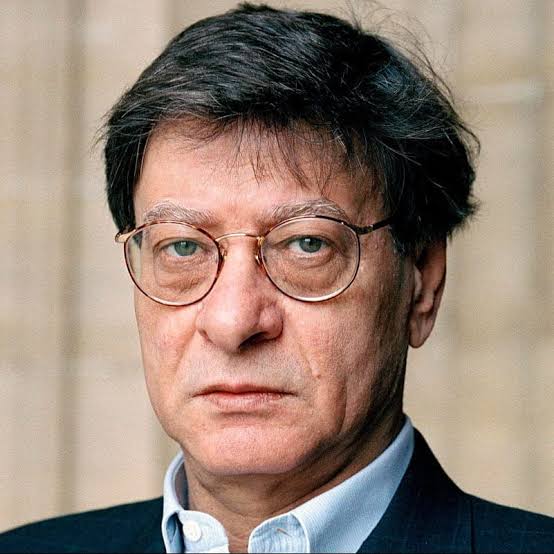
    Mahmoud Darwish: The poetry of Palestine

    I want to find a language that transforms language itself into steel for the spirit – a language to use against these sparkling silver insects, these jets. I want to sing. I want a language . . . that asks me to bear witness and that I can ask to bear witness, to what power there is in us to overcome this cosmic isolation.
    —Mahmoud Darwish


    Mahmoud Darwish (1941–2008) was born in the village of al-Birwa, in the Galilee, Palestine. He became a refugee at age seven. He worked as a journalist and editor in Haifa and left to study in Moscow in 1970. His exilic journey took him to Cairo, Beirut, Tunis, Paris, Amman, and Ramallah, where he settled in 1995. He is one of the most celebrated and revered poets in the Arab world. He published more than thirty books, and his poetry has been translated into thirty-five languages.


    Even if you are a lover of poetry, you may not have heard of Mahmoud Darwish, despite his work—poetry and prose—being celebrated and translated into thirty-five languages. Translation into English was late in coming. And there is so much culture to taste and consume that it may be incidental ignorance of Arab poetry in general and Palestinian poetry in particular that has kept it out of sight.

    Sample praise:

    “Darwish’s poetry is an epic effort to transform the lyrics of loss into the indefinitely postponed drama of return.”
    —Edward Said

    “The most celebrated writer of verse in the Arab world.”
    —Adam Shatz, The New York Times

    “Did as much as anyone to forge a Palestinian national consciousness.”
    —Peter Clark, The Guardian

    “No poet in our time has confronted the violent tides of history with greater humanity or greater artistic range than Mahmoud Darwish.
    ―Michael Palmer, author of Company of Moths

    “A world-class poet . . . Darwish has not only remade a national consciousness; he has reworked language and poetic tradition to do so.”
    ―Fiona Sampson, The Guardian

    “Darwish, beloved as the beacon-voice of Palestinians scattered around the globe, had an uncanny ability to create unforgettable, richly descriptive poems, songs of homesick longing which resonate with displaced people everywhere.”
    ― Naomi Shihab Nye

    “No list on Palestinian literature is complete without the acclaimed poet Mahmoud Darwish.”
    —Esquire

    “Mahmoud Darwish is perhaps the foremost Palestinian poet of last century.”
    —Tablet

    There are too many books to feature just one. Please consider giving Mahmoud Darwish a try.

    “We Study Fascism, and We’re Leaving the U.S.”

    “We’re like people on the Titanic saying our ship can’t sink. And what you know as a historian is that there is no such thing as a ship that can’t sink.”
    Professor Marci Shore


    We Study Fascism, and We’re Leaving the U.S.
    New York Times
    By Marci Shore, Timothy Snyder and Jason Stanley

    Marci Shore, Timothy Snyder and Jason Stanley, all professors at Yale and experts in authoritarianism, explain why America is especially vulnerable to a democratic backsliding — and why they are leaving the United States to take up positions at the University of Toronto.

    Professor Stanley is leaving the United States as an act of protest against the Trump administration’s attacks on civil liberties. “I want Americans to realize that this is a democratic emergency,” he said.

    Professor Shore, who has spent two decades writing about the history of authoritarianism in Central and Eastern Europe, is leaving because of what she sees as the sharp regression of American democracy. “We’re like people on the Titanic saying our ship can’t sink,” she said. “And what you know as a historian is that there is no such thing as a ship that can’t sink.”

    Professor Snyder’s reasons are more complicated. Primarily, he’s leaving to support his wife, Professor Shore, and their children, and to teach at a large public university in Toronto, a place he says can host conversations about freedom. At the same time, he shares the concerns expressed by his colleagues and worries that those kinds of conversations will become ever harder to have in the United States.


    I have written about Timothy Snyder a number of times before, starting here. As the piece says, he and his colleagues are experts on fascism.

    If you are able to read and watch the extended New York Times piece and video, you will find over 1,000 comments to which the professors reply. The comments raise important questions, including the issue of whether it would be better for them to stay and fight the fight, rather than leaving the country. Another question is why they are doing this now, rather than protesting—if this is a protest—sooner.

    That last matter is easily answered. They have been studying the issue for their careers, and have been highlighting it in America for a long time. If you were an expert on this and had been pleading for more people to pay attention and do something, how much longer would you be willing to stay and fight, when the foreseeable reality came to pass?

    Just because they are in Toronto and not America, their work will continue to enlighten anyone anywhere who is listening. As in so many areas, and not for the last time, America’s loss is Canada’s gain. Again.

    Better Homes 1961: Best Home Ideas + Fight Communism

    TV Guide, Week of August 26, 1961

    If you were reading the TV Guide for the Week of August 26, 1961 you would see two ads from Better Homes and Gardens magazine:


    Best Home Ideas of 1961
    The editors of Better Homes and Gardens scour the country to give you the best in 1961 house plans and ideas. See them in the September issue.


    and


    How Your Family Can Fight Communism
    Learn what you are battling to save, how you and your children can save it—read the September issue of Better Homes and Gardens.


    This is not to say that having a better home and fighting Communism were the only concerns of Americans in August 1961. But they were high on the list.

    Does that seem strange more than sixty years later? Is it surprising that the hopes and fears of some—many?—Americans haven’t changed that much, minus the hammer and sickle?

    The second ad promises that you will “Learn what you are battling to save” as if maybe readers weren’t sure what they were fighting for. What are you battling to save?

    We can live an alternative history now: The Man in the High Castle by Philip K. Dick

    Philip K. Dick (PKD) was a genius and visionary creative. Nobody’s mind is like anybody else’s, but his was more unlike than most. He had worlds in his mind that were like this one but were not at the same time. It is why so many of his books and stories became groundbreaking movies and why he was by some standards not standard.

    The Man in the High Castle, original novel and extended TV expansion, is about history “as it happened” and history “as it might otherwise be”. Sometimes this is called alternative or counterfactual history. What if _? In this case, what if Germany and Japan had won World War II?

    Except at the same time that Germany and Japan won World War II they lost World War II. Despite substantial real-life evidence that they won the war and control the world, there are films proving that they lost and that the Allies won. Of course, in the world we live in, in the history we know, the Allies did win the war. So why wouldn’t there be films depicting that victory and the Axis defeat?

    In the world of The Man in the High Castle, these are just films and not just films. They are acts of imagination just as the novel—all of PKD’s novels, all histories—are acts of imagination.

    Can you live in a world of imagination? That is precisely the accusation that PKD’s behavior sometimes elicited, that he was mentally unstable. But he recognized that we live in a world not just of imagination but of constant and immediate change, reflected in his theme of the I Ching in The Man in the High Castle.

    If you live in an oppressive world where Hitler won the war but you have reason to believe that you are actually living in a world where Hitler lost the war, are you unrealistic or even crazy? Or is it crazy not to believe in the possibility? To surrender needlessly and prematurely? Is change not only possible but inevitable? Do you need alternative films to prove it?

    Heading into a terrible wildfire season: Let AI put out the fires!

    AI is now infused into everything, or soon will be. That includes consumer products from coffee or shoes to large scale undertakings. How exactly is AI in your coffee, not just involved in the process of growing it and bringing it to your kitchen? Don’t ask. Just be confident that the day is coming when AI will be in everything, or so they say.

    I thought about his when I heard that funds have been cut for people who fight fires, especially in a summer when increasingly dangerous wildfires will increase again. Firefighters are generally underpaid relative to their importance, and the money for them is now reduced or gone.

    I can imagine the fever dreams of AI true believers who imagine firefighting-drones controlled by AI controllers. No brave or expensive people needed. Or of the powerful but simple-minded leaders these true believers advise. “It will be just like in the movies!”

    Except that if that ever happens, it is not anytime soon. But those wildfires are very soon and certain. This is not a movie, except maybe a disaster movie. AI may come to the rescue, but I doubt it.