Bob Schwartz

Month: April, 2025

A new Passover tradition: Matzah oracle
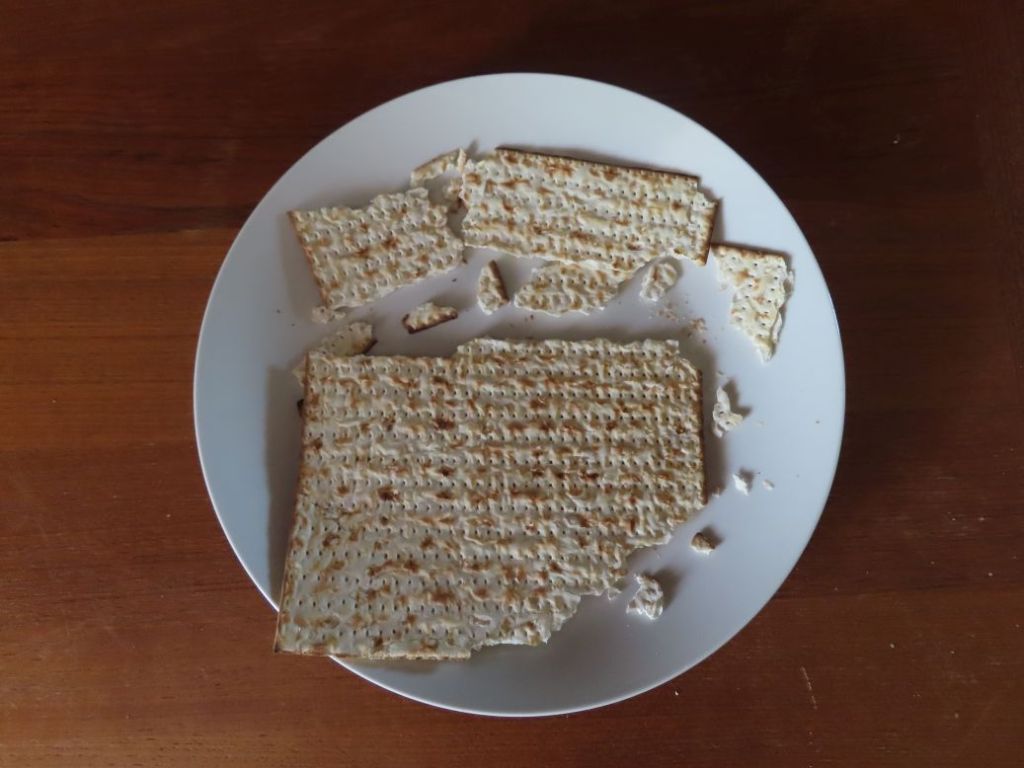
On the first morning of Passover, I came across a book on using the letters of the Hebrew Bible as an oracle.

To be clear, oracles—the I Ching is a well-known example—don’t foretell particular outcomes in a detailed way, though that is one perspective. Instead, they open your mind to deeper visions of the questions you ask and the situations you are confronting.

The first morning of Passover is also a time to think about matzah, as in: What am I going to have for breakfast that includes matzah rather than bread?

That is the origin of the matzah oracle. The steps:

1. Put a sheet of matzah in a one-galloon storage bag.

2. Place the storage bag with the matzah on a hard surface, a table or the floor.

3. Ask your question or seek some insight.

4. Drop a heavy object on the storage bag. For my first oracle, I used a book, a 700-page commentary on the Torah. But it doesn’t have to be a book and it doesn’t have to relevant. Just something that will break the matzah into pieces but won’t obliterate it to total crumbs.

5. Remove the pieces to a plate so you can count them. The difference between a small piece and a crumb can be hard to determine. Don’t worry. Remember that this is an oracle to deepen your thinking, not a predictor, so it won’t matter.

6. Count the pieces. My first matzah oracle contained ten pieces, which corresponds to the letter Yud.

7. Find the Hebrew letter or combination of letters corresponding to that number. Here is a list:


א (Aleph)
1

ב (Bet)
2

ג (Gimel)
3

ד (Dalet)
4

ה (Heh)
5

ו (Vav)

6

ז (Zayin)
7

ח (Cheth)
8

ט (Teth)
9

י (Yud)
10

כ (Kaf)
20

ל (Lamed)
30

מ (Mem)
40

נ (Nun)
50

ס (Samech)
60

ע (Ayin)
70

פ (Peh)
80

צ (Tzaddi)
90

ק (Qof)
100

ר (Resh)
200

ש (Shin)

300

ת (Tav)
400


A number greater than ten requires a combination of letters, e.g., 12=Yud (10)+Bet (2).

This oracle is a work in progress, and I have a few ideas about how to deal with letter combinations. The simplest suggestion is to consider both letters. In the example above, consider both Yud and Bet.

Also, it is unlikely that the matzah oracle will generate all the letters. A piece of matzah that breaks into 400 pieces is likely a pile of crumbs. Maybe there are those committed enough to count all the crumbs.

8. Once you have a letter or letters, there are a number of books and countless websites devoted to the meaning of Hebrew letters—some more valuable than others.

Here are two books that offer thoughtful insights:

A New Oracle of Kabbalah: Mystical Teachings of the Hebrew Letters by Richard Seidman

The Wisdom in the Hebrew Alphabet by Michael Munk

Once you are done with the oracle, the matzah is available for eating. My suggestion, since the matzah is already in pieces, is to soak them in water, combine them with a beaten egg, and fry them into matzah brei, the best of all Passover breakfast dishes.

© 2025 by Bob Schwartz
The Passover story revised: Rameses lets my people go!

“Your plea has moved me. Your people are free to go. You have a long and perilous journey ahead of you.”
Rameses

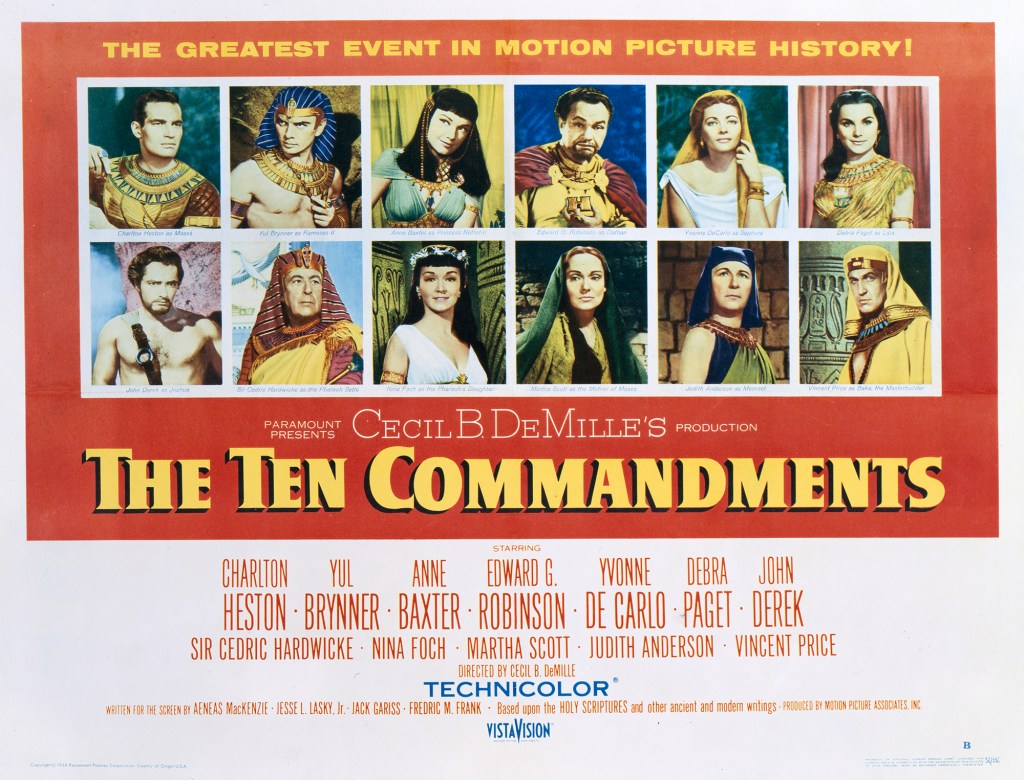
The movie The Ten Commandments (1956) is a famous and spectacular wide-screen reimagining of the Passover story. Following is a revision of that reimagining.

The scene here, adapted from the original movie scene, is one in which Moses approaches Rameses and makes the legendary demand “Let my people go!”

Instead of hardened heart, Rameses relents. He sees that a peaceful resolution will be best for all concerned and will avoid conflict and unnecessary death and destruction.


Rameses sits on his throne. Moses approaches, with the calm, stern face of a prophet, staff in hand and wearing a Bedouin robe. The white-robed Wazir moves to bar their way.

WAZIR
What kingdom has sent you?

MOSES
The Kingdom of the Most High.

The Wazir looks bewildered but makes no further effort to detain their approach to the dais.

FANBEARER
These must be ambassadors from Midian, Divine One.

RAMESES
Oh – Bedouins.

FANBEARER
What gifts do you bring?

MOSES
We bring you the Word of God.

Rameses, puzzled, tries to recall some association with the voice. His features harden ­ then change into a grim smile. Rameses is prepared to be amused.

RAMESES
What is this word?

MOSES
Thus saith the Lord God of Israel: Let my people go! Men shall be ruled by Law… not by the will of other men.

RAMESES
I recognize you now my brother. How you have changed! You and I have had our bitter differences. I do not know your God. I thought our God was your God, but now I see that is not so. I am not as hardhearted as you believe. Your plea has moved me. Your people are free to go. You have a long and perilous journey ahead of you.


Viewing The Ten Commandments

Clips from The Ten Commandments on YouTube

Free on Internet Archive

Free broadcast on ABC, Saturday, April 12, 2025, 7:00pm ET/PT

© 2025 by Bob Schwartz

The past has gone and the future is not yet here: Meditation


We are not used to staying in the present but there is nowhere else to be. The past has gone and the future is not yet here. It is that simple: only now exists. The present cannot be controlled. If we hold this moment back, it becomes the past. If we try to make the moment last, we are sending it into the future.

All meditation methods have the same purpose: to keep us in the present and to introduce us to the mind. We are not trying to stop our thoughts but to feel less trapped by them. The earlier we can catch ourselves from falling in with habitual patterns and getting entangled the better, and one of the most dependable techniques for preventing this is awareness of the breath.

Usually we breathe without taking any notice but in this technique we watch the breath, following it as it flows in and out of the body. We keep calm. We are not trying to accomplish anything. We just allow the mind to use the breath to settle. We do not have to supervise our senses or our thoughts. If something distracts or interrupts us, we let it pass. Staying mildly aware of our breath, we observe it without getting too absorbed by it.

Meditation is like taking a holiday. We have permission to give up planning and worrying. We are off duty. It is time to relax and slow down. Too much effort with our practice makes us tight and that is no use, but allowing the mind to go completely flat is not the answer either. If we are not alert, we will fall asleep or our attention will wander without us knowing it. We are trying to find a balance, neither too tense nor too sluggish.

When we are not wound up or straying between the past and the future, the meditation gradually brings us into the present moment—grounded in our body.

Ringu Tulku, Mind Training


I Ching about Trump tariffs on China

The I Ching, the venerable Book of Changes, is estimated to have first been composed around 1000 BCE. About 3,000 years ago.

The point is that China and its constituent states have been managing very complex and difficult governmental and social situations for millennia. Those who are leading contemporary China may face a lot of current challenges, as their ancestors have faced so many other challenges. They know their way around difficulties and difficult people. They have managed, starting in 1949, to build the world’s second largest economy. They have done it, by the way, paying close attention the I Ching. The Trump administration would do well to do the same.

Asking the I Ching about Trump tariffs on China it says:


52
Gen • Keeping Still

Mountain above
Mountain below

NAME AND STRUCTURE

The attribute of Mountain is stillness. When Mountain is doubled, it is extremely still.

From the very beginning of Chinese culture, ancient sages emphasized keeping still. Keeping still is not keeping merely the body still but the mind and spirit as well, and is called “sitting in stillness” or “nourishing the spirit.” While sitting still in a lotus posture, one is shaped like a mountain. Sitting in stillness, or in meditation as Westerners call it, is a self-disciplinary training. While doing this, one is able to control the mind and the breath, to be introspective about one’s shortcomings and to cultivate inner strength and virtue. Mencius says, “I am skillful in nourishing my imperishable noble spirit.” When one is in a state of stillness, one is oblivious to one’s surroundings. This is the highest stage of nonattachment. In such a state there is no fault in one’s being. It is believed that when Heaven is about to confer a great mission on a person, it first exercises his or her mind and spirit with discipline. Keeping still is meant to prepare one’s mind and spirit to progress when the time comes.

Commentary on the Decision

Mountain.
It is keeping still.

Keep still when it is time to keep still.
Remain active when it is time to remain active.
When action and resting do not miss their time,
Their way becomes promising and brilliant.

SIGNIFICANCE

Keeping Still expounds the truth of knowing when and where to stop before one’s action goes too far. The key to success is to advance when it is time to advance and to stop when it is time to stop. Every action should accord with the time and situation. Never act subjectively and blindly. Keeping still means to be tranquil and stable. It is a phase of advancement. Advance and stillness complement each other. Keeping still is preparing oneself for a new advance. All the lines of this gua take images of different parts of the body to indicate particular times and situations.

When King Wen abolished slavery and reestablished the Jing land system, people were shocked, as if a thunderstorm had struck. Those who were liberated were happy, but not the slave owners—especially those who were close to the tyrant. Dangerous counterattacks were anticipated. King Wen retreated, sitting in stillness to contemplate the situation and foresee the future. The Duke of Zhou describes King Wen’s different stages and moods of stillness. Eventually his honesty and sincerity brought good fortune.

The Complete I Ching, Master Alfred Huang


A president as unpredictable and dangerous as a…hippo

Unpredictable and dangerous is a primary—but not only—description of our president. Case in point: he just paused most of the tariffs for 90 days, but also increased the China tariff to 125%.

I asked AI for a list of the most unpredictable and dangerous animals. The one that came up at or near the top of different models is the hippopotamus.


In my assessment, the hippopotamus stands out as particularly dangerous and unpredictable. Despite their deceptively docile appearance, hippos kill an estimated 500 people annually in Africa, making them one of the deadliest large mammals to humans. They’re notoriously territorial, can charge at speeds of up to 30 mph, have enormous jaws with tusks that can easily crush a human, and their behavior can shift from calm to aggressive with little warning.

Claude Sonnet 3.7


Does hungry hippo sound about right?

Let’s call him Fearless Leader

There are some in America and around the world who do not like to say or hear the name of the president. For them the name is almost an obscene word, something they wish they did not have to speak or think about.

Proposed for those people is an alternative name: Fearless Leader, or F.L. for short. Fans of animated TV will recognize him as a character from The Rocky and Bullwinkle Show. He is the dictatorial ruler of the fictional country Pottsylvania. Fearless Leader is a stern, monocle-wearing villain with a German-like accent who constantly schemes against the United States. He’s the boss of two other recurring villains, Boris Badenov and Natasha Fatale, and frequently sends them on missions to capture Rocky and Bullwinkle or to carry out various nefarious plots.

You can simply substitute Fearless Leader for the other name. There is no disrespect in calling anyone Fearless Leader—fearless and a leader—is there?

By the way…Does Natasha Fatale look like anyone we know?

What exactly is the rule of law?

You have heard the term “rule of law” used every day, many times a day, by lawyers and non-lawyers in these times.

You thought you knew what they meant by it, they thought they knew what they meant by it. In general, you and them may have been beneficially close to the mark. But is close enough?

Here is one of many definitions:


The rule of law is a foundational principle of governance that holds that all individuals, organizations, and government entities are equally subject to and accountable under the law. At its core, this concept ensures that laws are clear, publicly promulgated, fairly enforced, and independently adjudicated.

The rule of law encompasses several key elements:

  1. Supremacy of law – No one is above the law, including government officials, legislators, and heads of state. All are equally subject to legal constraints and consequences.
  2. Legal certainty – Laws must be clear, stable, and predictable, allowing people to understand what is permitted and prohibited.
  3. Equality before the law – All persons are treated equally regardless of social status, wealth, or political position.
  4. Separation of powers – Authority is distributed among different branches of government (typically executive, legislative, and judicial) to prevent concentration of power.
  5. Independent judiciary – Courts must be impartial and free from external influence to interpret and apply laws fairly.
  6. Due process – Legal procedures must be fair, transparent, and respect fundamental rights.
  7. Protection of human rights – Basic rights and freedoms must be enshrined in and protected by law.

Historically, the concept has evolved from ancient civilizations through documents like the Magna Carta (1215), which limited the English monarch’s power, to modern constitutional democracies. The rule of law stands in contrast to rule by law, where law becomes merely a tool for rulers to exercise power rather than a constraint on that power.

When functioning properly, the rule of law provides stability, predictability, and protection against arbitrary government action. It creates the foundation for economic development, social cohesion, and democratic governance by ensuring that power is exercised according to established rules rather than personal whim.

Claude Sonnet 3.7


My legal education began with what was essentially a philosophy course. Professors Bill Bishin and Chris Stone had created a course at USC Law, and later created a textbook, called Law, Language and Ethics (the textbook contains 1,356 pages). My law school, relatively new at the time, had the wisdom to hire Bishin and to include him and this book in our first-year curriculum.

What I learned, and have never forgotten, and what every lawyer knows or should, and what every non-lawyer who comments, knowledgeably or not, about the law knows or should: law is complex and encompasses much more than rules.


For Bishin, LL&E evinced “this law school’s determination to offer a course dramatizing the relevance and utility of significant philosophical thought in the solutions of problems faced every day by judges, lawyers, legislators. Bishin understood that in all legal contests, “disputants are really arguing about the nature of reality, the problem of knowledge, the functions of language, the requisites of morality, the meaning of the good life, the ends of society.” (USC Law Magazine)


We live in a short-form cursory culture. Those who publicly talk about the “rule of law”, no matter how brilliant, whether lawyers, politicians, analysts, don’t usually have the time to go deep. Watchers and listeners, smart or not, don’t usually have the motivation or time to go deep.

But the next time you hear or say “rule of law’ take a beat or two to think about what you do or don’t actually understand, beyond the three-word slogan.

© 2025 by Bob Schwartz

Coyote brokers peace deal between Moses and Pharaoh

Coyote brokers peace deal between Moses and Pharaoh

It is possible, possible, possible. It must
Be possible.
Wallace Stevens, Notes Toward a Supreme Fiction

Triality

Triality

Singing birds on the left
Clattering dishes on the right
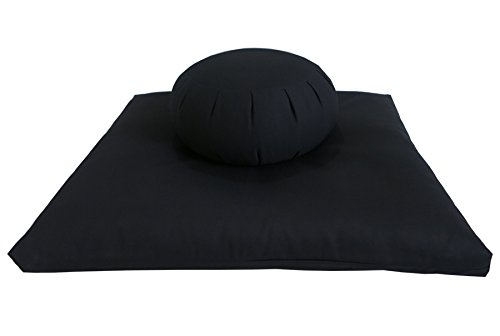
Silent cushion in between
Not three

© 2025 by Bob Schwartz

Penguins are subject to Trump tariffs. At least some of them have sweaters.


From The Guardian:

‘Nowhere on Earth is safe’: Trump imposes tariffs on uninhabited islands near Antarctica
Australian prime minister surprised after external territories – including tiny Norfolk Island and remote islands home to penguins – targeted by US president

A group of barren, uninhabited volcanic islands near Antarctica, covered in glaciers and home to penguins, have been swept up in Donald Trump’s trade war, as the US president hit them with a 10% tariff on goods.

Heard Island and McDonald Islands, which form an external territory of Australia, are among the remotest places on Earth, accessible only via a two-week boat voyage from Perth on Australia’s west coast. They are completely uninhabited, with the last visit from people believed to be nearly 10 years ago.

Nevertheless, Heard and McDonald islands featured in a list released by the White House of “countries” that would have new trade tariffs imposed.


We don’t think the penguins have heard about the tariffs. It will not affect them anyway, since they have nothing but fish, and they don’t trade that. They might be able to bribe Trump though, since it is reported that he is a fan of McDonald’s Filet-O-Fish sandwich. Like the penguins, he loves to eat.

While researching this, I came across the Penguin Foundation in Australia, which focuses on the Little Penguins on similar islands.

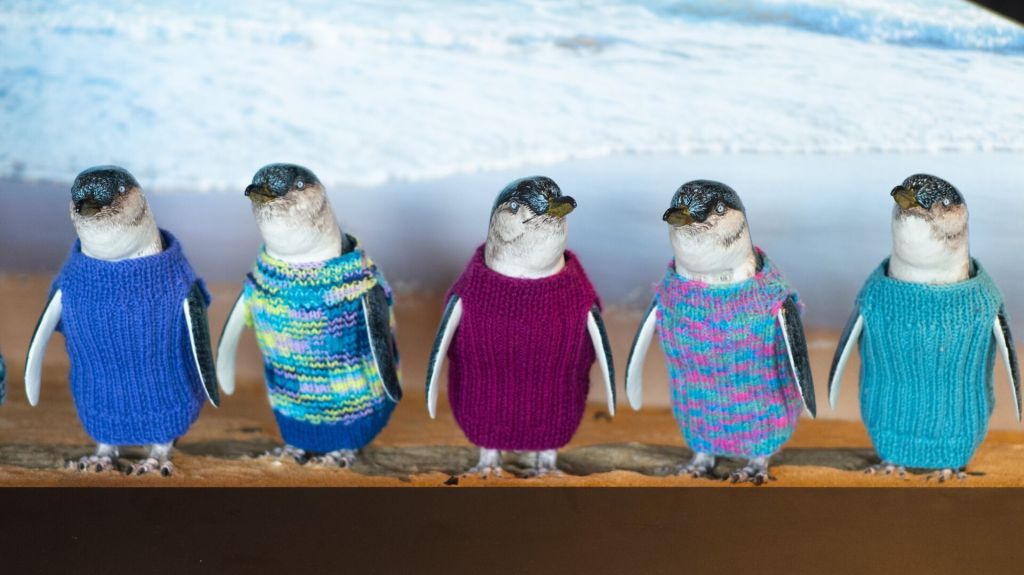
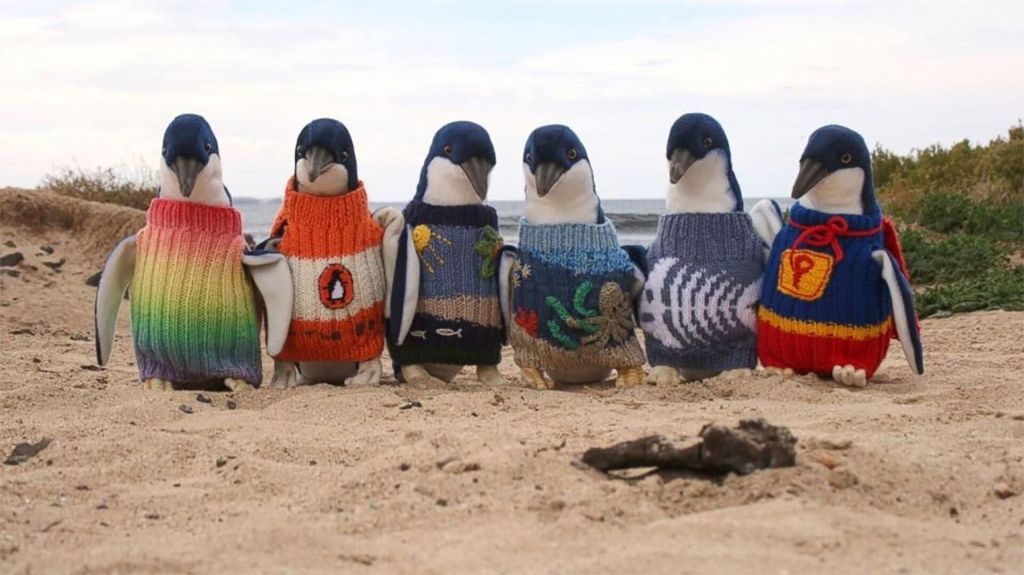
An oil spill led the Penguin Foundation to promote knitting sweaters (jumpers) for the Little Penguins of Phillip Island, to keep them from preening their feathers coated in toxic oil. (The knitting pattern is available on their site.)

Knitters have knitted enough sweaters for the current penguins and those that may be harmed in the future. Now the Penguin Foundation is asking knitters to knit sweaters for plush penguin toys to wear, which toys are being sold to raise money for the foundation.

Two reasons to mention all this here. One is that placing tariffs on “countries” inhabited by penguins is idiotic. Two is that thinking about penguins and particularly thinking about penguins wearing hand-knitted sweaters, even if meant to protect them from toxic oil spills, makes us smile. You do want a reason to smile right now—any reason—don’t you?