There have been 38 Godzilla movies since 1954. This monster is going so strong that the 2023 movie Godzilla Minus One is the best reviewed Godzilla movie yet.
Godzilla movies have a total box office of about $2.5 billion. Maybe there has been criticism of Godzilla as a psycho monster. If there has been criticism, it has not affected Godzilla’s popularity.
People love Godzilla. People love monsters. Don’t tell them they don’t.
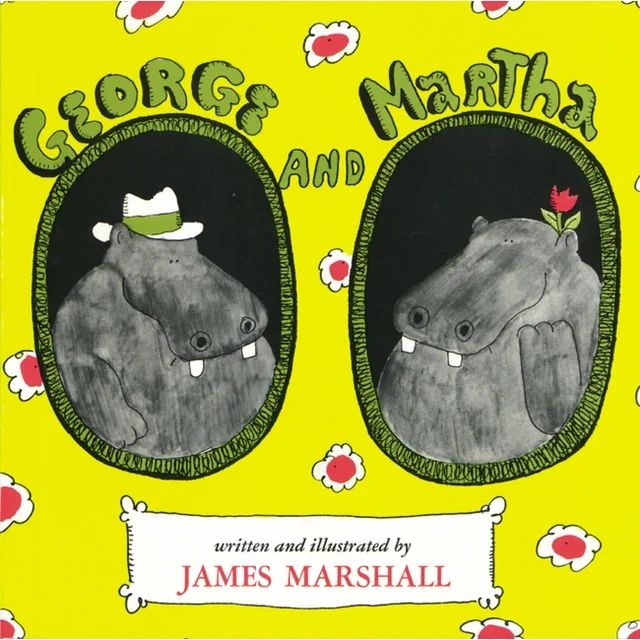
I could go on and on about the genius of the late James Marshall and his most beloved creation, the hippos George and Martha, two best friends.
You may think that these illustrated stories are for children, and you would be right, but far from completely right.
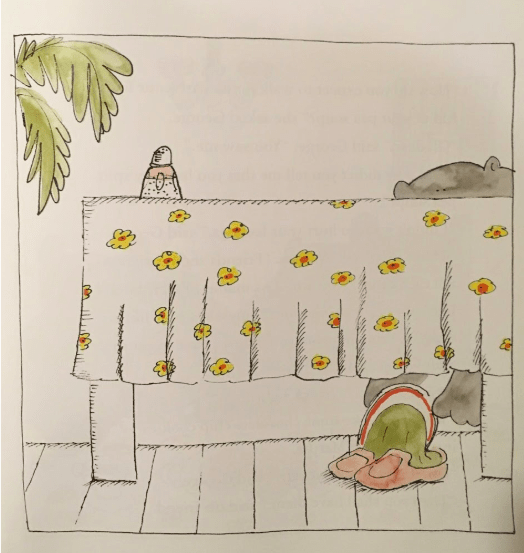
As an example, the very first of these 35 stories is Split Pea Soup.
Martha has cooked split pea soup for the two of them. George doesn’t like the soup, but doesn’t want to hurt Martha’s feelings, so he pours it into his shoes. Martha catches him in the act:
Martha said, “That’s silly. Friends should always tell each other the truth. I don’t like split pea soup very much myself. I only like to make it. From now on, you’ll never have to eat that awful soup again.”
“What a relief!” George sighed.
“Would you like some chocolate chip cookies instead?” asked Martha.
“Oh, that would be lovely,” said George.
“Then you shall have them,” said his friend.
If you think that the message is so saccharine and cliched that even a child, let alone a sophisticated grownup like you, would find it over sweet and oversimple, you have not met George and Martha.
When I searched today for appreciations of George and Martha, I found one from the New York Times in March 2018. The writer, Amy Bloom, explains how important George and Martha could be in those challenging times (you recognize why those times and these are similarly challenging):
“The Collected Stories of George and Martha: Two Best Friends” is all 35 George and Martha stories. I would recommend buying the book, with its glorious bright yellow-with-pink-flowers cover, and enjoying Sendak’s foreword. I would display it right where guests would see it even before they take off their coats. And I would hope that their exposure to George and Martha would act as lemon juice on scurvy, derailing some of the more predictable and dispiriting dinner party conversations of 2018.
Black and blue And who knows which is which, and who is who? Up and down And in the end, it’s only round and round, and round
Pink Floyd, and especially Roger Waters, are at or near the top of iconoclastic (“icon smashing”) pop music. (Waters continues to swim outside the mainstream, getting him into trouble with certain constituencies, but from my perspective, his artistic contribution grants him a license.)
Take the issue of education. We know the schools are not working, if the mission is to cultivate citizens with solid basic skills and knowledge. Instead of, for example, schools that deliver many students to college who are deficient in elementary math and who can’t conscientiously research and coherently write without the assistance of AI. What some parents clamor for is education that inculcates their children with the “right” ideology.
More than forty years ago, this is what Waters wrote in Another Brick in the Wall:
We don’t need no education We don’t need no thought control No dark sarcasm in the classroom Teacher, leave them kids alone
All in all, it’s just another brick in the wall All in all, you’re just another brick in the wall
Back to post-election music. Two years after John Lennon—another iconoclast—released his anti-war track, Happy Xmas (War Is Over) (1971), Pink Floyd featured Waters’ view about war on Dark Side of the Moon (1973). Us and Them is about war, but more broadly about the pointless and thoughtless identities that lead inevitably to pointless and thoughtless conflict.
Us and them And after all, we’re only ordinary men Me and you God only knows it’s not what we would choose to do
“Forward!” he cried from the rear And the front rank died The general sat, and the lines on the map Moved from side to side
Black and blue And who knows which is which, and who is who? Up and down And in the end, it’s only round and round, and round
“Haven’t you heard it’s a battle of words?” The poster bearer cried “Listen, son,” said the man with the gun “There’s room for you inside”
Down and out It can’t be helped, but there’s a lot of it about With, without And who’ll deny it’s what the fighting’s all about?
Out of the way, it’s a busy day I’ve got things on my mind For want of the price of tea and a slice The old man died
These methods were developed over decades as successful tools of change in resistance to authoritarian regimes. Which is to say: they have worked.
When I posted these in September 2020, I wrote at the time:
“As optimistic as I want to be about emerging sometime soon from dark governmental and political times, that day may not be tomorrow, or November, or January, or 2021.”
So it goes.
Please read this last thoroughly. Please consider which may be appropriate for you and for the current circumstances. Then please pass the list on and act.
These actions have worked before. And they can work again.
198 Methods of Nonviolent Action
Formal Statements
Public Speeches
Letters of opposition or support
Declarations by organizations and institutions
Signed public statements
Declarations of indictment and intention
Group or mass petitions
Communications with a Wider Audience
Slogans, caricatures, and symbols
Banners, posters, displayed communications
Leaflets, pamphlets, and books
Newspapers and journals
Records, radio, and television
Skywriting and earthwriting Group Representations
Deputations
Mock awards
Group lobbying
Picketing
Mock elections
Symbolic Public Acts
Displays of flags and symbolic colors
Wearing of symbols
Prayer and worship
Delivering symbolic objects
Protest disrobings
Destruction of own property
Symbolic lights
Displays of portraits
Paint as protest
New signs and names
Symbolic sounds
Symbolic reclamations
Rude gestures
Pressures on Individuals
“Haunting” officials
Taunting officials
Fraternization
Vigils
Drama and Music
Humorous skits and pranks
Performances of plays and music
Singing
Processions
Marches
Parades
Religious processions
Pilgrimages
Motorcades
Honoring the Dead
Political mourning
Mock funerals
Demonstrative funerals
Homage at burial places
Public Assemblies
Assemblies of protest or support
Protest meetings
Camouflaged meetings of protest
Teach-ins
Withdrawal and Renunciation
Walk-outs
Silence
Renouncing honors
Turning one’s back
The Methods Of Social Noncooperation
Ostracism of Persons
Social boycott
Selective social boycott
Lysistratic nonaction
Excommunication
Interdict
Noncooperation with Social Events, Customs, and Institutions
Suspension of social and sports activities
Boycott of social affairs
Student strike
Social disobedience
Withdrawal from social institutions Withdrawal from the Social System
Stay-at-home
Total personal noncooperation
“Flight” of workers
Sanctuary
Collective disappearance
Protest emigration (hijrat)
The Methods of Economic Noncooperation: Economic Boycotts
Actions by Consumers
Consumers’ boycott
Nonconsumption of boycotted goods
Policy of austerity
Rent withholding
Refusal to rent
National consumers’ boycott
International consumers’ boycott
Action by Workers and Producers
Workmen’s boycott
Producers’ boycott
Action by Middlemen
Suppliers’ and handlers’ boycott
Action by Owners and Management
Traders’ boycott
Refusal to let or sell property
Lockout
Refusal of industrial assistance
Merchants’ “general strike”
Action by Holders of Financial Resources
Withdrawal of bank deposits
Refusal to pay fees, dues, and assessments
Refusal to pay debts or interest
Severance of funds and credit
Revenue refusal
Refusal of a government’s money
Action by Governments
Domestic embargo
Blacklisting of traders
International sellers’ embargo
International buyers’ embargo
International trade embargo
The Methods Of Economic Noncooperation: The Strike
Symbolic Strikes
Protest strike
Quickie walkout (lightning strike)
Agricultural Strikes
Peasant strike
Farm Workers’ strike
Strikes by Special Groups
Refusal of impressed labor
Prisoners’ strike
Craft strike
Professional strike
Ordinary Industrial Strikes
Establishment strike
Industry strike
Sympathetic strike
Restricted Strikes
Detailed strike
Bumper strike
Slowdown strike
Working-to-rule strike
Reporting “sick” (sick-in)
Strike by resignation
Limited strike
Selective strike
Multi-Industry Strikes
Generalized strike
General strike
Combination of Strikes and Economic Closures
Hartal
Economic shutdown
The Methods Of Political Noncooperation
Rejection of Authority
Withholding or withdrawal of allegiance
Refusal of public support
Literature and speeches advocating resistance
Citizens’ Noncooperation with Government
Boycott of legislative bodies
Boycott of elections
Boycott of government employment and positions
Boycott of government depts., agencies, and other bodies
Withdrawal from government educational institutions
Boycott of government-supported organizations
Refusal of assistance to enforcement agents
Removal of own signs and placemarks
Refusal to accept appointed officials
Refusal to dissolve existing institutions
Citizens’ Alternatives to Obedience
Reluctant and slow compliance
Nonobedience in absence of direct supervision
Popular nonobedience
Disguised disobedience
Refusal of an assemblage or meeting to disperse
Sitdown
Noncooperation with conscription and deportation
Hiding, escape, and false identities
Civil disobedience of “illegitimate” laws
Action by Government Personnel
Selective refusal of assistance by government aides
Blocking of lines of command and information
Stalling and obstruction
General administrative noncooperation
Judicial noncooperation
Deliberate inefficiency and selective noncooperation by enforcement agents
Mutiny
Domestic Governmental Action
Quasi-legal evasions and delays
Noncooperation by constituent governmental units
International Governmental Action
Changes in diplomatic and other representations
Delay and cancellation of diplomatic events
Withholding of diplomatic recognition
Severance of diplomatic relations
Withdrawal from international organizations
Refusal of membership in international bodies
Expulsion from international organizations
The Methods Of Nonviolent Intervention
Psychological Intervention
Self-exposure to the elements
The fast a) Fast of moral pressure b) Hunger strike c) Satyagrahic fast
Depending on your voting this election, you may not feel good about the results. You may think that those who have gained, regained or retained power will cause people to suffer and for things to get worse, not just in America but around the world. You may be right.
There are practical strategies available to counter some of that, strategies that will be discussed and executed in the days and months ahead.
This is something different. When people come to power who don’t have the best interests of other people in their hearts and minds, we can make up the difference and counterbalance the worst.
We can do that by doubling down on being better people. In the words of Michelle Obama, who knows something about what our fellow Americans are capable of, “When they go low, we go high.”
Sunrise doesn’t last all morning A cloudburst doesn’t last all day Seems my love is up and has left you with no warning It’s not always gonna be this gray
All things must pass All things must pass away
Sunset doesn’t last all evening A mind can blow those clouds away After all this, my love is up and must be leaving It’s not always gonna be this gray
All things must pass All things must pass away
Now the darkness only stays at nighttime In the morning it will fade away Daylight is good at arriving at the right time It’s not always gonna be this gray
“There are two aspects of watching, subjective and objective. Subjective watching deals with one’s self; it is to examine one’s inner motives.Objective watching deals with others; it is to watch others’ reactions to one’s conduct. The wisdom of watching is like looking at a mirror, checking one’s original intention and outward conduct.”
The I Ching/Yijing can’t predict the election.
The pollsters can’t predict the election.
The political experts can’t predict the election.
The difference is that the I Ching embodies centuries of human affairs and history. Which makes it wise, wiser than the pollsters, the political experts, and us.
Primary is its wisdom that everything changes. One line changing to its opposite. Hexagrams changing one to another. Randomly but not randomly. People choose and change what happens. It begins with Creation (Hexagram 1). It almost ends with After Completion (Hexagram 63). But it ends with Before Completion (Hexagram 64). As if it is going to start all over again. Which it always has and will.
Q: What will be the outcome of the 2024 U.S. election?
A: Hexagram 20
Guan • Watching
NAME AND STRUCTURE
Guan means watching, observing, examining, contemplating….
Sequence of the Gua: When things become great, they require careful attention. Thus, after Approaching, Watching follows.
In China a Taoist temple is termed Tao Guan; literally it is “a place for watching the Tao.” The esoteric secret of Taoist meditation is watching—watching the breath, or the flowing of energy, or nothing. The purpose of watching is keeping alert. While chanting or reciting scriptures both Buddhist and Taoist monks beat wooden fish rhythmically. Because fish never close their eyes, the wooden fish remind one to stay alert. The Chinese name for Avalokiteshvara (an incarnation of the Buddha) is Guan-yin. Guan-yin means watching (guan) the sound (yin). To the Chinese, contemplation is watching; contemplative watching is focusing on one point and being attentive. During meditation, the sect that worships Guan-yin watches the sound either inside or outside the body. Watching the sound but not getting caught up in it, one is totally detached from the world. This gua not only sheds light on meditation but also expounds the truth that people should always keep their eyes open, watching the virtue of a leader. Thus a leader should always be sensitive to morality and justice and manifest these qualities to his people….
SIGNIFICANCE
The theme of the gua is to demonstrate the wisdom of watching. There are two aspects of watching, subjective and objective. Subjective watching deals with one’s self; it is to examine one’s inner motives. Objective watching deals with others; it is to watch others’ reactions to one’s conduct. The wisdom of watching is like looking at a mirror, checking one’s original intention and outward conduct. The ancient sages believed that inner sincerity is always revealed through one’s conduct.
The Complete I Ching: The Definitive Translation by Taoist Master Alfred Huang
A couple of days ago, I was thinking about ways to be in this fraught moment of Election 2024.
My typical search for just the right soundtrack ended with the perfect music: Christmas.
It is almost two months until Christmas. On the consumer front, Christmas has already begun. It used to be that shopping Christmas began at Thanksgiving. Now, the unofficial start is Halloween.
Commercial Christmas aside, no holiday more embodies good feeling—whether spiritual, peaceful, familial or just plain human. And that good feeling is embodied in the music.
What I have started to do, even though it is the first week in November, is to add Christmas music to my playlist. Lots of it, because I suspect that good feeling is going to be helpful in the days ahead.
You can choose the Christmas music you like. It comes in all flavors, and you likely have your favorites. Whatever that is, just listen as much as you need to keep things joyous and bright.
It’s hard to feature just one song from so many favorites. Here’s one, from an angel of song.
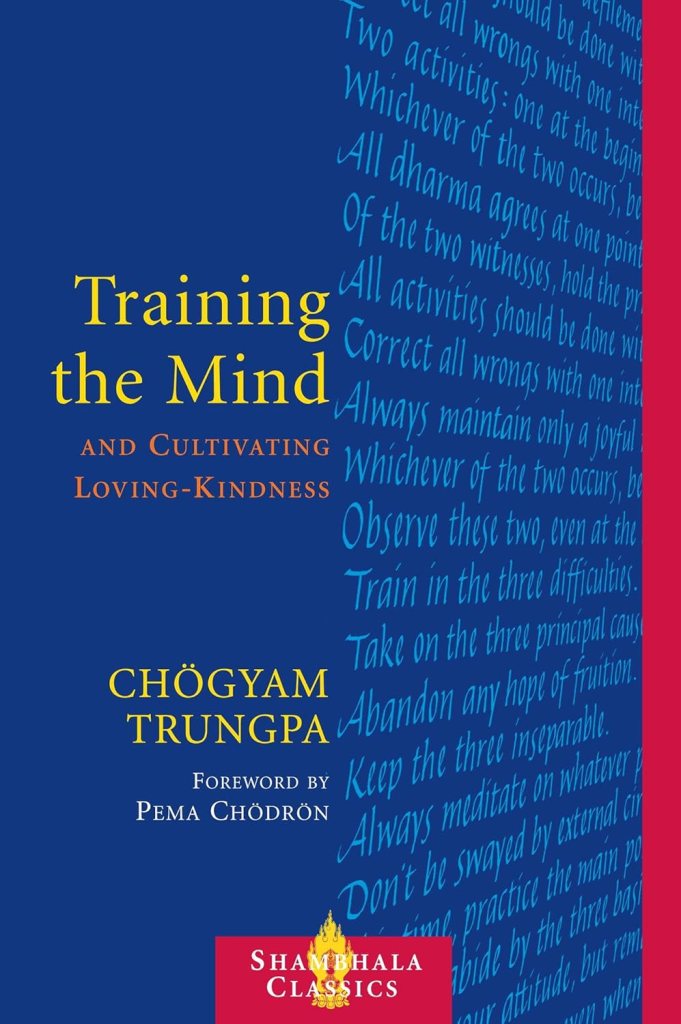
11 When the world is filled with evil, Transform all mishaps into the path of bodhi.
That is to say, whatever occurs in your life—environmental problems, political problems, or psychological problems—should be transformed into a part of your wakefulness, or bodhi….
In other words, you do not blame the environment or the world political situation…. According to this slogan, when the world is filled with evil, or even when the world is not filled with evil, any mishaps that might occur should all be transformed into the path of bodhi, or wakefulness. That understanding comes from your sitting practice and your general awareness.
This slogan says practically everything about how we can practice generosity as well. In our ordinary life, our immediate surroundings or our once-removed surroundings are not necessarily hospitable. There are always problems and difficulties. There are difficulties even for those who proclaim that their lives are very successful, those who have become the president of their country, or the richest millionaires, or the most famous poets or movie stars or surfers or bullfighters. Even if our lives go right, according to our expectations, there are still difficulties. Obstacles always arise. That is something everybody experiences. And when obstacles happen, any mishaps connected with those obstacles—poverty mentality, fixating on loss and gain, or any kind of competitiveness—should be transformed into the path of bodhi.
That is a very powerful and direct message. It is connected with not feeling poverty stricken all the time. You might feel inadequate because you have a sick father and a crazy mother and you have to take care of them, or because you have a distorted life and money problems. For that matter, even if you have a successful life and everything is going all right, you might feel inadequate because you have to work constantly to maintain your business. A lot of those situations could be regarded as expressions of your own timidity and cowardice. They could all be regarded as expressions of your poverty mentality….
It is the sense of resourcefulness, that you can deal with whatever is available around you and not feel poverty stricken. Even if you are abandoned in the middle of a desert and you want a pillow, you can find a piece of rock with moss on it that is quite comfortable to put your head on. Then you can lie down and have a good sleep. Having such a sense of resourcefulness and richness seems to be the main point….
We have found that a lot of people complain that they are involved in intense domestic situations: they relate with everything in their lives purely on the level of pennies, tiny stitches, drops of water, grains of rice. But we do not have to do that—we can expand our vision by means of generosity. We can give something to others. We don’t always have to receive something first in order to give something away. Having connected with the notion of generosity, we begin to realize a sense of wealth automatically. The nature of generosity is to be free from desire, free from attachment, able to let go of anything.






 Bob Schwartz