The practice of tonglen
by Bob Schwartz
I have been practicing and studying Buddhism, primarily but not exclusively Zen, for a long time. Which means I acknowledge knowing one particle of dust about it.
In that time, my learning about and engagement with Tibetan Buddhism is less than that particle. But in recent weeks, I came across a Tibetan mind training practice known as lojong, within which is a practice known as tonglen.
A few very brief masterful explanations:
SENDING AND TAKING MEDITATION (Tibetan tong len). A meditative practice for adopting a radically new attitude or new way of looking at things. Sometimes called “exchanging self for others,” it involves visualizing giving away everything that is good in our lives and taking on everything that is bad in the lives of others as a way of training ourselves in courage. All forms of self-obsession lead to negative emotions, and tonglen is the antidote to that.
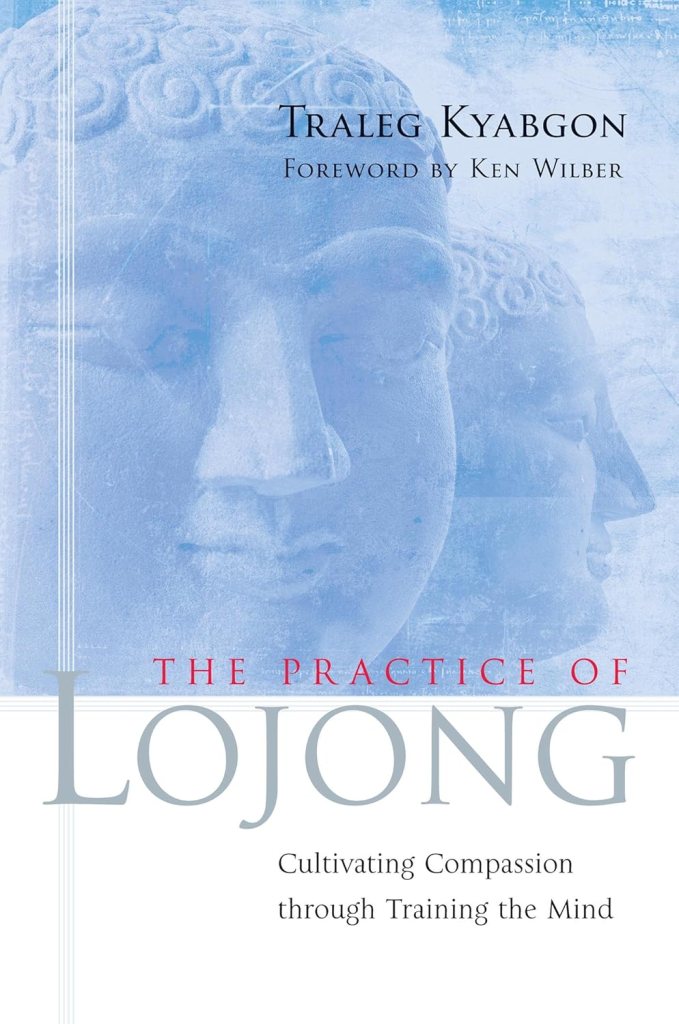
Traleg Kyabgon, The Practice of Lojong: Cultivating Compassion through Training the Mind
Introduction: It All Started with Tonglen
The Tibetan word tong means “giving”; len means “taking.” In its most well-known form, tonglen is a meditation technique that involves coordination with the breath. Breathing in, we visualize ourselves taking on the suffering of others; breathing out, we visualize ourselves giving others happiness. This powerful method for transforming our minds vividly illustrates the exchange of self and other that is the essence and spirit of tonglen. But the wider meaning and application of tonglen, both in spiritual practice and ordinary life, goes far beyond this specific technique. In general, tonglen refers to any form of exchanging self and other. We can even apply the term to the mundane exchange between an employer who pays wages and an employee who does work. Since, as we will see, the entire aim of the Buddhist path is to lessen the importance of the self and to increase the importance of others, tonglen is at the very heart of all practices. Without having an orientation toward tonglen, it is unlikely that our spiritual path will have a profound effect on our mind and heart.
Dzigar Kongtrul, The Intelligent Heart: A Guide to the Compassionate Life
TONGLEN MEDITATION
Extracted from Practice Instructions Given by Jamyang Khyentse Wangpo
Meditate that you completely take on all of the suffering and the causes of suffering—negative actions and disturbing emotions—of all sentient beings, the objects of compassion.
Then, meditate on giving all of your happiness in its entirety, including the positive actions that are the causes of that happiness, to each and every being.
This is done using the breath as follows: Visualize that the negativity, obscurations, and suffering of all living beings are gathered together in the form of black light. With each inhalation, breathe in through the nose imagining that light dissolves into your heart. Think, “Through this they are now free of all negativity and suffering forever.”
Meditate on all of your happiness and its causes—whatever positive actions you have accumulated—appearing as white light that shimmers like the moon’s rays. With the exhalation of the breath, imagine that this light flows out and dissolves into all beings. Think, “Through this they now have temporary and ultimate happiness.”
This practice is done in gradual stages.
Start by bringing to mind one person who has been very kind to you, such as your mother or father, and imagine that he or she is in front of you. Use this person as the object of tonglen, giving and receiving.
Start by bringing to mind one person who has been very kind to you, such as your mother or father, and imagine that he or she is in front of you. Use this person as the object of tonglen, giving and receiving.Focus on other loved ones, friends and family, as the objects of tonglen.
Start by bringing to mind one person who has been very kind to you, such as your mother or father, and imagine that he or she is in front of you. Use this person as the object of tonglen, giving and receiving.Focus on those whose suffering is unbearable, such as beings in the three lower and less fortunate realms of existence, and use them as the object of tonglen.
Start by bringing to mind one person who has been very kind to you, such as your mother or father, and imagine that he or she is in front of you. Use this person as the object of tonglen, giving and receiving.Focus on those humans who are destitute and suffer more than most, and those who we know engage in harmful and negative actions, as the object of tonglen.
Start by bringing to mind one person who has been very kind to you, such as your mother or father, and imagine that he or she is in front of you. Use this person as the object of tonglen, giving and receiving.Focus on your adversaries—people, ghosts, and spirits who harm you and your loved ones—as the object of tonglen.
Start by bringing to mind one person who has been very kind to you, such as your mother or father, and imagine that he or she is in front of you. Use this person as the object of tonglen, giving and receiving. Finally, embrace all sentient beings as the focus of your tonglen practice.
After practicing this mind training as much as you can, recite the following advice:
When the entire universe and all living beings are filled with negativity, bring all adverse circumstances onto the path of enlightenment. Drive all blame into one and meditate on the kindness of all.
Khentrul Lodrö Thayé, The Power of Mind: A Tibetan Monk’s Guide to Finding Freedom in Every Challenge
I avoid offering testimony on the effectiveness and value of religious practices and traditions. I follow the Buddha’s principle of upaya—skillful or expedient means, suited to an individual. About the practice of tonglen, and about lojong of which it is a part (more on this at some later time), this is something so simple and powerful that I thought I would share.
 Bob Schwartz