Bob Schwartz

Month: October, 2024

Fast on Yom Kippur and donate the food money to the starving

Yom Kippur, beginning on the evening of October 11, is the most solemn day of the Jewish year, on which we fast from sundown to sundown.

When we miss meals, we save on the groceries and restaurant meals we might otherwise pay for. Why not take the money we save—from a few dollars to much more—and donate it to help those who, through no fault of their own, are malnourished or starving?

One place that is occurring is in Gaza. Whatever the individual views and ideologies, whatever and wherever blame is assigned, we can all agree that having malnourished and starving children is not good, and that any efforts we make to mitigate the situation are good.

The International Rescue Committee is a reliable and reputable place for those donations:


Over half a million Palestinians are suffering from severe malnutrition, and children are dying of starvation. Right now the IRC and its partners are working to deliver urgently needed emergency food, medical supplies and other crucial humanitarian aid to displaced families.

Your gift today will help families in Gaza and conflict zones around the world survive, so please don’t wait. Make an emergency gift to the International Rescue Committee and help people in crisis.

Right now all gifts MATCHED up to $3,500,000.

All gifts, up to $3,500,000 will be matched by generous donors until 11:59 PM on January 2, 2025, or until the match total is met. Gifts received after the match amount has been met will not be matched but will be used where needed most.


Wishing all who fast an easy fast, and all, Jews and non-Jews alike, a good, sweet and peace-filled New Year. All of us deserve it.
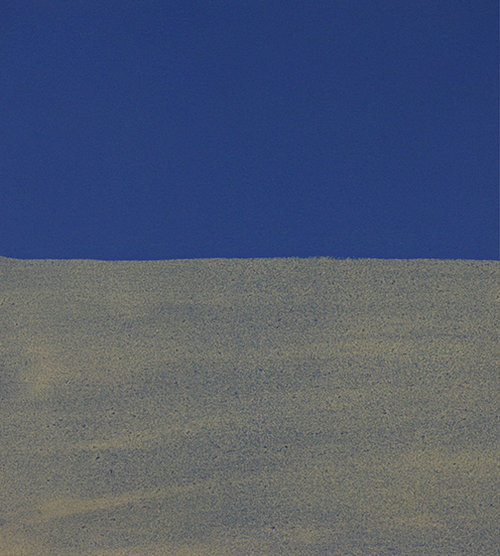
No distance

Kazuaki Tanahashi, Desert Within

The distance between
here and there
disappears when
the difference between
here and there
disappears.
What a journey!

© 2024 by Bob Schwartz

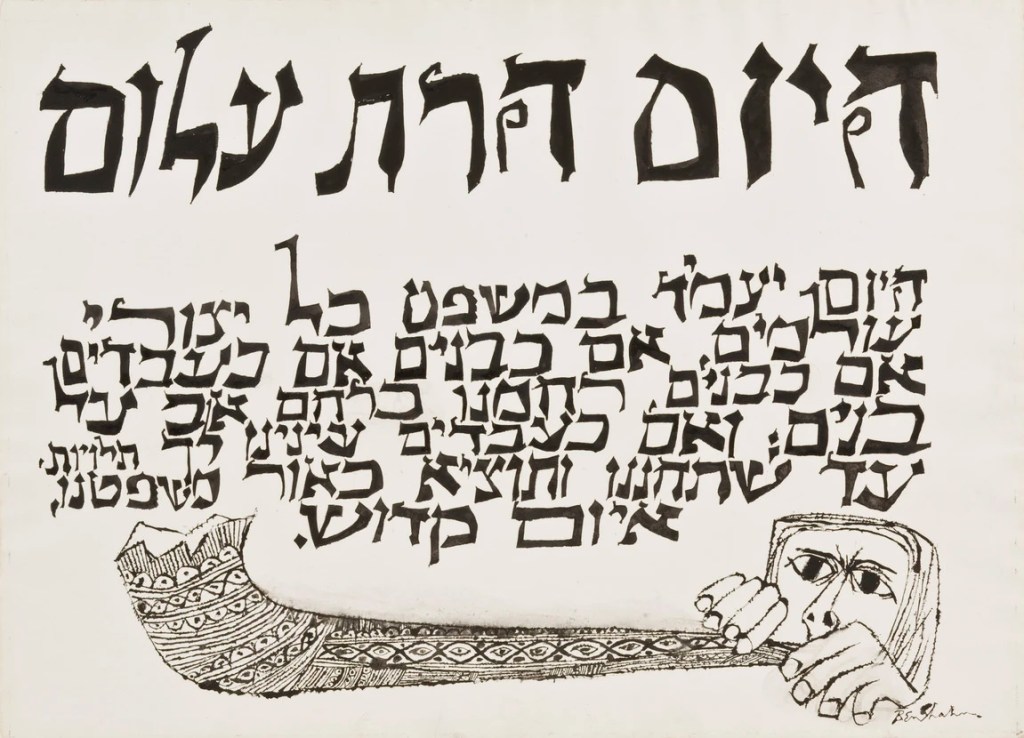
Ben Shahn and the Holy Day

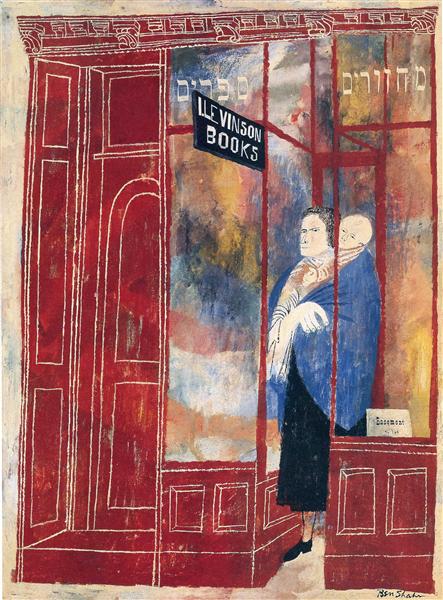
Today Is the Birthday of the World (1955), Ben Shahn

The art of Ben Shahn (1898-1969) is, I think, maybe a little out of style these days. This may say something about where we are, as Americans in general and as Jews in particular. From the 1930s through the 1960s, his work as a photographer and artist reflects, in theme and content, an uncompromising commitment to social justice and to the core of his faith. His works are guides through the struggles of the Depression, World War II, postwar economic difficulties, civil rights, and more. He had a special love for Jewish scripture and culture.

I was planning to exhibit some of his artwork promoting voter registration and voting, which I will soon. But given the time of year, I found a couple of his works specifically focused on the High Holidays, which are here right now.

Bookshop: Hebrew Books, Holy Day Books (1953), Ben Shahn. (Note: The Hebrew word at the upper right is machzorim, prayer books for the holiday.)

Please enjoy and explore Ben Shahn. He will be back in these pages, because he is needed.

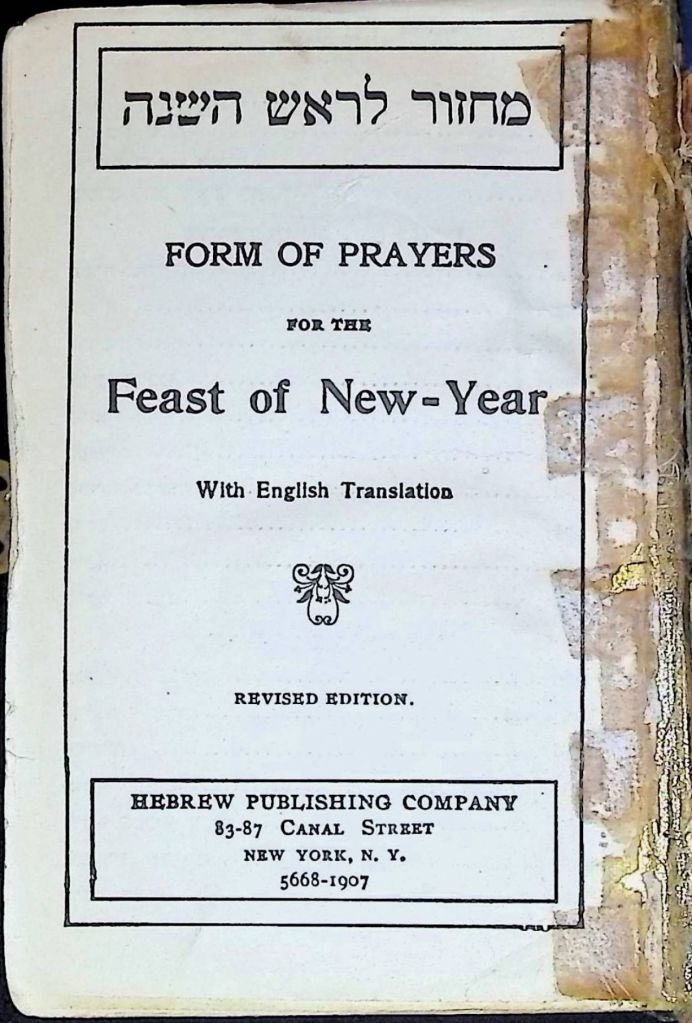
Form of Prayers for the Feast of New-Year (5668-1907)

I have a small collection of older High Holiday machzor (prayer books), including ones used by my grandfather and father.

The jewel of that collection is the one pictured here. It is called Form of Prayers for the Feast of New-Year With English Translation, published by the Hebrew Publishing Company on Canal Street, New York in 1907. The book, with ornate metal clasp, is 3.5 inches x 5 inches.

The cover is mother of pearl and metal. The centerpiece is a carved decoration inscribed with the numbers of the Ten Commandments—in Roman numerals! I think this looks something like a hamsa—a spiritual amulet shaped like a hand, popular in Jewish and other traditions. Maybe not.

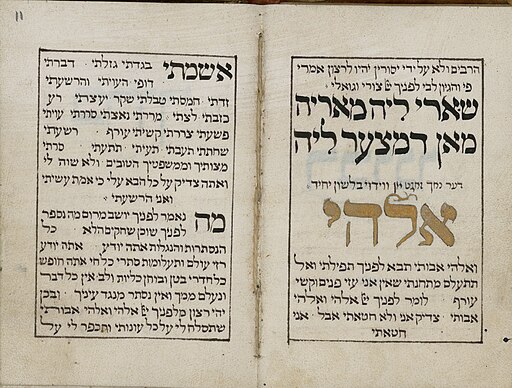
I would like to share more pages, but the book is delicate, having been lovingly held together with taped binding during the past century plus. The pages I’ve included below are from the concluding service on Yom Kippur, the Neilah. This offers a tiny idea of what this precious book is like.

Shana tova. A sweet and peace-filled New Year.

A little child shall lead them

Edward Hicks, The Peaceable Kingdom

The wolf shall live with the lamb;
the leopard shall lie down with the kid;
the calf and the lion will feed together,
and a little child shall lead them.
Isaiah 11:6

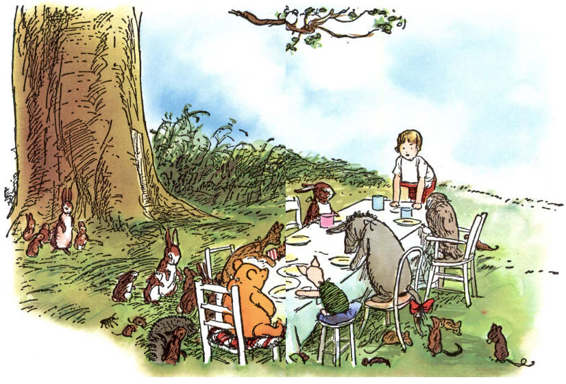
Christopher Robin had made a long table out of some long pieces of wood, and they all sat around it. Christopher Robin sat at one end, and Pooh sat at the other, and between them on one side were Owl and Eeyore and Piglet, and between them on the other side were Rabbit, and Roo and Kanga. And all Rabbit’s friends-and-relations spread themselves about on the grass, and waited hopefully in case anybody spoke to them, or dropped anything, or asked them the time.
Winnie-the-Pooh, Chapter Ten, In Which Christopher Robin Gives Pooh a Party, and We Say Good-bye

Confession for the Jewish High Holidays 5785/2024

Ashamnu
אָשַׁמְנוּ
nahn maswuwlun
نحن مسؤولون
We are responsible

Bagadnu
בָּגַדְנוּ
nahn nakhun
نحن نخون
We betray

Gazalnu
גָּזַלְנוּ
nahn nasriq
نحن نسرق
We steal

Dibarnu dofi
דִבַּרְנוּ דֹפִי
nahn nahtaqir
نحن نحتقر
We scorn

He-evinu
הֶעֱוִינוּ
nahn natasaraf bishakl munharif
نحن نتصرف بشكل منحرف
We act perversely

V’hirshanu
וְהִרְשַׁעְנוּ
nahn qusa
نحن قساة
We are cruel

Zadnu
זַדְנוּ
nahn nukhatit
نحن نخطط
We scheme

Chamasnu
חָמַסְנוּ
nahn eanifun
نحن عنيفون
We are violent

Tafalnu shaker
טָפַלְנוּ שֶקֶר
nahn alaiftira’
نحن الافتراء
We slander

Ya-atznu ra
יָעַצְנוּ רַע
nahn nabtakir alshara
نحن نبتكر الشر
We devise evil

Kizavnu
כִּזַבְנוּ
nahn naqul al’akadhib
نحن نقول الأكاذيب
We lie

Latznu
לַצְנוּ
nahn naskhar
نحن نسخر
We ridicule

Maradnu
מָרַדְנוּ
nahn naesi
نحن نعصي
We disobey

Ni-atznu
נִאַצְנוּ
nahn nasi’
نحن نسيء
We abuse

Sararnu
סָרַרְנוּ
nahn natahadak
نحن نتحداك
We defy

Avinu
עָוִינוּ
nahn nufsid
نحن نفسد
We corrupt

Tzararnu
צָרַרְנוּ
nahn eadaayiyuwna
نحن عدائيون.
We are hostile

Kishinu oref
קִשִׁינוּ עֹרֶף
nahn eanidun
نحن عنيدون
We are stubborn

Rashanu
רָשַׁעְנוּ
nahn ghayr ‘akhlaqiiyn
نحن غير أخلاقيين
We are immoral

Shichatnu
שִׁחַתְנוּ
nahn naqtul
نحن نقتل
We kill

Tiavnu
תִּעַבְנוּ
nahn nufsid
نحن نفسد
We spoil

Ta·inu
תָּעִינוּ
nahn nudil
نحن نضل
We go astray

Titanu
תִּעְתָּעְנוּ
nahn naqud alakharin ‘iilaa aldalal
نحن نقود الآخرين إلى الضلال
We lead others astray


The Jewish High Holidays 5785/2024—the ten Days of Repentance and Awe—begin with Rosh Hashanah, the New Year, on the evening of October 2, and end with Yom Kippur, the Day of Repentance, on October 10.

Confession is a centerpiece of the holiday. In the liturgy, Vidui includes two confessional prayers, Ashamnu and Al Cheit. Ashamnu is the shorter list of transgressions. Al Cheit is a longer detailed list of particular wrongdoings.

The past year has been one of tragedy, suffering and war in Israel, Gaza, the Middle East, and the Jewish world. Whatever our faith, status, history, ideology, grievances, or rationales, we are reminded now that none of is above responsibility, none of us as above the need for confession.

Above is my adaptation of Ashamnu. In Hebrew it is an acrostic, the first letter of each line in alphabetical order. English translations of those words vary, but all are admissions of conduct to be fixed in the year ahead. I’ve changed the common translation of the first word, Ashamnu. Often translated as “we have trespassed” or “we are guilty”, I have borrowed from Abraham Joshua Heschel. He famously said about his early protest of the Vietnam War: “In a free society, few are guilty, but all are responsible.”

My version also adds a rough translation of each expression into Arabic. Not in the least literate in the language, I’ve relied on a digital translator. For any errors in this, small or egregious, my humble and sincere apologies.

The message is that all of us, from the heinous to the heavenly, are responsible. The High Holidays insist that we are imperfect in ways that we may not acknowledge or may ignore. Our hearts may be hard when they should be soft. Why else do we literally beat our chests as we recite each of our wrongs? So we can locate our hearts, reach in, and know what condition they are in.

Shana tova. A good and sweet New Year to all.

© 2024 by Bob Schwartz