There are no atheists among baseball fans around the playoffs.
That needs clarifying. “Baseball gods” are not necessarily God in the conventional sense. Some fans will indeed pray to the Abrahamic God for team success, or if not Judaeo/Christian/Muslim, to their own parallel supreme deities.
Baseball gods are where a fan, true believer or not, seeks extra help for their team. Whether your team is an overwhelming favorite to win the whole thing, including the World Series, or your team is a long shot, the principle is the same: talent is not enough.
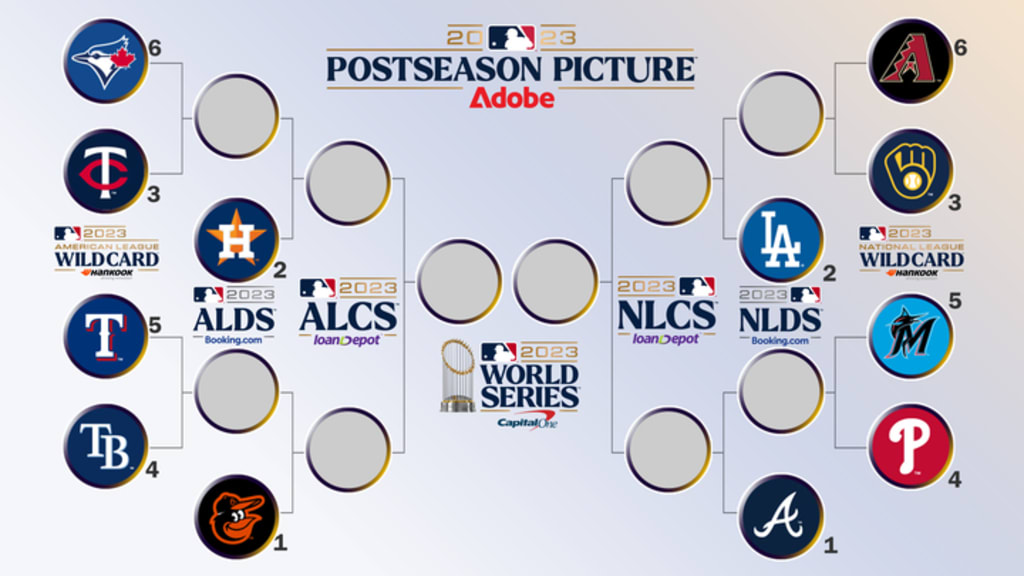
Twelve teams have survived the long, long season—162 grueling games—yet there are still more games to play against strong opponents. For those remaining games, talent is not enough. Something more is needed.
That’s where prayers to the baseball gods come in. Does each team have its own god? Is each of those gods equally powerful to give their team that extra something, that special boost, that can make the difference? Do those gods have playoffs among themselves? Who knows? Not me. Baseball theology is not my specialty.
It is too risky to leave baseball up to the talent of the players and the wisdom of the managers. If a little extra help is needed and sought, what’s the harm? In the playoffs, we want to enjoy the thrill of victory and avoid the agony of defeat. Whatever we believe, we pray on.
Today is the middle of the Jewish festival of Sukkot, named after the huts (sukkot) in which we are these days supposed to dwell in or at least visit and share meals in. These structures represent dwellings the Israelites inhabited during their storied 40 years of wandering in the desert. Sukkot is also a harvest festival, and the sukkah represents the temporary huts set up in the fields.
A few wandering notes:
Kohelet (Book of Ecclesiastes)
The Book of Ecclesiastes is traditionally read on Sukkot. In Hebrew, the book is called Kohelet (also written Qohelet), named after the book’s speaker, identified in English as Preacher/Teacher. Ecclesiastes is famous for the King James translation of the opening—“Vanity, vanity, says the Preacher, all is vanity.” Other modern translators choose a different word for the ancient Hebrew hevel, instead of vanity using absurd, meaningless, pointless, wind, breath, etc.
Ecclesiastes is distinct from any book in the Hebrew Bible, and may be the most philosophically puzzling and profound. Here is a summary of its message:
Qohelet and his audience live in a world of rapid political, social, and economic changes, and it is in such a context that he reflects on humanity’s plight. It is a world full of inconveniences, inconsistencies, and contradictions. Nothing that mortals do or have is ultimately reliable—not wealth, pleasure, wisdom, toil, or even life itself. People try to cope with the situation of anomie in various ways. They worry. They are never satisfied. They are obsessed with discovering any formula that will bring success and happiness. They try give an accounting of all that is happening. They endeavor to straighten everything that is crooked, correct every injustice, fill every void. They strive to gain an immortality of sorts through fame, progeny, wealth, or accomplishments. They try everything to gain some control, if not actually to secure an advantage in life. Nothing works, however, and still there looms the large shadow of death, from which no one can escape.
As Qohelet sees it, humans have no control over the world in which they live, for all is “vanity” (Hebrew hebel). His most persistent counsel, therefore, is to take pleasure in all that one does. Indeed, this call for enjoyment is so prominent that it is sometimes seen as the main message of the book. Yet enjoyment can hardly be the central message of the book. Nowhere in the book does Qohelet say that one should seek pleasure and, when he does speak of his own quest for pleasure, he tells us that he finds it to be, like everything else in life, elusive, fleeting, and as unreliable as wind. For Qohelet, human beings have no control over what will happen in the world, and so one should live moment by moment.
Throughout the book, there is profound awareness of God, although it is not an immanent deity of whom Qohelet speaks. The deity does not relate personally to anyone, does not enter into a covenant with anyone, does not intervene in the history of any nation in any identifiable fashion. God is wholly transcendent, and, indeed, the fundamental dissimilitude between God’s being and humanity’s being is stressed. This is what Qohelet means by the fear of God, a concept that conveys the indisputable distinction between divinity and humanity.
God remains an utter mystery to Qohelet. Although he would speak repeatedly of the power of God and the activity of God, he admits that he is not able to make much sense of them. There is no epistemological system by which to know God. Wisdom cannot fathom the significance of history. Nature, too, reveals nothing save the sovereignty and mystery of God. Neither history nor nature yields any knowledge of God to Qohelet, but Qohelet knows that there is nothing better for humanity than to enjoy the present as a gift of God.
C. L. Seow, HarperCollins Bible Commentary
Elijah
The prophet Elijah doesn’t have his own book in the Hebrew Bible, but he is a major figure (see 1 Kings 17:1 and following for his unforgettable exploits). Each Shabbat includes the song Eliyahu Hanavi:
Elijah the Prophet Elijah the Tishbite Elijah the Giladite May he soon come to us With Messiah the son of David
In our real lives, Elijah makes his most notable appearance at the Passover seder. A glass of wine is set at the table for him, the door is opened, and at some point Elijah drops by and drinks it. Or maybe the glass is secretly emptied by a seder attendee, which impresses the kids.
The question: Why isn’t Elijah invited to join us in the sukkot? There is not even a door to open because there aren’t doors. If Elijah is thirsty and drinks at Passover, why not at Sukkot?
Lao Tzu
Lao Tzu is the purported author of the Tao Te Ching, a basic text of Taoism and one of the world’s shortest and most powerful wisdom texts.
Chapter 11 of the Tao Te Ching relates directly to the huts, the sukkot of Sukkot:
11
Thirty spokes converge on a hub but it’s the emptiness that makes a wheel work pots are fashioned from clay but it’s the hollow that makes a pot work windows and doors are carved for a house but it’s the spaces that make a house work existence makes a thing useful but nonexistence makes it work
Te-Ch’ing (1546–1623) says, “We all have form and think ourselves useful but remain unaware that our usefulness depends on our empty, shapeless mind. Thus, existence may have its uses, but real usefulness depends on nonexistence. Nonexistence, though, doesn’t work by itself. It needs the help of existence.”
Tao Te Ching, Red Pine translation
Exactly. To rephrase:
an opening is left in the hut but it’s the spaces that make a hut work
Is this too far afield from Sukkot and Judaism? From Kohelet and Elijah? When next you ride a bicycle or cook in a pot or stand in a room or in a sukkah, please consider this.

 Bob Schwartz