“Cease to do evil. Learn to do good, seek justice.” Whether God or just Isaiah talking, it was and is great advice.
by Bob Schwartz
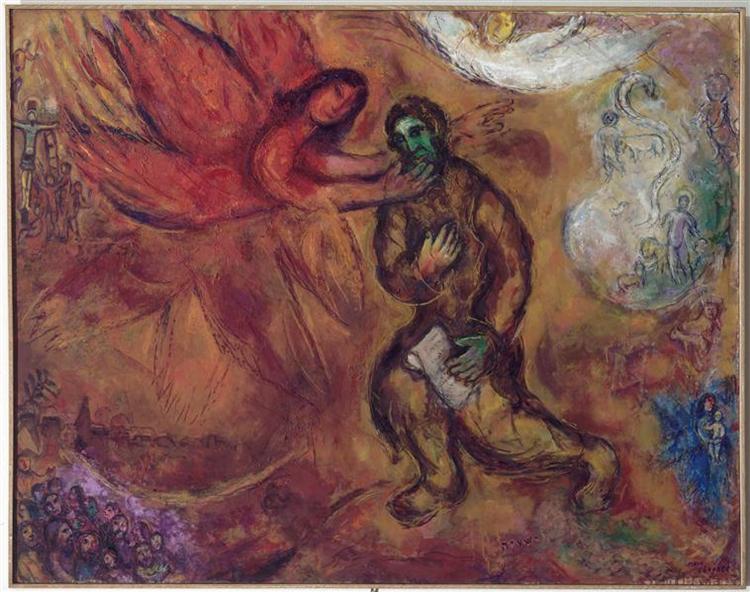
For CB and the haverim
Each week it is the Jewish tradition to read a portion of the Torah (Five Books of Moses) along with a selection from the prophets. This week the haftarah (prophetic reading) is the beginning of the book of Isaiah (1:1-27).
Isaiah is perhaps the best-loved of the prophetic books. It is cited more than any other prophetic text in rabbinic literature, and more haftarot are taken from Isaiah than from any other prophetic book containing the work of literary prophets. (Haftarot are the prophetic readings chanted in synagogue on the Sabbath, holidays, and fast days.)….Not only rabbinic Judaism but also Christianity and Western culture have emphasized the book of Isaiah. First-time readers of Isaiah are often surprised to find that a well-known expression, a famous quotation, or even a favorite song comes from or is based on Isaiah.
Jewish Study Bible
While Isaiah is a complex book, as are many of the prophetic texts, the message in 1:11-17 is simple and powerful, for believers and nonbelievers, especially for anyone who claims to be listening to God, either directly or through a prophet. God and humanity don’t want empty gestures. Not if those praying hands are dirty, even bloody. “Cease to do evil. Learn to do good, seek justice.”
11 “Why need I all your sacrifices?”
says the LORD.
“I am sated with the burnt offerings of rams
and the suet of fatted beasts,
and the blood of bulls and sheep and he-goats
I do not desire.
12 When you come to see My face,
who asked this of you,
to trample My courts?
13 You shall no longer bring false grain offering,
it is incense of abomination to me.
New moon and sabbath call an assembly—
I cannot bear crime and convocation.
14 Your new moons and your appointed times
I utterly despise.
They have become a burden to me,
I cannot bear them.
15 And when you spread your palms,
I avert My eyes from you.
Though you abundantly pray,
I do not listen.
Your hands are full of blood.
16 Wash, become pure,
Remove your evil acts from My eyes.
Cease doing evil.
17 Learn to do good,
seek justice.
- Why need I all your sacrifices? This is not a pitch for the abolition of sacrifice but rather an argument against a mechanistic notion of sacrifice, against the idea that sacrifice can put man in good standing with God regardless of human behavior. The point becomes entirely clear at the end of verse 15, when the prophet says that it is hands stained with blood stretched out in payer that are utterly abhorrent to God. Thus, the grain offering is “false” (or “futile”) because it is brought by people who have oppressed the poor and failed to defend widows and orphans.
- Your hands are full of blood. This shocking detail is held back until the end of these two lines of poetry: the palms lifted up in prayer are covered with blood, and that is why God averts His eyes, because He can’t bear looking at them. It should be noted that Isaiah’s outrage, as it is spelled out in verse 17, is not chiefly with cultic disloyalty, as it would be for the writers in the school of Deuteronomy, but with social injustice—indifference to the plight of the poor and the helpless, exploitation of the vulnerable, acts represented here as the moral equivalent of murder.
Robert Alter, The Hebrew Bible
 Bob Schwartz