Bob Schwartz

Month: June, 2018

TV: The Americans Series Finale

For each man kills the thing he loves,
Yet each man does not die.
Oscar Wilde

There will be time, there will be time
To prepare a face to meet the faces that you meet;
There will be time to murder and create…
T. S. Eliot

We always deceive ourselves twice about the people we love — first to their advantage, then to their disadvantage.
Albert Camus

Man is the only creature who refuses to be what he is.
Albert Camus

In the end, everyone significant in the extraordinary TV series The Americans is dead or exiled, separated from those they love, from their homes and from themselves.

But that presupposes that they really do love those others, that they really do have homes and that they really do know who they are. Do they? Can they?

In the series finale, a father sends a final message to a son he will never see again: be yourself.

It was no secret from the start of The Americans that it was about big questions disguised as a compelling story. Whether it is in a novel or a movie or a TV series, those creative ambitions are often squandered by the end. Life inevitably ends in death, but the planned death of a TV series is just as tricky. Those who have stuck around for the narrative ride want something—not necessarily the cliché of closure, but something like meaning.

The Americans, like other superior contemporary TV drama series, is built to persist in the consciousness of its viewers the way a great novel might. We are not Soviet spies pretending to be a suburban family in Reagan-era America. We are not FBI counterintelligence agents. But nothing—no extraordinary circumstances—insulates them or us from the shared human uncertainties that drive the choices we make and the consequences of those choices. Choices that can leave us, despite our best intentions and best interests, in exile. Which is why Oscar Wilde, T. S. Eliot and Albert Camus are able to serve so well as reviewers of The Americans.

Bobby Kennedy

Come, my friends,
‘T is not too late to seek a newer world.
Ulysses by Alfred, Lord Tennyson.

Bobby Kennedy was killed 50 years ago today, in the midst of what might have been a successful campaign for the Democratic nomination and for the presidency in 1968. We don’t know unwritten stories. He was 42 years old.

You will find plenty of perspectives on Bobby Kennedy published today, and in the dozens of books and hundreds of essays written about him and his place in history. I’ve written about him too, but today I find myself with little new to say.

Instead, I’ll quote, as I have before, from a poem he recited on the campaign trail.

The poem is Ulysses (1842), written by Alfred, Lord Tennyson.

Imagine that. A 20th century politician reciting a 19th century poem about a hero who first appeared more than two thousand years earlier. Not just any poem and hero, but an idealistic poem about a hero who reluctantly takes on a mission. Having already sacrificed family life for duty, he can’t help but set out one more time. Leaving the life of ease behind, he fiercely pursues a dream until the end of days.

The language of the poetry may be old-fashioned to the modern ear, but please read it carefully. It remains a timeless description of what drives people to mission and sacrifice, in spite of the lure of comfort and the toll of years. If America needed that—and almost got it—in 1968, we need it now.

…Come, my friends,
‘T is not too late to seek a newer world.
Push off, and sitting well in order smite
The sounding furrows; for my purpose holds
To sail beyond the sunset, and the baths
Of all the western stars, until I die.
It may be that the gulfs will wash us down:
It may be we shall touch the Happy Isles,
And see the great Achilles, whom we knew.
Tho’ much is taken, much abides; and tho’
We are not now that strength which in old days
Moved earth and heaven, that which we are, we are;
One equal temper of heroic hearts,
Made weak by time and fate, but strong in will
To strive, to seek, to find, and not to yield.


L’dor Vador (Ramadan)

L’dor Vador (Ramadan)

Jews begat
Christians begat
Muslims.
Thousands became
Millions became billions.
Blessed and blind warriors
Pages of holy books
Edged in gold
Sharp as swords.
Angry and bitter blood transmutes
To sweet water in the scorching desert
Of seeking souls.

©

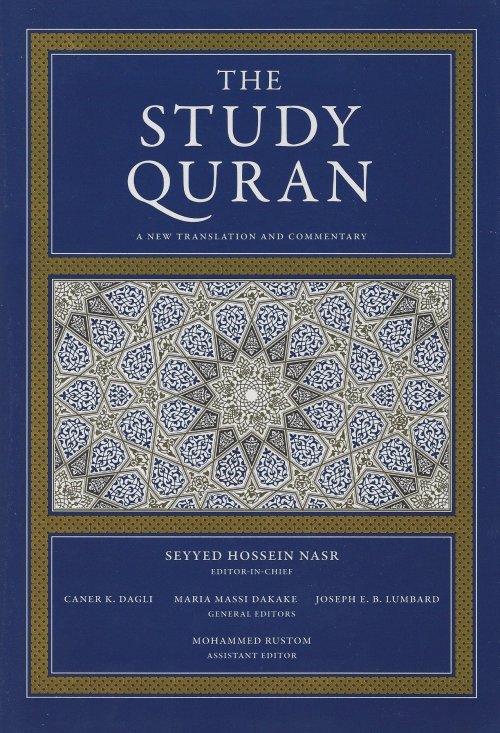
Note: We are in the midst of the Muslim holy month of Ramadan, commemorating the first revelation of the Qur’an to Muhammad. It is sad astonishment to students of all three Abrahamic faiths to see how zealously ignorant and contentious some of the faithful of each may be to each other. (Jews who will not dare to touch, let alone read, the New Testament; Jews and Christians who will not dare to touch, let alone read, the Qur’an.)

In fact, each faith has produced extraordinary core texts that should be the first stop for anyone claiming to know anything—not only about the other, but about their own traditions. The golden threads of Judaism are woven into Christianity, the golden threads of Judaism and Christianity are woven into Islam. The ugliness and terror are man-made; the best parts are from the compassionate and caring.

L’dor vador. From generation to generation. One family.

Pardon Me Myself and I

Last November I wrote:

A best guess is that Trump would love to pardon everybody, or almost everybody, who might be caught in the net of the special investigation….There is a thought that his pardon of those who might provide evidence in the ongoing investigation could be considered obstruction of justice. Of course, that charge will have to wait until he is out of office, since a sitting president cannot be indicted. Plus, he can pardon himself for any federal crimes, including that. So that would not stop Trump.

And here we are. While his pardon of others is still a work in progress, Trump now loudly claims the absolute power to pardon himself.

As with all things Trump, he has managed to distract us. Like he does with his lies. As reasonable citizens, we want to focus on important lies the president tells. But we can’t focus because he tells so absurdly many of them (3,000 and counting, according to the Washington Post).

The little issue at the moment is whether the president has the power, conditional or absolute, to pardon himself. The issue has never been litigated, and despite the overwhelming view that it is wrong, legally and morally, there is a small colorable claim for this position. Not a claim I would make as a conscientious patriotic American lawyer if Trump was my client, but a constitutional claim that could be made.

The much, much bigger issue we are distracted from is that a President of the United States is for the first time ever claiming the absolute power to pardon himself in the face of criminal activity he is charged with or has committed. Our most corrupt presidents of the past—and we’ve had a handful—have convinced themselves that they could get away with plenty. But even as crooked as they were, they believed that claiming such a self-pardoning power not only relegated them to political hell, but to actual hell itself. It seems we finally have a president who isn’t afraid of going to hell—because he is already there, and is taking us with him.

How Smart People Miss the Rise of Authoritarian Rule. Until It Is Too Late.

If you listen carefully, you will hear respected journalists and observers now saying some things about Trump that you rarely heard from them before—not during his campaign, and not until recently during his presidency:

He is a liar.
He is a narcissist, possibly mentally disordered.
He is corrupt.
He is leading America towards authoritarian rule.

Why have they been so reluctant to speak more plainly about the obvious? First, because these are extreme characterizations, not to be offered lightly. Second, the appearance of objectivity is important for these journalists and observers, and such extreme characterizations can be seen as biased—even if true. Third, many people who reached these conclusions could hardly believe it themselves. Finally, in a fit of magical thinking, they thought that it would pass, and that we would revert, much sooner than later, to a more traditional, conventional, decent, reasonable, principled, truthful, democratic approach to American government.

This led me to wonder about others who have observed and covered historic authoritarians as they rose to power. I came across the book Hitlerland: American Eyewitnesses to the Nazi Rise to Power (2012). Those Americans who had a front-row seat to the first act of one of history’s darkest and most tragic eras—what did they think they were watching?

Andrew Nagorski writes:

Today, it’s conventional wisdom that Hitler’s intentions were perfectly clear from the outset and that his policies could only result in World War II and the Holocaust. Most people find it hard to imagine that in the 1920s and right through the 1930s, American reporters, diplomats, entertainers, sociologists, students and others living in or passing through Germany wouldn’t have all instantly seen and understood what was happening before their eyes. After all, they had ringside seats, providing them with an unparalleled view of the most dramatic story of the twentieth century. Several of them not only observed Hitler from afar, but met and spoke to him, both when he was still a local agitator in Munich and then the all-powerful dictator in Berlin. To them, he wasn’t some abstract embodiment of evil but a real-life politician. Some Americans tried to take his measure very early, while others did so once he was in power. And even those who didn’t have those opportunities witnessed the consequences of his actions.

Yet their readings of what was happening in Germany, and what Hitler represented, varied greatly. There were those who met Hitler and recognized he represented almost a primeval force and possessed an uncanny ability to tap into the emotions and anger of the German people, and those who dismissed him as a clownish figure who would vanish from the political scene as quickly as he had appeared. There were those who, at least initially, viewed him and his movement sympathetically or even embraced it, and those whose instinctive misgivings quickly gave way to full-scale alarm, recognizing that he was a threat not only to Germany but also to the world.