Bob Schwartz

The Sandokai: You Don’t Have To Be Zenish

Branching Streams

You don’t have to be a Zen person to read and appreciate the Sandokai (Harmony of Difference and Equality). You don’t have to be any particular person at all.

The Sandokai is a poem by eighth-century Chinese Zen Ancestor Sekito Kisen. It is a core text that is recited daily by many Zen practitioners.

It is often described as “difficult” the same way that oceans are described as “deep.” The depth is valuable and explorable, and yet ships of all kinds from all nations seem to float and travel on its surface beneficially, without regard to the depths below.

It is read as a challenge to even the most practiced reader. But a first reading by a beginner (and we are all beginners) can be surprisingly lightening.

The unsurpassed modern overview of the Sandokai is by Shunryu Suzuki Roshi. His talks from 1970 at the Tassajara Zen Mountain Center are collected in Branching Streams Flow in the Darkness: Zen Talks on the Sandokai. (You can also read the unedited transcripts and hear the talks themselves by visiting the San Francisco Zen Center archives.)

If you have any interest in the nature of things, just read. Don’t worry about what else you’ve studied or about what perspective or tradition you are coming from, or not studied or are not coming from. Just read, and if any of the verses strike you—or strike you over the head—all for the good. And if not, well, it’s still an interesting and lyrical poem.


Harmony of Difference and Equality (Sandokai)

The mind of the great sage of India
is intimately transmitted from west to east.

While human faculties are sharp or dull,
the Way has no northern or southern ancestors.

The spiritual source shines clear in the light;
the branching streams flow on in the dark.

Grasping at things is surely delusion,
according with sameness is still not enlightenment.

All the objects of the senses
transpose and do not transpose.

Transposing, they are linked together;
not transposing, each keeps its place.

Sights vary in quality and form;
sounds differ as pleasing or harsh.

Darkness merges refined and common words;
brightness distinguishes clear and murky phrases.

The four elements return to their natures,
Just as a child turns to its mother.

Fire heats, wind moves,
water wets, earth is solid.

Eye and sights, ear and sounds,
nose and smells, tongue and tastes;

Thus for each and every thing,
according to the roots, the leaves spread forth.

Trunk and branches share the essence;
revered and common, each has its speech.

In the light there is darkness,
but don’t take it as darkness;

In the dark there is light,
but don’t see it as light.

Light and dark oppose one another
like the front and back foot in walking.

Each of the myriad things has its merit,
expressed according to function and place.

Existing phenomenally like box and cover joining;
according with principle like arrow points meeting.

Hearing the words, understand the meaning;
don’t establish standards of your own.

Not understanding the Way before your eyes,
how do you know the path you walk?

Walking forward is not a matter of far or near,
but if you are confused, mountains and rivers block your way.

I respectfully urge you who study the mystery,
don’t pass your days and nights in vain.

Translation from the Soto Zen Text Project.
Politics of Pessimism

Book of Job

It is one thing to say that things could be better in America. Another to say that things are terrible, horrible, very bad.

At the moment, that seems to be a Republican approach to “lifting up” the nation and winning the presidency. Make sure we realize just how dire things really are and then promise to swoop in as our rescuer. First we kill all hope.

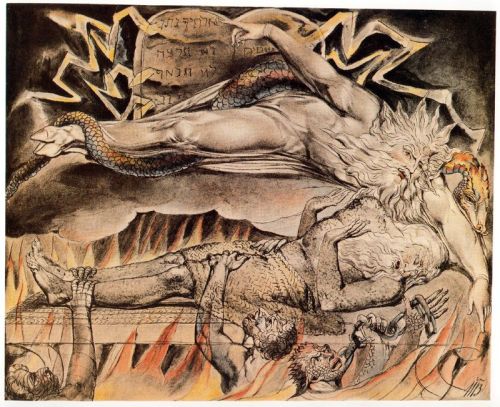
Hope isn’t dead. Crushing our current spirit for the sake of future dominance is a terrible, horrible, very bad idea. The more Bible-minded will recognize this as one of the tricks played by some legendary figures. See, for example, the Book of Job.

For a post-debate review of this, see The ‘Everything is Bad’ Party.

Rosh Hashanah: God Is Busy Writing

Hebrew Alphabet

This week begins the Jewish Days of Awe, starting with Rosh Hashanah, the New Year. Shana Tova – a good year.

A tale about Hasidic master Reb Levi Yitzchak of Berditchev (1740-1809):

It was Yom Kippur. The faithful, weak from fasting, were waiting for the Rebbe to begin the Mussaf prayer, but he too was waiting. An hour went by, and another. Impatience turned into anguish. This time the Rebbe was really going too far. It was late. Why was he waiting?

When he finally emerged from his meditation, he explained: “There is in our midst someone who cannot read. It is not his fault; he has been too busy providing for his family to go to school or study with a teacher. But he wishes to sing. And so he allows his heart to speak: ‘You are God; I am but a man. You are Almighty and know everything; I am weak and ignorant. All I can do is decipher the twenty-two letters of the sacred tongue; let me give them to You to make into prayers for me and they will be more beautiful than mine.’ ” The Rebbe raised his voice: “And that, brethren, is why we had to wait. God was busy writing.”

From Souls on Fire: Portraits and Legends of Hasidic Masters by Elie Wiesel


Biden and Colbert

Whatever your politics, it was TV history last night on The Late Show. Joe Biden and Stephen Colbert talking, just two great guys leaning in and getting real, while millions watched, and many teared up.

It starts with Colbert. The question has been whether and how he would progress from being a character on The Colbert Report to a different character that is more himself. There was that moment on the final Daily Show when Colbert exposed his most sincere and unironic thanks to Jon Stewart, the man who gave him his chance.

But last night’s Late Show interview skipped all the midpoints of developing a Colbert talk show persona to transcending any idea of what a late-night host might be. Beyond showing himself as a man of faith, Colbert served almost as a therapist and priest. He didn’t stay away from the pain. He compassionately went right for it, not for spectacle, but for the healing truth, and to reveal the depths of Biden’s quandary.

Reflecting their shared history of family tragedy, it was like a reunion of two old souls. On top of that, Colbert wore not only his faith but his politics on his sleeve, something that just isn’t done in his position. It was clear that he was urging Biden to run not because it was a good idea, but because Colbert and the Nation needed him.

It doesn’t take much to get Biden to speak from his soul. Hello will usually do. But Colbert brought out an extra dimension of that. Where certain candidates now running make us cringe, Biden made me and plenty of others cry. Where certain candidates make us want to run the other direction, listening to Joe just made me want to be a better person.

In the moment, it didn’t matter that Colbert was in only the third show of his widely-covered new TV venture. Or that Biden was in the final weeks of the will-he-or-won’t-he candidacy drama. It just was what it was, and what it was was good and human, so humbly and nobly human. Something we don’t see much on TV. Or in politics.

Bacon and Ribs Illegal in America When Jews and Muslims Take Over

When Orthodox Jews or Muslims are in charge, bacon, ribs, and all sorts of other things will be made illegal.

Of course, that will never happen. Not because Orthodox Jews or Muslims will never take control of American democracy (anything’s possible). But because the U.S. Constitution—that imperfectly perfect protector of individual rights—would not permit it.

In the secular sphere, there is no higher law than the Constitution. Beyond being the law of the land, it is the law of the law of the land. Those who study it in the context of world history and politics recognize that it is a one-of-a-kind, no-other-time-or-place achievement.

Those who say there is some kind of higher law than that in the civic arena are misinformed, or in some cases, such as Ted Cruz who should know better, strategically mistaken. The question those folks have to answer is this: If there is higher law than the Constitution, whose law is it? If it’s “God’s” law, recall that God talks to lots of people in lots of religious traditions, and apparently isn’t always heard to say the same thing to everyone. It will shock some Christians to learn that God has been speaking to Jews for thousands more years, and while there seemed to have been plenty of talk about a messiah, nothing to indicate that one actually arrived. Or asked county clerks in Kentucky to stop issuing marriage licenses. Or told presidential candidates who claim to believe in law and order to defy the law of the law of the land. In his name. Amen.

Why Would A Human Candidate Need to Be Humanized?

A dog does not need to be caninized. A cat does not need to be felinized. So why would a human candidate need to be humanized?

Guns. Period.

Another Shooting

It is not about angry people, frustrated people, mentally ill people having guns.

It is about the finality of guns. The way they are the period on the end of a life.

It. Is. As. If. You. Took. The. Normal. Length. Of. This. Sentence. And. Broke. It. Up. Unnaturally. With. Too. Many. Periods.

When all you have to do is remove all those unnecessary periods and let the sentence flow.

Too many periods. Way too many guns.

Tell every politico who represents you that if they want to stand on a deadly and unconditional view of the Second Amendment, a view that denies any sensible and humane regulation, they can stand there all day, but without an office and without your vote.

Joe Biden and the Kennedys: Profiles in Service and Tragedy

Joe Biden

Thinking about Joe Biden’s decision on whether to run for the Democratic presidential nomination, the Kennedys come to mind. All the brothers.

Like the Kennedys, Biden is Irish-American, with a fanatical sense of public service and family. Like the Kennedys, he is a pragmatic liberal, maybe a bit to the left of that dynasty, but deeply aware of the obligation of those who have much to those who have much less.

(Speaking of the haves, unlike the Kennedys, Biden may be the least wealthy politician ever to emerge from decades of high-profile public service.)

Most of all, like the each of the Kennedy brothers, he has had to struggle with multiple tragedies, each one a reason to choose a different path, each one instead a reason to keep going—because of rather than in spite of.

Not a single person, no matter the party, no matter who they support, would begrudge Biden a decision not to run this time. But—unlike the position taken by those who say running might tarnish his legacy—he would crown his career by demonstrating the idea that what does not kill us can make us stronger, and can make us give more, even when so much has been taken.

August 17, 1998: Clinton Admits to Misleading People

Bill Clinton

Exactly seventeen years ago, on August 17, 1998, Bill Clinton admitted that, under oath, he had not told the truth about his relationship with Monica Lewinsky.

Why mention this now, other than the anniversary? To understand that, you might check out the most famous quote from American philosopher George Santayana—one of the most often repeated quotes in modern times.

On that day in August, President Clinton gave a brief television address to admit: “While my answers were legally accurate, I did not volunteer information….I know that my public comments and my silence about this matter gave a false impression. I misled people.”

Clinton was subsequently impeached by the House of Representatives on charges including perjury and obstruction of justice, but retained his office when the Senate failed to convict by a two-thirds majority.

Note in passing that his lead counsel in the impeachment trial was Cheryl Mills, who went on to become Hillary Clinton’s Chief of Staff at the Department of State. And that another Bill Clinton lawyer in the proceedings was David Kendall, who is currently one of Hillary Clinton’s lead attorneys in the matter of her e-mail server. For what it’s worth.

Here is an excerpt from Bill Clinton’s address to the nation:

This afternoon in this room, from this chair, I testified before the Office of Independent Counsel and the grand jury.

I answered their questions truthfully, including questions about my private life, questions no American citizen would ever want to answer.

Still, I must take complete responsibility for all my actions, both public and private. And that is why I am speaking to you tonight.

As you know, in a deposition in January, I was asked questions about my relationship with Monica Lewinsky. While my answers were legally accurate, I did not volunteer information.

Indeed, I did have a relationship with Miss Lewinsky that was not appropriate. In fact, it was wrong. It constituted a critical lapse in judgment and a personal failure on my part for which I am solely and completely responsible.

But I told the grand jury today and I say to you now that at no time did I ask anyone to lie, to hide or destroy evidence or to take any other unlawful action.

I know that my public comments and my silence about this matter gave a false impression. I misled people, including even my wife. I deeply regret that.

Birdman

Birdman

There are too many movies, good bad and ugly, so it is hard to keep up. Even with the good ones. So just yesterday I finally got to see last year’s Academy Award winner Birdman.

It is all it is supposed to be. It is what you ask for from popular art, that it be entertaining and that it be…art. It is as satisfying and memorable as a great novel. And just about as indescribable.

When it was released, and later when it was praised, there were attempts to describe the plot and, for PR purposes, the unusual production technique (it was filmed in a series of very long takes, tracking shots that lasted many minutes, so that if anything went wrong in a take—a missed line of dialogue—the entire scene had to be reshot, start to finish). Also discussed was the parallel between the story (an actor who walks away from a billion dollar comic book film franchise) and the film’s lead actor Michael Keaton (who walked away from the billion dollar Batman franchise). This point turns out to be less than inconsequential.

What is consequential is how Birdman manages to treat big topics like “life” and “art” in so fascinating a way. There is a Broadway play within the film, a drama adapted from Raymond Carver’s unusual, influential and iconic book of stories, What We Talk About When We Talk About Love. But actually, it is the film that is sort of a Carver adaptation, fooling around with form to try saying something significant in a way that can be heard through the clutter of our expectations.

Birdman is the unexpected. The full title of the move hints at this: Birdman or (The Unexpected Virtue of Ignorance). Without giving much away, assuming you have seen or will see it, the movie asks you to root for a happy ending. Except you can’t see, exactly, how there could possibly be a happy ending that is true to the rest of the movie. Yet there is an unexpected ending that is entirely true to the movie, and to life and art.

I could put a quote from Ray Carver’s writing here. God knows there are hundreds of them that would be appropriate and make for good reading. It would be kind of meta, since the play-within-the-movie obviously includes some. But it would also be kind of cheesy and clichéd, and I can hear the voice of Carver laughing or at least chiding me. So just see the movie, if you haven’t. And definitely read Carver if you haven’t.

And remember that a man really can fly.