Bob Schwartz

Month: October, 2013

League of Denial: The NFL’s Concussion Crisis

league-of-denial-raster-br10-8
You may not think that you want to watch the new PBS Frontline documentary League of Denial: The NFL’s Concussion Crisis.

You may not want to spend almost two hours on a documentary, even a superb one. You may not like football, may not know anybody who plays football at any level, may not care about the business of sports. Then again, some or all of those may apply to you.

It doesn’t matter. You can watch League of Denial online. Please watch it.

One of the many lessons you will learn, if you didn’t already know, is that we pay a price for everything. Or at least somebody does. The price is sometimes advertised and obvious, but sometimes hard to find or even hidden. The point is not that something is good or bad, right or wrong, but that we can only make informed and enlightened decisions when everything is known. No more or less.

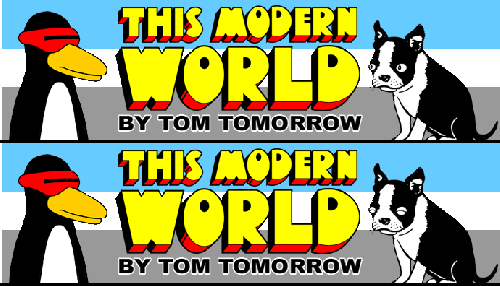
This Modern World by Tom Tomorrow

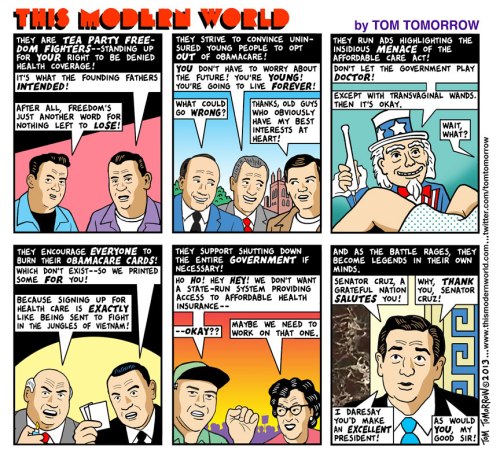
This Modern World
Tom Tomorrow (Dan Perkins) is just about the best editorial cartoonist in America. He won this year’s Herblock Prize, named for the dean of modern editorial cartoonists.

Here is the current edition of This Modern World

TMW Current

If you would like to be delighted by a collection of all from this past year or so, visit The Nation.

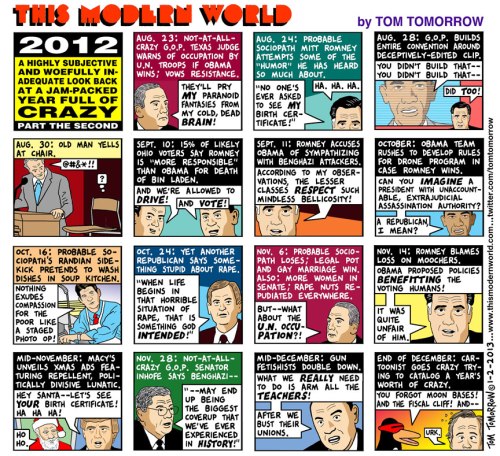
It’s hard to pick out just one more to show off. This is Tom Tomorrow’s review of 2012
TMW 2012 1TMW 2012 2

The Man Who Could Kill Democracy

McCutcheon v FEC

Today the Supreme Court hears arguments in the case of McCutcheon and Republican National Committee v. Federal Election Commission, an attack on the constitutionality of limits on individual contributions to federal elections. Just as the Court found in Citizens United that corporations have a First Amendment right to unlimited campaign contributions, so Alabama businessman Shaun McCutcheon would have that extended to people (since, as Mitt Romney pointed out, corporations are people too, ergo, people are corporations—at least for election money).

Mr. McCutcheon seems to be a decent and hardworking person, a loyal American, and he is of course entitled not only to his opinion but to his pursuit of it in the courts. But Mr. McCutcheon could conceivably be known as the man who killed American democracy, or at least the one nominally identified with its murder. Yes, he would have the heirs to Abraham Lincoln as his accomplices or co-conspirators, but his fingerprints would be on the weapon.

Is that hyperbole? Before Citizens United, it might have seemed so. But beyond theory, we now have proof that Big Money has a distorting effect on Big Democracy. A contortionate, twisted beyond recognition effect. There is reason to believe that if individual limits are lifted, the effect might go beyond injury to mortal blow.

You can read the submitted briefs here. After the arguments, you can listen to them here.

The questions presented on appeal are these:

Federal law imposes two types of limits on individual political contributions. Base limits restrict the amount an individual may contribute to a candidate committee ($2,500 per election), a national-party committee ($30,800 per calendar year), a state, local, and district party committee ($10,000 per calendar year (combined limit)), and a political-action committee (“PAC”) ($5,000 per calendar year). 2 U.S.C. 441a(a)(1) (current limits provided). Biennial limits restrict the aggregate amount an individual may contribute biennially as follows: $46,200 to candidate committees; $70,800 to all other committees, of which no more than $46,200 may go to non-national-party committees (e.g., state parties and PACs). 2 U.S.C. 441a(a)(3) (current limits provided) (see Appendix at 20a (text of statute)). Appellants present five questions:

1. Whether the biennial limit on contributions to non-candidate committees, 2 U.S.C. 441a(a)(3)(B), is unconstitutional for lacking a constitutionally cognizable interest as applied to contributions to national-party committees.

2. Whether the biennial limits on contributions to non-candidate committees, 2 U.S.C. 441a(a)(3)(B), are unconstitutional facially for lacking a constitutionally cognizable interest.

3. Whether the biennial limits on contributions to non-candidate committees are unconstitutionally too low, as applied and facially.

4. Whether the biennial limit on contributions to candidate committees, 2 U.S. C. 441a(a)(3)(A), is unconstitutional for lacking a constitutionally cognizable interest.

5. Whether the biennial limit on contributions to candidate committees, 2 U.S.C. 441a(a)(3)(A), is unconstitutionally too low.

Without going into the arguments so well-developed in the written briefs, and in the oral arguments today, one point should be stressed. The First Amendment is central to American democracy, but it has never been absolute. It could be of course, and we would be free to destroy the reputations of others, or talk freely about overthrowing the government, or republish the words of others without penalty, or yell fire in that crowded theater. Instead, as an exercise in social priorities, we argue about balance, though sometimes the argument for the good of the many and “democracy” is cover for what’s good for me and mine.

If the Court agrees that both the base limits (the per election money) and the aggregate limits (cumulative over two years) are unconstitutional on their face, anyone with money can attempt to influence public opinion and the action of public officials to the full extent that money can. And it can. Some say that this would simply level the playing field—the same way that everybody having guns would level the playing field, insuring that only the bad guys would get shot. Funny how the First and Second Amendments can work so well together.

In the worst case, where we may be speaking about McCutcheon as we do about Citizens United, only more so, there is still an answer. Simple but not easy:

Get smart.
Vote.

Without casting aspersions too wide, it does seem that a number of Americans really don’t do their homework on public issues. As far as voting, our abysmal turnout numbers tell the tale. But if Americans did do their homework and did vote, we really could have a pragmatic, centrist, reasonable and successful country—instead of an extremist-obstructed one based more on blustery ideology and vaguely-veiled self-interest. We can hope.

How Much Is That in Harvard Years?: Why Ted Cruz Thinks He Is Leader of the Senate

Ted Cruz - Double Harvard
One of the puzzles of the current political situation is how a U.S. Senator with less than a year in Congress believes he is the leader of his party—if not of the nation.

One theory is that Ted Cruz was born in Canada, and therefore doesn’t completely understand the American political system. But that would make him more reasonable, conciliatory and polite, so that has been rejected.

Another possibility is that the sudden disappearance of Senate Republican leader Mitch McConnell has left a vacuum that the party is scrambling to fill. In the chaos of the relentless search for the Kentucky Senator, Sen. Cruz has leapt into the breach.

The best explanation is a bit esoteric, but if you attended one of the “major” Ivy League colleges, as Ted Cruz did, you should have no trouble following. (Note: This writer, as a graduate of what Ted Cruz considers a “lesser” Ivy, is still struggling with the theory. Hopefully there is a Harvard, Princeton or Yale grad out there to help.)

Just as there are “dog years,” there are also, at least in the mind of Ted Cruz, “Harvard Years.” The exact numbers aren’t clear, but on a one-for-one basis, this means that the seven years he spent at Harvard (College and Law School) is the equivalent of seven years in Congress. If it is two-for-one, he has been there for fourteen years. And if it is a canine calculus, Ted Cruz has been in Congress for 49 years! That is a near record achievement that should put complaints of his inexperience to rest, though other concerns won’t go away so easily.

Note: The Ivy League colleges are famous (at least among their attendees) for their mottos. These are in Latin, because at the time the schools were founded, Latin was the lingua franca of the intelligentsia. (And yes, of course, Ted Cruz probably speaks Latin, along with French and Spanish.)  For all his Haravardian pride, he should pay closer attention to the motto of his alma mater: Veritas (truth).

Even closer to home for Ted Cruz, if he would deign to consider the motto of one of those lesser Ivies, is this: Leges Sine Moribus Vanae—laws without morals are in vain.

Joke Break: Duck Walks into a Drugstore…

Duck Drug Store
We need a break. So here’s one in a continuing series of jokes from the joke file, a well-traveled manila folder containing about three pounds of clippings and copies from all kinds of sources.

This doesn’t mean that there aren’t stupid, tragic and completely unnecessary things going on in this country and the world. That’s exactly what’s going on—but we still have to live. And laugh.

Great jokes don’t have to offend sensibilities, but they sometimes do. So a blanket apology in advance if you are put off or offended—or if you don’t find a particular joke very funny.


Duck walks into a drugstore, asks for some Chap Stick. Guy behind the counter says, “That’ll be fifty-nine cents.” Duck says, “Put it on my bill.”

Next day, the duck walks into the drugstore, asks for a package of condoms. Guy behind the counter says, “Would you like me to put that on your bill?” Duck says, “Hey, what kind of a duck do you think I am!”

Another Fleetwood Mac Presidency?

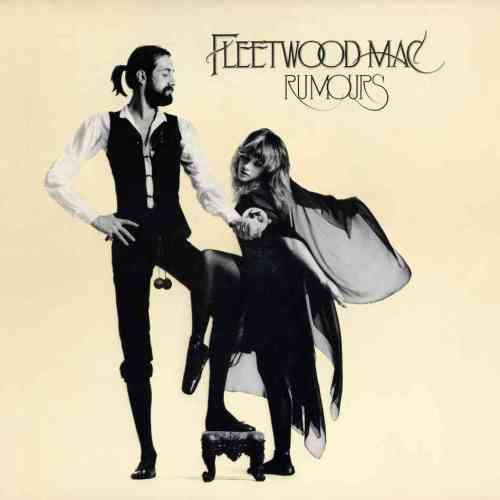
Fleetwood Mac - Rumours
That’s not Bill and Hillary Clinton on the cover of the Rumours album.

Pandora popped this album up and three things came to mind. The music is still pretty good, as well-crafted as any pop of its day, but it does sound  a bit dated. The second thought is about this now-iconic photo of Mick Fleetwood and Stevie Nicks. What in the name of artsy pretentiousness is going on, and why does Mick have two balls hanging near his crotch?

The final thought was of the Clintons. If you were there, you will never, ever get the identity between Bill and the campaign theme song Don’t Stop out of your head, hard as you try.

Hillary’s presidential candidacy is a big topic that has to be dealt with in bite-size chunks. Among the sub-topics is whether she will run, whether she will win the nomination, whether she will win the presidency, and whether any of it is a good idea for the party or the country. All that is stuff for another day.

The subject here is what it means in terms of Fleetwood Mac. Does Hillary still like and listen to them, or did she never, instead just giving in to another of Bill’s peccadilloes? Did she think of herself more as a Stevie Nicks or as a Christine McVie? Did she think more of Stevie or Christine? Did Bill think more about Stevie or Christine?

(As a bonus, consider that the songs on Rumours are famously confessional about broken relationships and secret infidelities among band members. That’s why it’s called Rumours. Ironic, yes?)

The big question is whether a Hillary candidacy is a hark back to Mac, essentially a call for the better days of the mid-1970s or early-1990s, the decades that frame the Clinton Years. If it is, the question then is what kind of place, if any, there is for Fleetwood Mac in 2016. It’ll soon be here.

National Poetry Day in the U.K.

National Poetry Day
National Poetry Day
In the U.K.
A day to turn away
From the plainness of prose
To levitate above its dull weight on hearts and minds
To read write appreciate celebrate
Fly on verse.

America has dedicated a month to it
The cruelest month of April
As if our rebel poems are 28, 30 or 31 times better
Than those of our exiled imperial masters.

Let your verse be free.
Ignore the Yankee codger Robert Frost
Who said free verse, without form or meter,
Was like playing tennis without a net.
Play poetry tennis as you will
Without net, without racket, without balls
Without clothes, without score.

Happy Poetry Day.

History’s Goat

John Boehner
If, as expected, the government shutdown is protracted, bleeding into the debt ceiling crisis, the cool eyes of history will judge Speaker of the House John Boehner to be the goat. Not the President, not extremist Republicans in the House, not Ted Cruz or anyone in the Senate. Almost everyone on both sides of the aisle either knows it is John Boehner’s fault or believes in any case that he will be blamed and take the fall.

It is his responsibility because he could have brought a “clean” Continuing Resolution to a vote in the House—and he still can. All indications are that enough Republicans would vote for it—and still would. This would not solve any other crises or disagreements, but all those could then proceed under the simple everyday circumstance of the government running. That would be a good thing by almost all lights.

The reasons John Boehner doesn’t do this are many and complex. He is appropriately loyal to what was, and will hopefully be again, a great political party. The demands on his Speakership are as difficult as any in modern history; it is possibly a job that no one could do perfectly or even well. The extremist Republicans in the House have not so much discovered political extortion—an ancient practice—as fallen in love with it, become obsessed with it. They have aimed their threats at the nation, the President, and reasonable members of their own party in primary after primary.

The extremist threat against John Boehner is not that he will lose his secure Ohio House seat—he won’t—or even that he will lose his Speaker post—he probably will, if they can find anybody else courageous or stupid enough to try to “lead” these House Republicans. The threat hanging over John Boehner, a man who loves his country and his Congress, is that he will be humiliated by failing miserably, rather than just not succeeding.

John Boehner is making a classic mistake, one that competitors in all fields, including sports, business and politics, should know. To win, you have to play aggressively and by the rules, but you have to play to win according to your best inner guidance. Because when you play not to lose, you already have.

Right now, John Boehner knows he isn’t winning, but he could, if he would just end this shutdown. Instead, he has retreated to a haven of rhetoric and finger-pointing that he knows is not right. That’s why every evaluation of his performance, even by some friends and moderate Republicans, begins with “He is a nice guy, a good man, but…”

Right now, whatever the consequences, he could do the right thing, pay whatever price there is to pay, and be a hero. But right now, and in the historian’s rear view mirror, that isn’t how it looks.

Patents: Just One More Shutdown Victim

Election Game

You have heard stories, but you may not be directly affected by the shutdown at the moment, or know anyone who is. The shutdown may end tomorrow, but it may go on for weeks, as the last one did in 1996.

You understand the human misery that begins today. But maybe you don’t realize the legitimate, non-controversial things that the federal government does—things that are actually required by the U.S. Constitution, which even the most radical and extreme government haters say they respect.

The United States Patent and Trademark Office is one of those functions. It is an engine of innovation, which is one of those buzzwords that everyone across the political specturms like to throw around. How busy and important is the USPTO? Right now, there is a backlog of 1,000,000 patent applications in the pipeline

The USPTO site features this:

USPTO Operation Status

During the general government shutdown that began October 1, 2013, the United States Patent and Trademark Office will remain open, using prior year reserve fee collections to operate as usual for approximately four weeks. We continue to assess our fee collections compared to our operating requirements to determine how long we will be able to operate in this capacity during a general government shutdown. We will provide an update as more definitive information becomes available.

Should we exhaust these reserve funds before the general government shutdown comes to an end, USPTO would shut down at that time, although a very small staff would continue to work to accept new applications and maintain IT infrastructure, among other functions. (Should it become necessary for USPTO to shut down, details of the agency’s plan for an orderly shutdown are available on page 78 of the United States Department of Commerce’s shutdown plan, available here.)

Any new or updated public information related to USPTO operations during the government shutdown will be placed on this page.

The mentioned shutdown plan includes 87 pages and obviously took many hours to create and will take many more to execute.

While there, a search of the patent database found numerous political games (above). Unfortunately, there did not seem to be any patents for helping political extremists understand that government is not a game, and that the extraordinary founders of the nation who they claim to love never meant it to be one. Those founders believed in government, and could never imagine any representatives irresponsible enough to believe otherwise.

The Most Significant Shutdown Front Pages

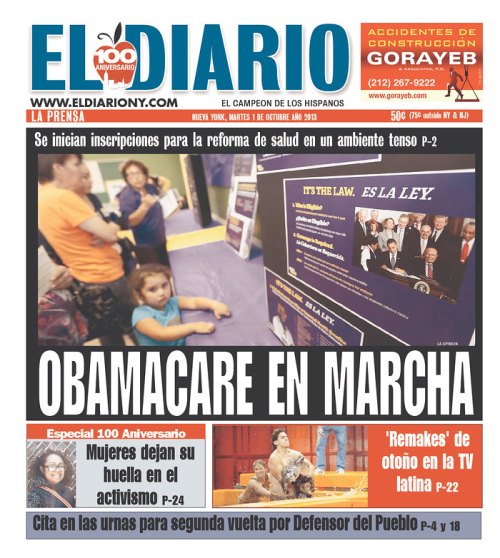
El Diario

Republicans should pay close attention to the front pages of America’s newspapers this morning, the first day of the government shutdown prompted by their obsessive opposition to Obamacare.

Most papers carry some version of “shutdown” or “gridlock,” with photos of John Boehner and Harry Reid, or John Boehner and Barack Obama (it’s all about John Boehner).

But the big story on two front pages is the opening of the Affordable Care Act insurance exchanges. These two papers just happen to be two of the largest Spanish-language dailies—El Diario in New York (above) and La Opinion in Los Angeles (below).

La Opinion

Why is this significant for Republicans? Because they claim (but in their heart of hearts still may not believe) that here in the second decade of the 21st century, they can’t become an American national party without broad Latino support. That is true, but the fact is that a large part of that constituency is uninsured and is deeply interested in the benefits of Obamacare. This is reflected in those front pages. But the Republicans are sworn enemies of Obamacare, so committed that they are willing to put people out of work to do it. How can the Republicans be a party attractive to Latinos under that circumstance?

The answer is that they can’t. It is a circle Republicans cannot square. And no matter how much lip service they pay to underserved populations, everything they do says something else. Actions, like front pages, speak louder than words.